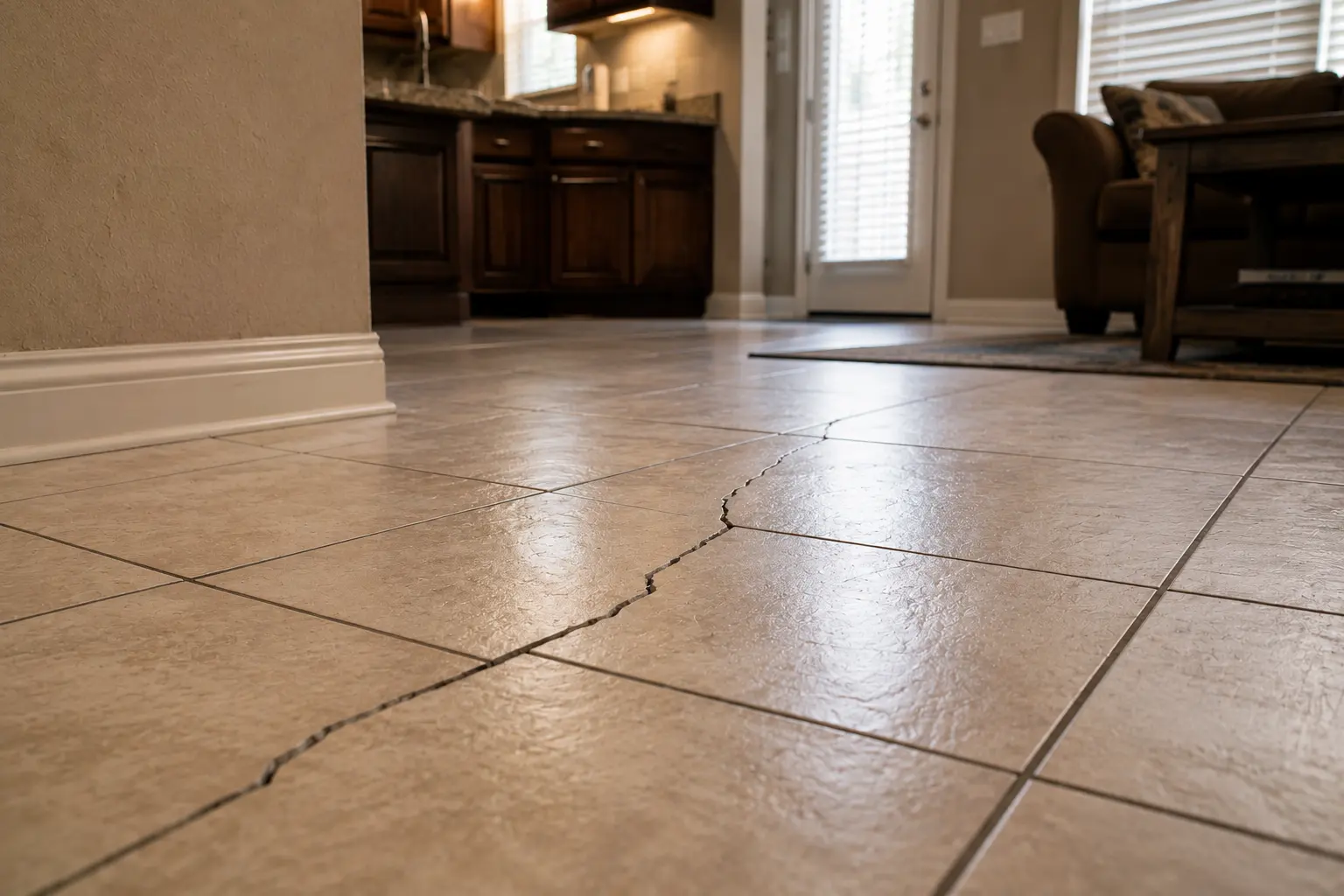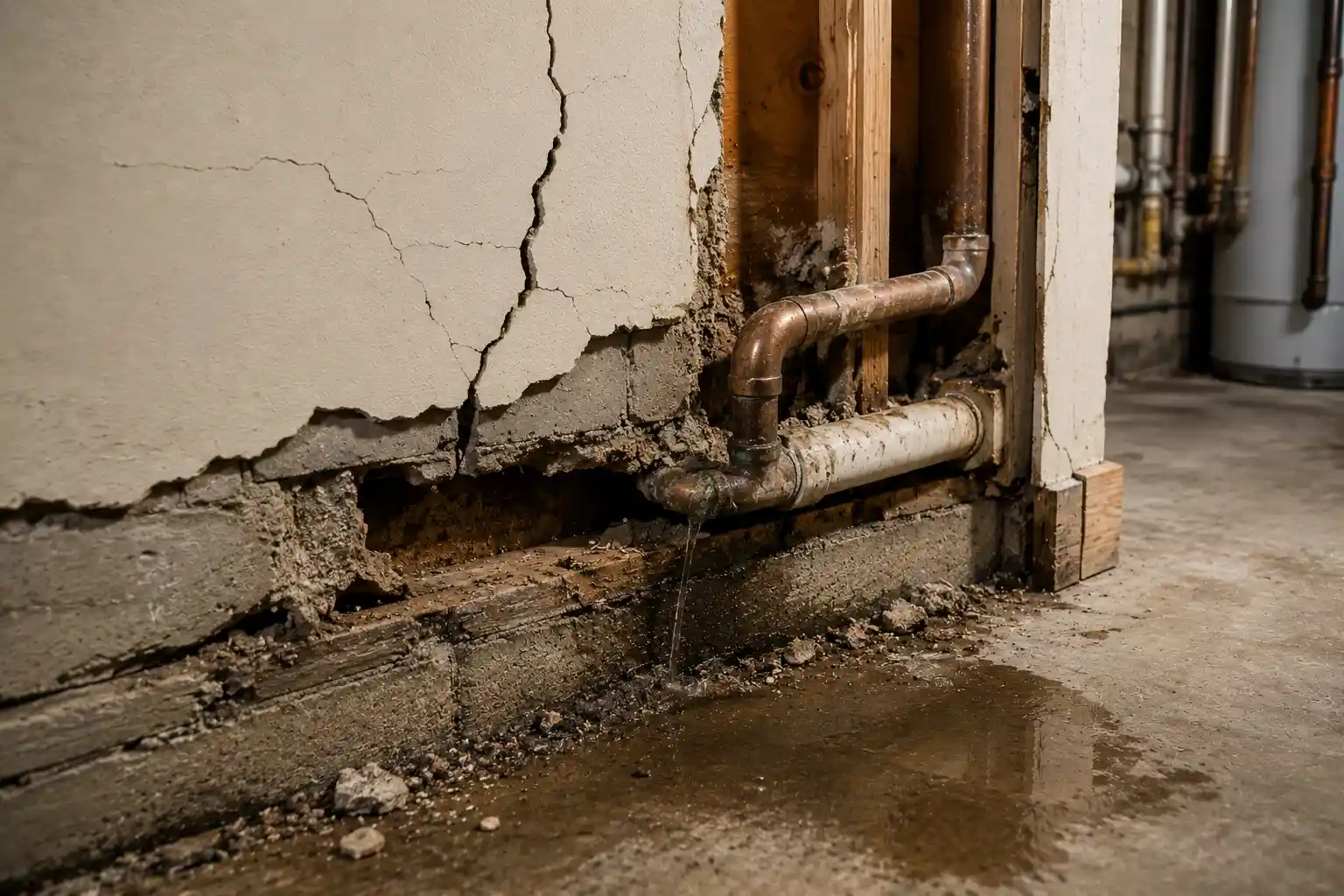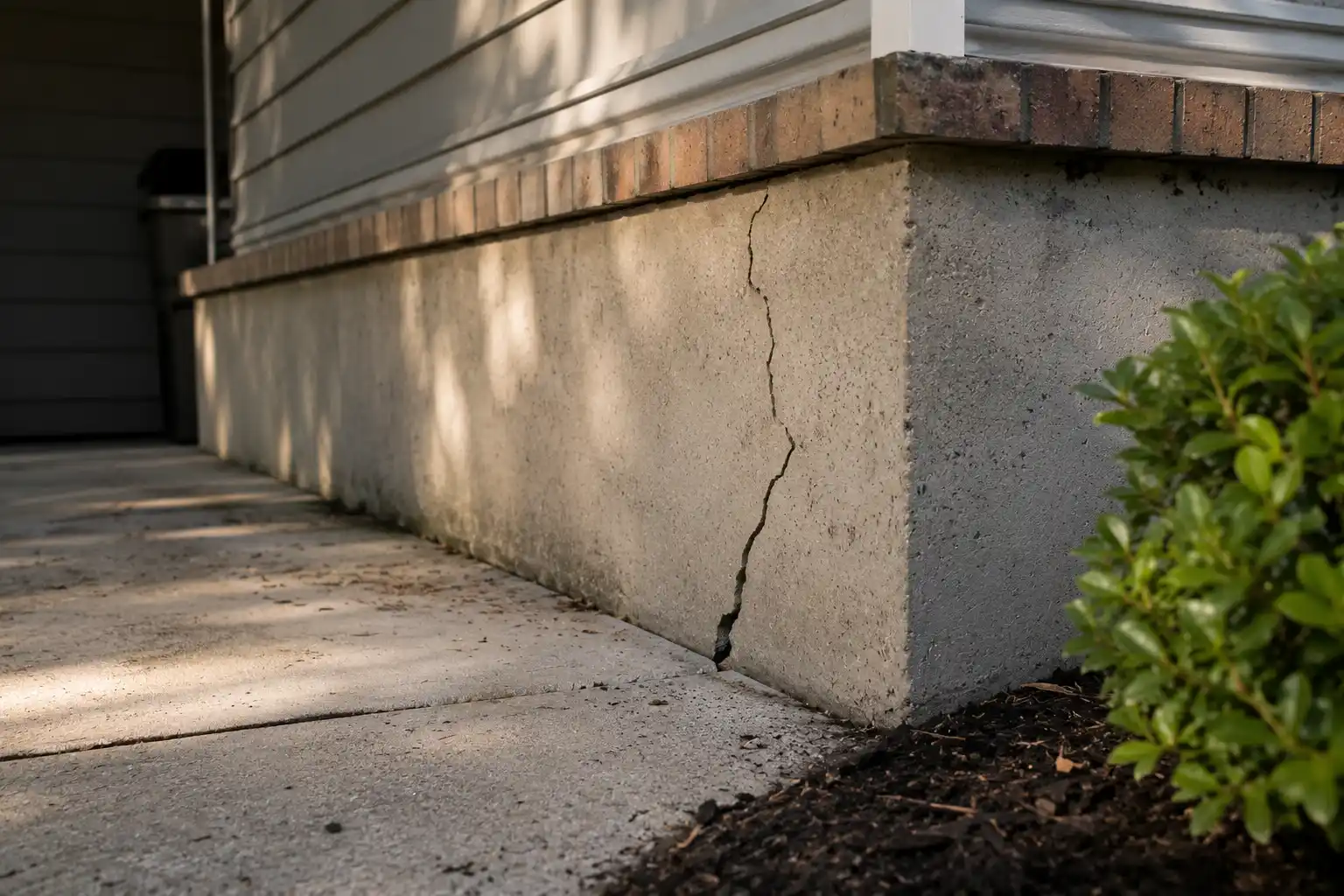
A crack in the ceiling can immediately make homeowners nervous.
Sometimes it’s a thin line forming near a corner. Other times, it spreads slowly across the ceiling or appears together with wall cracks nearby. Many people wonder the same thing:
“Is this just cosmetic — or is my foundation shifting?”
The truth is that ceiling cracks are not always caused by foundation problems.
Some cracks happen naturally as homes age and materials expand or settle over time. But in Louisiana homes, ceiling cracks can also be early warning signs of structural movement happening underneath the house.
Because Louisiana foundations constantly deal with:
- shifting clay soil,
- heavy rainfall,
- flooding,
- humidity,
- and moisture exposure,
structural movement is more common than many homeowners realize.
Here’s how to tell the difference between harmless ceiling cracks and signs of possible foundation trouble.
Are Ceiling Cracks Normal?
In many homes, yes.
Minor ceiling cracks can develop naturally because of:
- drywall expansion,
- humidity changes,
- normal settling,
- or aging materials.
Small cosmetic cracks are especially common in:
- older homes,
- recently built homes,
- and houses exposed to seasonal moisture fluctuations.
Not every ceiling crack means the structure is failing.
The important question is:
What kind of crack is it — and is it getting worse?
What Causes Ceiling Cracks?
Ceiling cracks are often symptoms of movement or stress somewhere in the structure.
The cause may involve:
- cosmetic drywall movement,
- framing shifts,
- moisture damage,
- roof stress,
- or foundation settlement.
In Louisiana homes, moisture and soil movement frequently contribute to ceiling cracking over time.
1. Normal Settling and Drywall Movement
Most homes experience some degree of natural settling.
As materials age and adjust, small stress cracks can appear in:
- ceilings,
- drywall seams,
- corners,
- and joints.
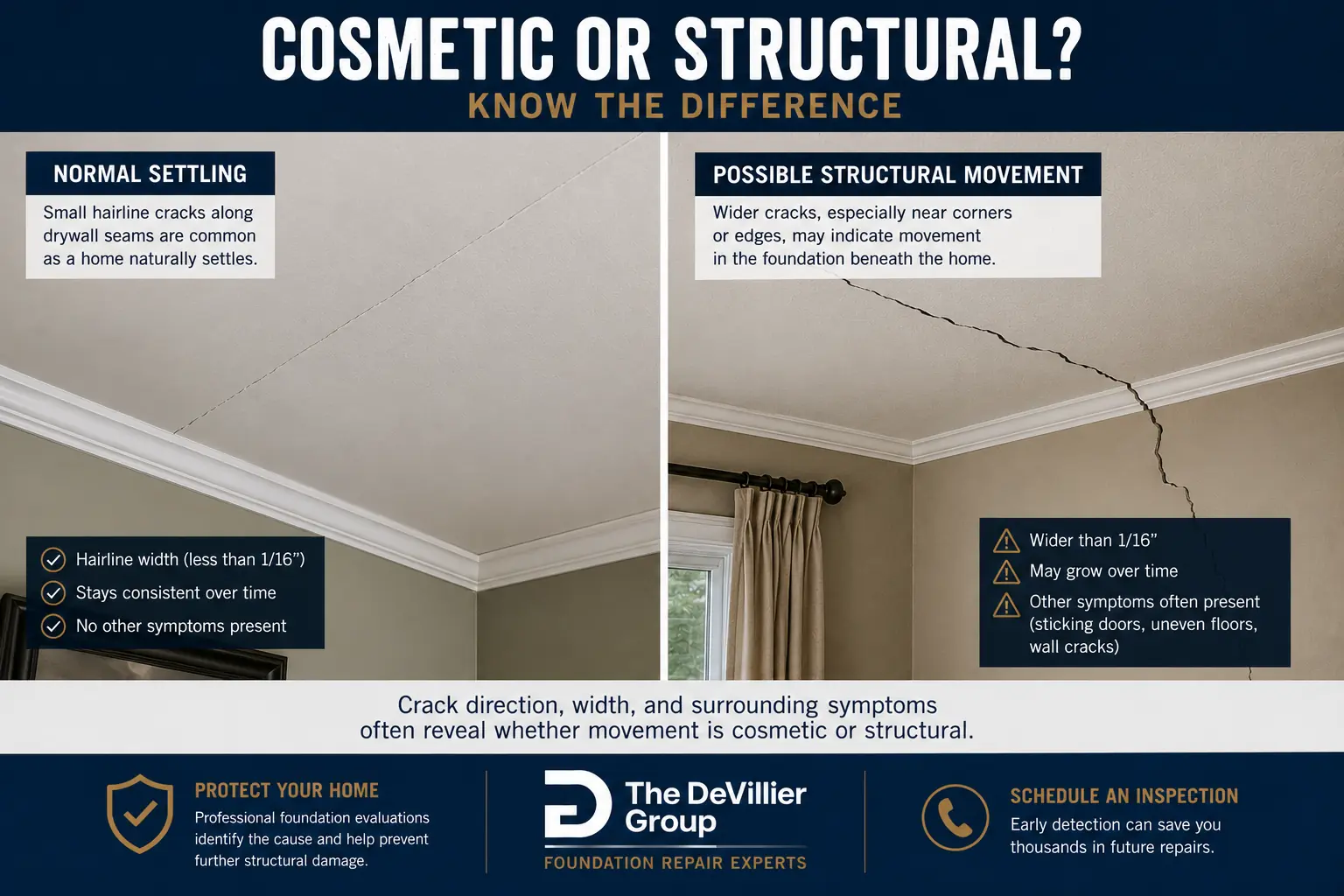
These cracks are usually:
- thin,
- stable,
- and cosmetics.
Common Cosmetic Ceiling Cracks
- hairline cracks
- straight seam cracks
- small corner separation
- isolated drywall tape cracking
These are often more noticeable during Louisiana’s humid seasons because moisture causes building materials to expand and contract slightly.
2. Foundation Settlement
One of the more serious causes of ceiling cracking is foundation movement.
When a foundation settles unevenly, structural stress transfers upward into:
- walls,
- ceilings,
- floors,
- windows,
- and framing systems.
This movement can eventually create:
- widening ceiling cracks,
- connected wall cracks,
- or visible separation along ceiling lines.
Signs Foundation Settlement May Be Involved
- cracks worsening over time
- cracks appearing with wall movement
- uneven floors nearby
- sticking doors or windows
- visible foundation cracks
- multiple cracks throughout the home
When ceiling cracks appear alongside several other structural symptoms, foundation movement becomes more likely.
3. Louisiana Clay Soil and Moisture Movement
Louisiana homes constantly experience soil movement beneath the foundation.
Clay-heavy soil absorbs moisture during rainy periods and shrinks during dry weather. This repeated expansion-and-contraction cycle creates ongoing pressure beneath the structure.
Over time, the movement may affect:
- slab foundations,
- crawl spaces,
- support piers,
- and framing systems.
This is one reason many Louisiana homeowners notice:
- worsening cracks after storms,
- seasonal movement,
- and recurring drywall separation.
4. Roof Movement or Structural Framing Stress
Not all ceiling cracks originate from the foundation.
In some homes, the issue may involve:
- roof framing movement,
- truss uplift,
- attic humidity,
- or structural shifting in ceiling supports.
This is especially common during seasonal temperature and moisture changes.
Truss Uplift
Roof trusses naturally expand and contract over time. In some conditions, this movement pulls slightly against ceiling drywall, creating cracks near:
- corners,
- ceiling joints,
- and wall connections.
These cracks are often cosmetic but may repeatedly reopen seasonally.
5. Moisture Damage and Water Intrusion
Water damage is another major cause of ceiling cracking in Louisiana homes.
Roof leaks, attic moisture, or humidity buildup can weaken:
- drywall,
- ceiling materials,
- and framing supports.
As materials soften or deteriorate, cracking may develop.
Signs Moisture May Be the Cause
- yellow or brown staining
- bubbling paint
- sagging drywall
- musty smells
- soft ceiling texture
Moisture-related cracks often appear differently than structural settlement cracks and may require roofing or ventilation correction rather than foundation repair.
6. Cracks Around Ceiling Corners and Doorways
Ceiling cracks that spread into wall corners or door openings often deserve closer attention.
These areas experience concentrated structural stress when a home shifts unevenly.
More Concerning Patterns
- diagonal cracks
- cracks spreading from corners
- connected ceiling and wall cracking
- widening separation around trim
These symptoms may indicate structural movement beneath the home.
Which Ceiling Cracks Are Usually Less Serious?
Some ceiling cracks are very common and often cosmetic.
Usually Less Concerning
- thin hairline cracks
- straight drywall seam cracks
- small isolated corner cracks
- stable cracks that do not grow
Many homes develop these naturally over time.
Which Ceiling Cracks May Indicate Foundation Problems?
Certain crack patterns deserve more attention, especially when they worsen.
More Serious Warning Signs
- widening ceiling cracks
- long diagonal cracks
- cracks combined with wall movement
- sagging ceilings
- repeated recurring cracks
- uneven floors nearby
- sticking doors and windows
- visible structural shifting
The more symptoms appearing together, the greater the likelihood of structural movement beneath the home.
Why Ceiling Cracks Often Return After Repair
Many homeowners patch and repaint ceiling cracks only to watch them return months later.
This usually happens because the underlying movement was never corrected.
If:
- the foundation continues shifting,
- framing continues moving,
- or moisture problems remain,
the structural stress simply recreates the crack over time.
Permanent repair depends on identifying the actual source of movement.
How Foundation Professionals Diagnose Structural Cracking
A structural inspection may evaluate:
- crack direction
- crack width
- floor leveling
- foundation movement
- crawl-space conditions
- framing stability
- roof structure
- drainage patterns
- moisture exposure
In Louisiana homes, inspections often focus heavily on environmental movement because moisture and soil conditions affect nearly every part of the structure.
Can Ceiling Cracks Be Repaired?
Yes — but the correct repair depends on the underlying cause.
Cosmetic Repairs
Minor drywall settling cracks may only require:
- patching,
- tape repair,
- and repainting.
Structural Repairs
If foundation movement or framing instability exists, repairs may involve:
- foundation stabilization,
- drainage correction,
- pier support,
- crawl-space reinforcement,
- or structural leveling.
Fixing the cosmetic crack without correcting structural movement often leads to the crack returning later.
When Should You Call a Foundation Professional?
You should consider professional evaluation if:
- ceiling cracks continue worsening,
- cracks spread into walls,
- floors become uneven,
- doors begin sticking,
- or multiple structural symptoms appear together.
In Louisiana homes, early structural movement often appears subtly before larger foundation problems become obvious.
Final Thoughts
Not every ceiling crack means your foundation is failing.
Some are harmless cosmetic signs of normal settling and material movement. But in Louisiana homes, ceiling cracks can also reveal deeper structural stress caused by:
- shifting clay soil,
- moisture movement,
- drainage problems,
- or uneven foundation settlement.
Understanding the difference between cosmetic cracking and warning signs of foundation trouble can help homeowners catch problems early before more severe damage develops. If you’re seeing recurring damage, it may be time to schedule a professional inspection.
FAQs
Are ceiling cracks always caused by foundation problems?
No. Ceiling cracks can result from normal settling, drywall movement, humidity changes, roof framing stress, or moisture damage.
What ceiling cracks are most concerning?
Widening cracks, diagonal cracks, sagging ceilings, and cracks combined with uneven floors or sticking doors may indicate structural movement.
Why do ceiling cracks worsen after heavy rain in Louisiana?
Heavy rain changes soil moisture beneath the home, causing foundation movement and structural stress that may worsen cracking.
Can ceiling cracks come back after repair?
Yes. If the underlying structural movement or moisture issue is not corrected, ceiling cracks may return even after cosmetic repair.
When should I worry about ceiling cracks?
You should seek inspection if cracks worsen, spread into walls, recur repeatedly, or appear alongside uneven floors and sticking doors.