Your home rarely develops foundation problems overnight.
In most cases, the warning signs start small — a crack near a doorway, a floor that suddenly feels uneven, or a window that becomes harder to open during humid Louisiana weather. Many homeowners ignore these early symptoms because they seem cosmetic at first. But over time, small structural shifts can turn into expensive repairs.
In Louisiana, foundation problems are especially common due to shifting clay soil, moisture changes, flooding, heavy rainfall, and high humidity. Homes in areas like Eunice, Lafayette, Baton Rouge, and surrounding regions are constantly exposed to soil movement that can slowly affect slabs, piers, and support systems underneath the structure.
The good news is that your house usually tells you when something is wrong.
Here are the most common warning signs your home may need foundation repair — and when it’s time to take them seriously.
1. Cracks in Drywall or Interior Walls
One of the earliest signs of foundation trouble is cracking inside the home.
You may notice:
- Thin hairline cracks above doors
- Stair-step cracks near corners
- Horizontal wall cracks
- Ceiling cracks are spreading over time
Not every crack means your foundation is failing. Homes naturally settle as they age. But when cracks continue widening, reappear after repairs, or begin spreading across multiple rooms, the issue may be deeper than cosmetic damage.
In Louisiana homes, moisture-heavy soil can expand and contract throughout the year. That movement places stress on walls and framing, eventually causing visible cracking indoors. If cracks continue to worsen, it may be time to schedule a professional foundation repair inspection.
When Should You Worry About Wall Cracks?
You should consider a foundation inspection if:
- Cracks are wider than 1/8 inch
- Multiple cracks appear at once
- Doors and floors also show movement
- Cracks keep returning after patching
2. Uneven or Sloping Floors
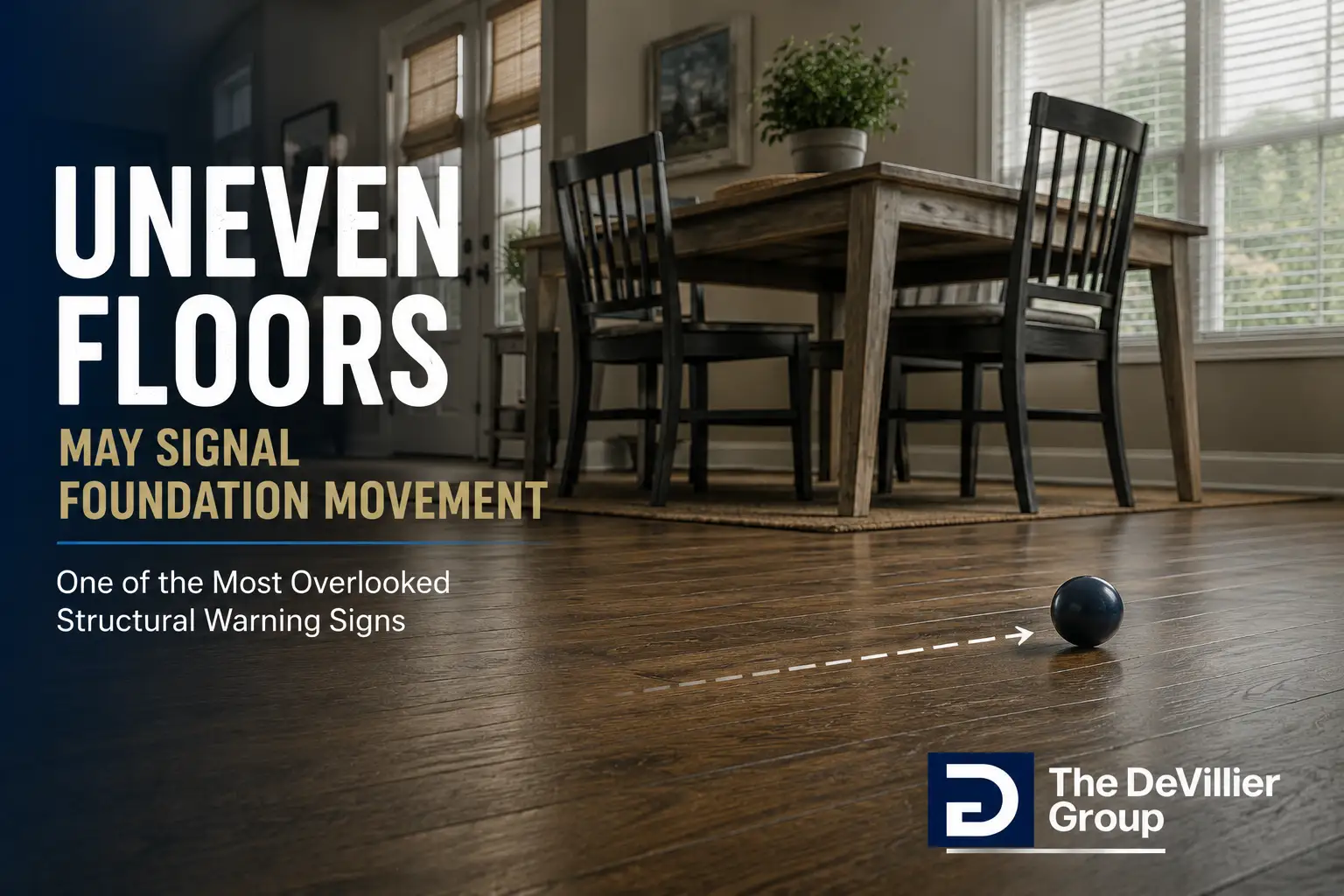
If your floors suddenly feel tilted, bouncy, or uneven underfoot, your foundation could be shifting underneath the structure.
This is especially common in:
- Pier and beam homes
- Older Louisiana homes
- Homes exposed to flooding or drainage issues
Homeowners often notice:
- Furniture leaning slightly
- Rolling objects moving across the floor
- Soft spots near hallways or kitchens
- Visible sagging in certain rooms
Uneven floors are often caused by:
- Soil settlement
- Weak support beams
- Moisture damage
- Foundation sinking
- Pier movement
Read related insights:
Are Uneven Floors Dangerous?
Minor unevenness isn’t always an emergency, but worsening floor movement should never be ignored. Structural shifting can eventually affect walls, roofing systems, plumbing, and overall home stability. Learn more about common signs your home needs foundation repair in Louisiana.
3. Doors That Suddenly Won’t Close Properly
A sticking door is one of the most overlooked signs of foundation movement.
When a foundation shifts, the framing around doors changes shape slightly.
Even a small amount of movement can cause doors to:
- Rub against the frame
- Swing open by themselves
- Refuse to latch
- Become difficult to lock
Many Louisiana homeowners blame humidity first — and sometimes that’s true. But if multiple doors suddenly stop working properly at the same time, the issue may be structural, as explained in why your doors won’t close properly.
Foundation Problems vs Humidity
Humidity usually causes temporary swelling.
Foundation movement often causes:
- uneven gaps around doors
- frame separation
- recurring alignment problems
- issues in multiple rooms
4. Windows Becoming Hard to Open
Windows can reveal foundation issues long before major structural damage appears.
As the home shifts, window frames twist slightly out of alignment. This may cause:
- sticking windows
- visible frame gaps
- cracked glass
- difficulty locking windows
- moisture leaks around frames
If windows on one side of the home are consistently harder to open, the structure may be settling unevenly.
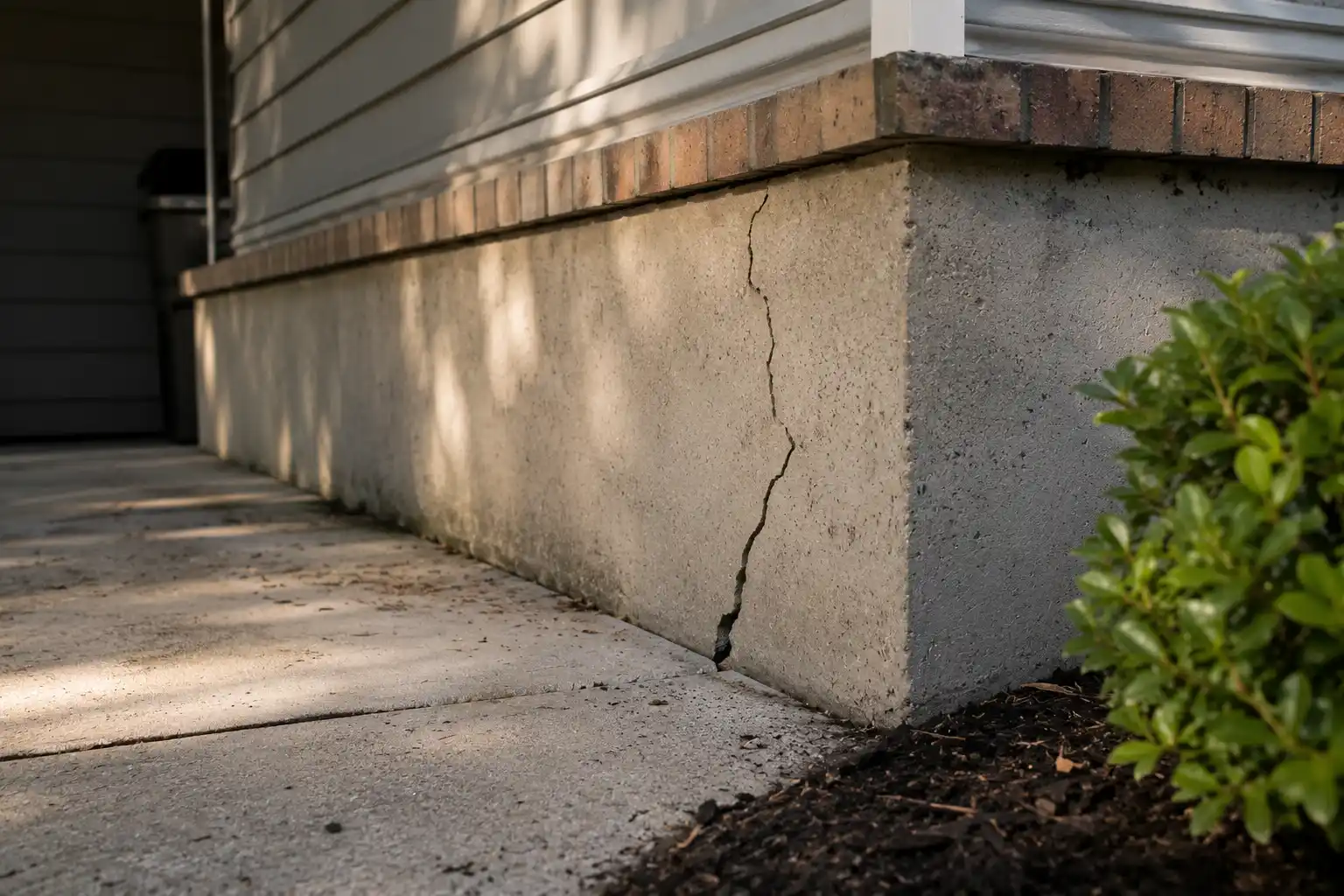
5. Cracks in Exterior Brick or Stucco
Exterior cracks are often more serious than interior drywall cracks.
Watch for:
- stair-step cracks in brick
- separation near windows
- horizontal foundation cracks
- widening mortar gaps
These symptoms may indicate:
- slab movement
- foundation settlement
- soil expansion underneath the home
Louisiana’s wet-dry soil cycles are especially hard on brick homes because moisture changes continuously shift the ground below the structure.
Hairline Crack vs Structural Crack
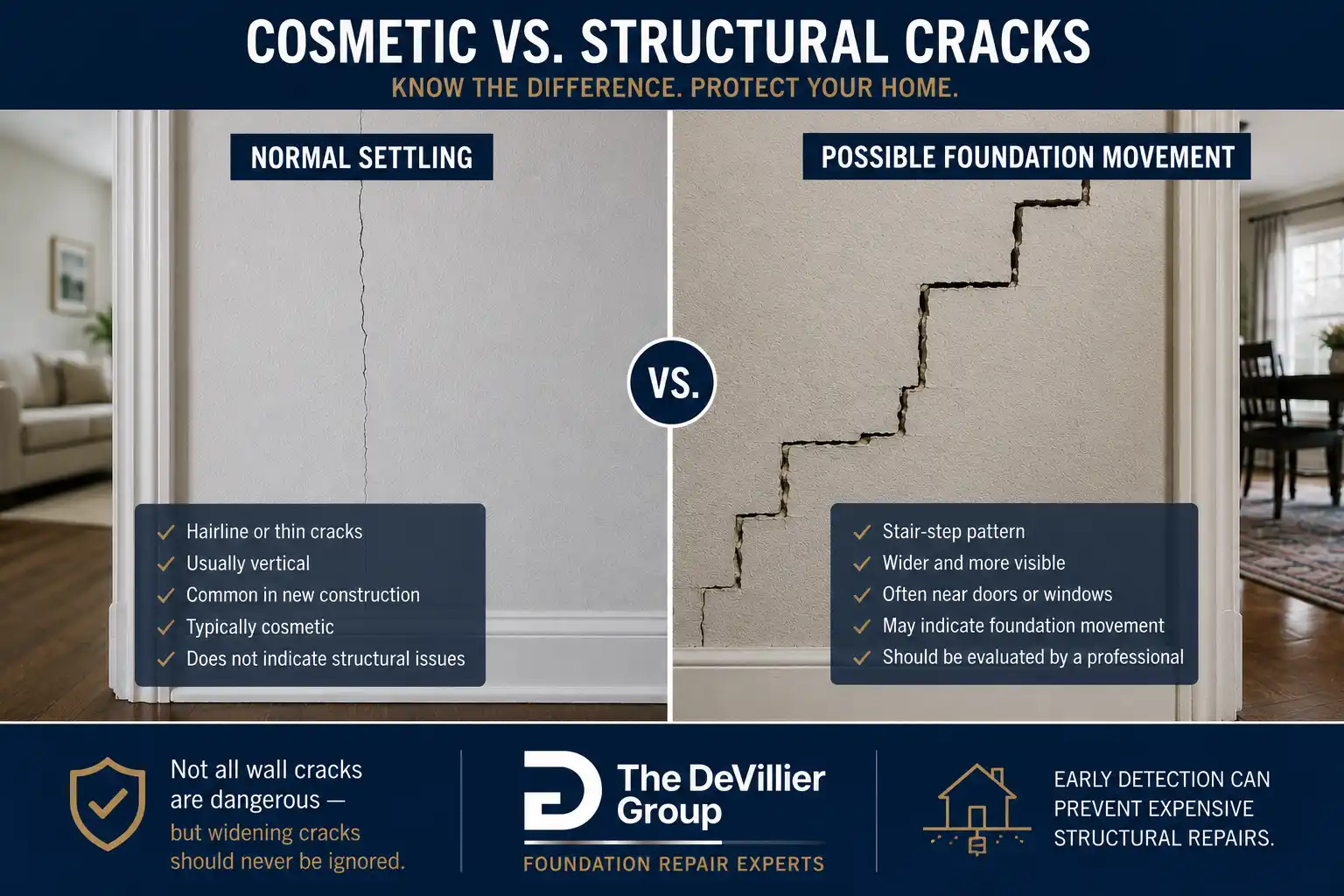
Usually Cosmetic:
- Thin vertical cracks
- Small isolated mortar cracks
- Non-growing surface lines
Potential Structural Concern:
- Stair-step cracking
- Horizontal cracks
- Widening gaps
- Multiple crack patterns
6. Cabinets Pulling Away From Walls
This is a surprisingly common sign of structural movement.
When walls begin shifting, cabinets and countertops may separate from their mounting surfaces. Homeowners may notice:
- gaps behind cabinets
- separated backsplashes
- countertops tilting slightly
- trim pulling apart
These problems are especially common in kitchens and bathrooms, where moisture exposure already stresses materials over time.
7. Gaps Around Windows, Doors, or Trim
Foundation movement can slowly pull sections of the house apart.
This often creates:
- gaps near crown molding
- trim separation
- visible daylight around frames
- cracked caulking
- baseboard separation
These symptoms may appear gradually, making them easy to ignore for months or years.
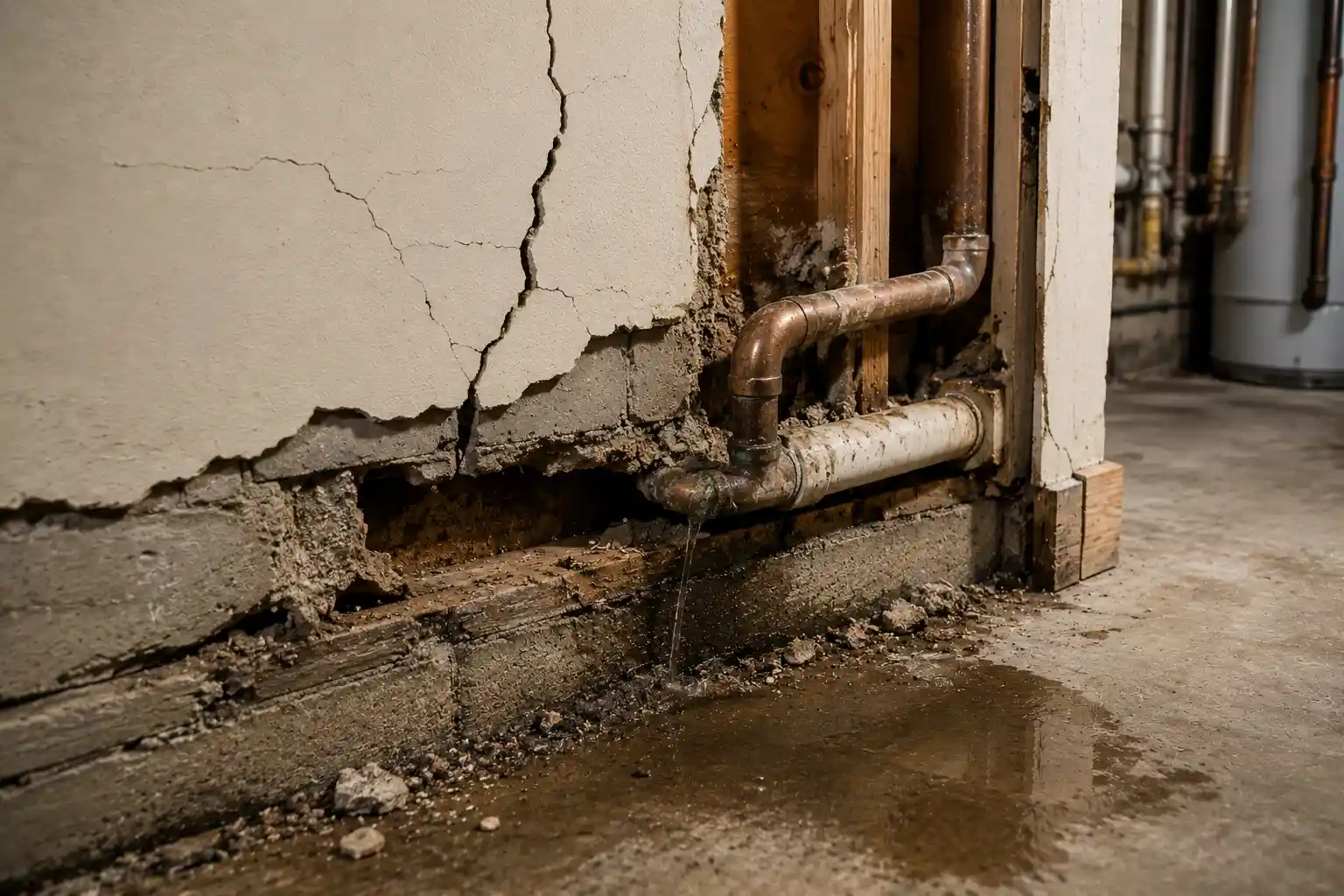
8. Water Pooling Around the Foundation
Water is one of the biggest causes of foundation problems in Louisiana.
Poor drainage allows moisture to collect around the home, which can:
- soften soil
- create uneven settlement
- weaken support systems
- increase slab movement
Signs of drainage-related foundation stress include:
- standing water after rain
- erosion near the slab
- muddy areas near the perimeter
- sinking sidewalks or patios
Why Louisiana Homes Are Vulnerable
Louisiana’s combination of:
- heavy rainfall
- clay-rich soil
- flooding
- humidity
- drainage challenges
creates ideal conditions for long-term foundation movement. For homeowners in Acadiana, this is a common reason for needing foundation repair in Lafayette, LA.
9. Chimney Leaning or Separating From the House
A leaning chimney is often a strong indication of foundation settlement.
Because chimneys are heavy and rigid, they react quickly when the foundation underneath begins moving unevenly.
Watch for:
- visible tilting
- separation gaps
- cracked brick joints
- leaning lines near the roof
This issue should be evaluated quickly because chimney movement can become a safety hazard over time.
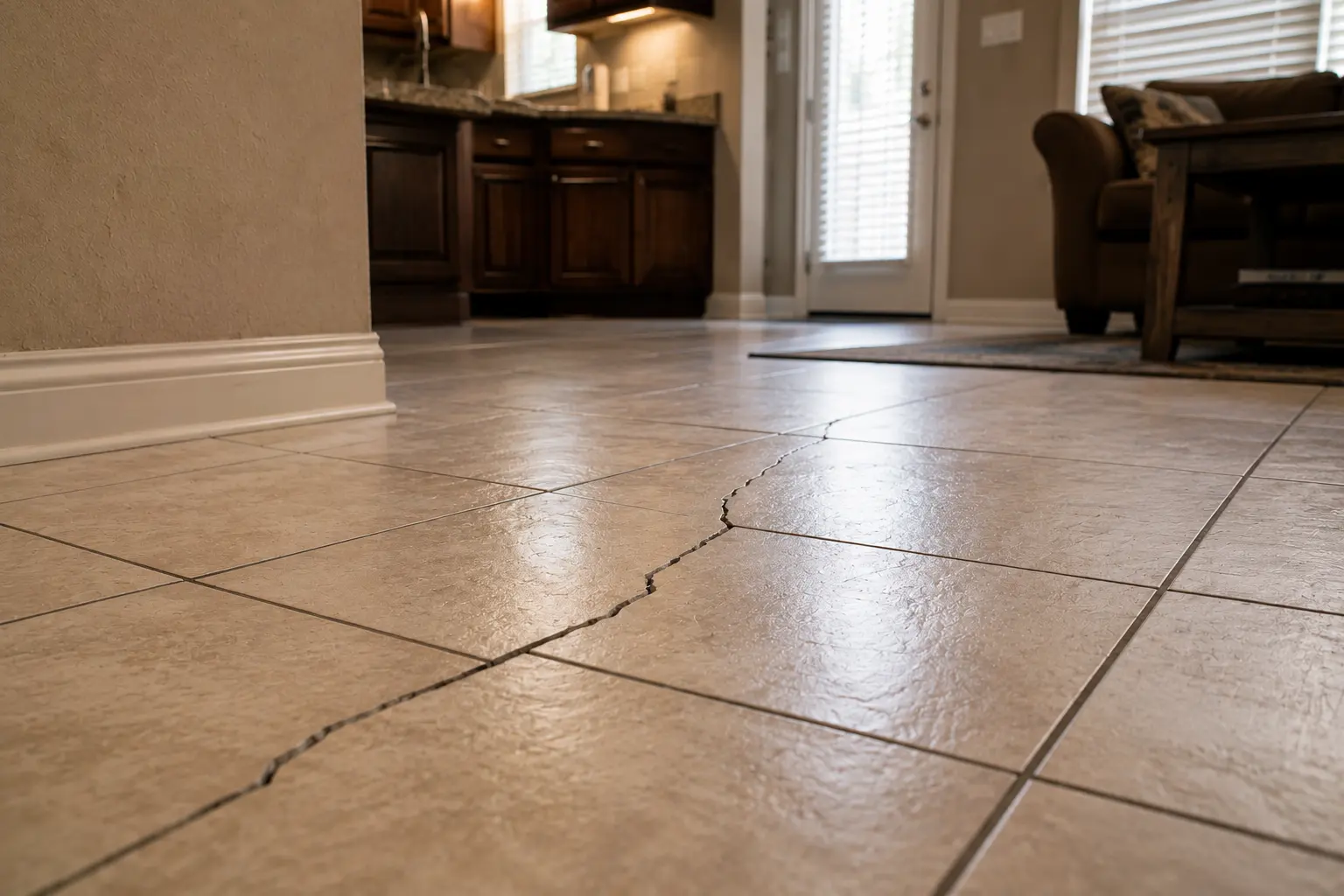
10. Foundation Cracks in the Slab
Visible cracks in the concrete foundation itself should never be ignored.
Some shrinkage cracking is normal, especially in newer slabs. But larger structural cracks may indicate:
- uneven settlement
- hydrostatic pressure
- soil movement
- structural stress
Which Foundation Cracks Are Serious?
Potential warning signs include:
- horizontal cracks
- widening cracks
- water seepage
- displacement between slab sections
11. Your Home Feels Like It’s “Shifting.”
Many homeowners describe foundation problems before they even see visible damage.
Common descriptions include:
- “Something feels off.”
- “The house feels uneven.”
- “The floor moves differently.”
- “The walls creak more than before.”
Trusting those early observations matters. Structural movement often starts subtly before major visible symptoms appear.
12. Problems Get Worse After Heavy Rain
In Louisiana, rainfall patterns often reveal hidden foundation problems.
After storms or long wet periods, you may notice:
- larger wall cracks
- doors sticking more
- floor movement increasing
- new separation around trim
This happens because saturated soil expands and shifts underneath the structure.
Homes with poor drainage or unstable soil conditions are especially vulnerable.
What Causes Foundation Problems in Louisiana?
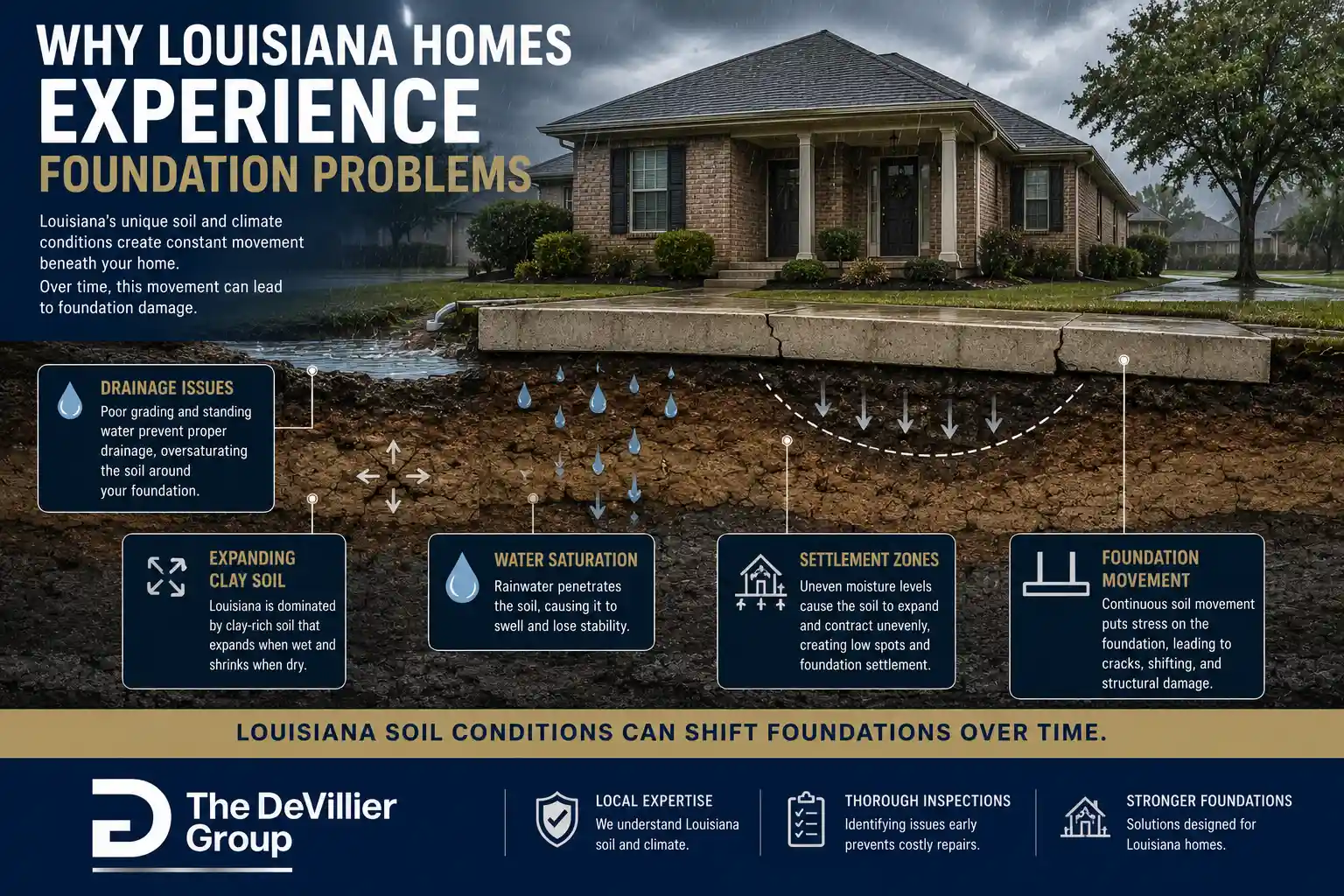
Foundation damage in Louisiana is often linked to environmental conditions unique to the region.
Common Causes Include:
Expanding Clay Soil
Clay absorbs water and swells during wet periods, then shrinks during droughts. This constant movement stresses the foundation over time.
Flooding and Poor Drainage
Standing water weakens soil stability and increases settlement risk.
Tree Roots
Large root systems can pull moisture unevenly from the soil around the home.
Aging Foundations
Older homes naturally experience settling over decades.
Moisture Changes
Louisiana humidity and rainfall create constant soil movement beneath slabs and piers.
When Should You Call a Foundation Repair Company?
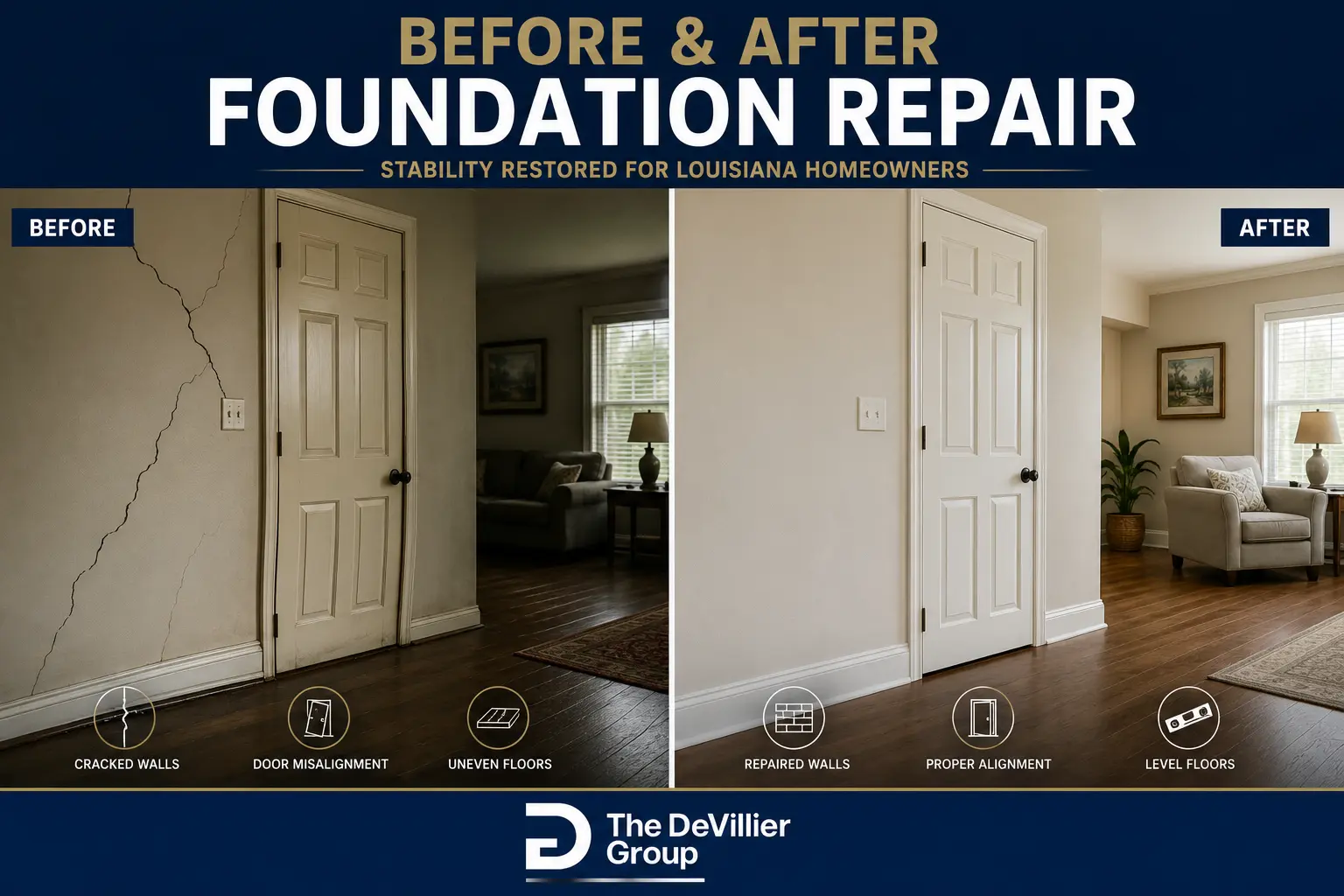
You should schedule an inspection if:
- cracks are spreading
- multiple symptoms appear together
- floors feel unstable
- doors and windows stop functioning normally
- water drainage issues are worsening
- the home visibly shifts over time
Early repairs are almost always less expensive than waiting until major structural damage develops. To schedule a professional evaluation, contact The Devillier Group.
How Much Does Foundation Repair Cost in Louisiana?
Foundation repair costs vary depending on:
- severity of movement
- foundation type
- repair method
- accessibility
- soil conditions
Minor repairs may cost a few hundred dollars, while major stabilization or leveling projects can reach several thousand dollars.
Common repair methods include:
- slab leveling
- pier installation
- drainage correction
- beam replacement
- structural stabilization
The earlier the issues are identified, the more affordable the repairs usually become. For a detailed breakdown, read our guide to foundation repair costs in Louisiana (2026).
You may also want to know whether foundation repair is covered by insurance in Louisiana.
Final Thoughts
Foundation problems rarely fix themselves.
The earlier you catch warning signs like wall cracks, uneven floors, sticking doors, or slab movement, the easier it becomes to protect your home from larger structural damage.
In Louisiana, environmental conditions make foundation movement more common than many homeowners realize. Paying attention to early symptoms can help you avoid costly repairs later and keep your home safe, stable, and structurally sound for years to come.
If you’ve noticed multiple warning signs in your home, a professional inspection from The Devillier Group can help determine whether the issue is cosmetic settling or a deeper structural concern.
FAQs
What are the first signs of foundation problems?
Early signs of foundation problems include wall cracks, uneven floors, sticking doors, window alignment issues, and gaps around trim or cabinets.
Are cracks in walls always caused by foundation problems?
Not always. Small hairline cracks can occur from normal settling, but widening cracks, stair-step cracks, or recurring cracks may indicate foundation movement.
Why are foundation problems common in Louisiana?
Louisiana homes are exposed to shifting clay soil, flooding, heavy rainfall, and high humidity, all of which can cause soil movement beneath foundations.
Can uneven floors mean foundation damage?
Yes. Uneven or sloping floors can be caused by settling foundations, weak support systems, or shifting soil underneath the home.
How much does foundation repair cost in Louisiana?
Foundation repair costs vary based on severity and repair type. Minor repairs may cost a few hundred dollars, while major leveling or stabilization projects can cost several thousand dollars.