
Foundation problems often start with cracks in walls, uneven floors, or sticking doors and windows. These signs may indicate foundation movement caused by soil settlement or moisture changes and should be addressed before the damage worsens.
The DeVillier Group provides professional foundation repair services throughout Lafayette and the Acadiana region. With over 30 years of experience, we evaluate each property and recommend the right repair solution, including concrete, steel, or helical piles, to restore long-term stability.
Foundation repair and house leveling address different structural issues. Foundation repair stabilizes a settling foundation, while house leveling corrects uneven floors and restores your home’s alignment.
The right solution depends on several factors, including:A professional foundation inspection helps identify the underlying problem and determine the most effective repair solution for long-term stability.
Foundation movement typically occurs when different sections of a structure are no longer receiving consistent support. Conditions vary from one property to another, but several factors may contribute to foundation problems in and around Lafayette, including:
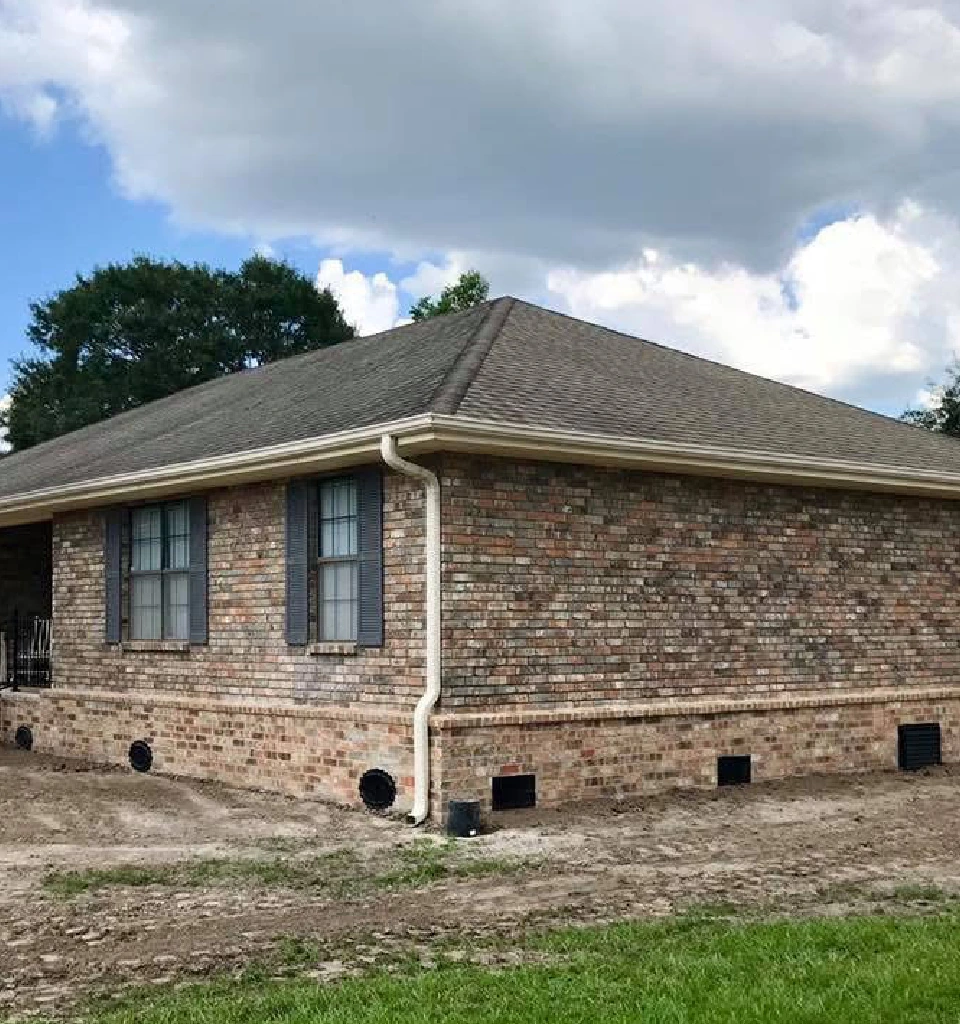
Concrete slab foundations may settle as soil shifts. Repairs often involve installing concrete, steel, or helical piles for long-term stability.
Movement can occur due to settling piers, weakened supports, or changing soil conditions. Repairs may include stabilization, reinforcement, or house leveling.
Homes with additions may have multiple foundation types. The DeVillier Group evaluates the entire structure to recommend the most appropriate repair solution.
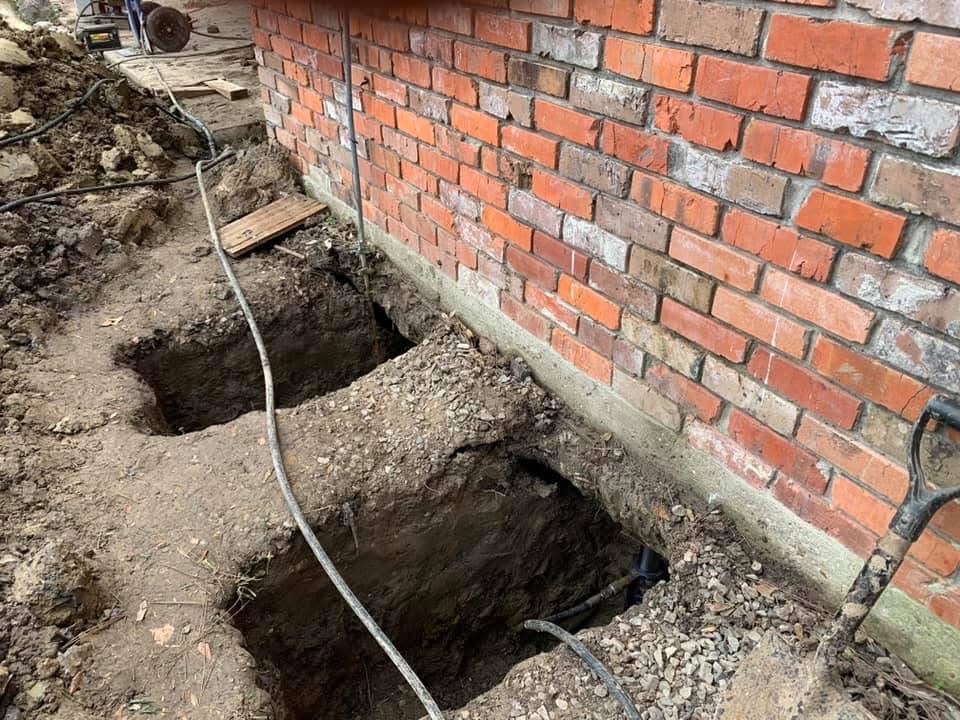
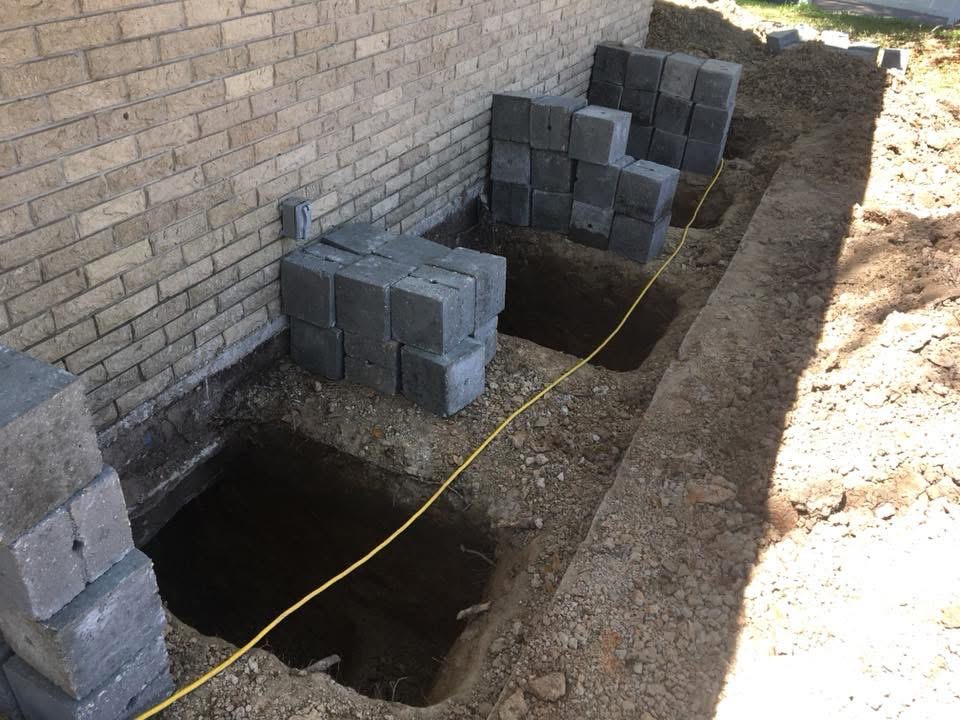
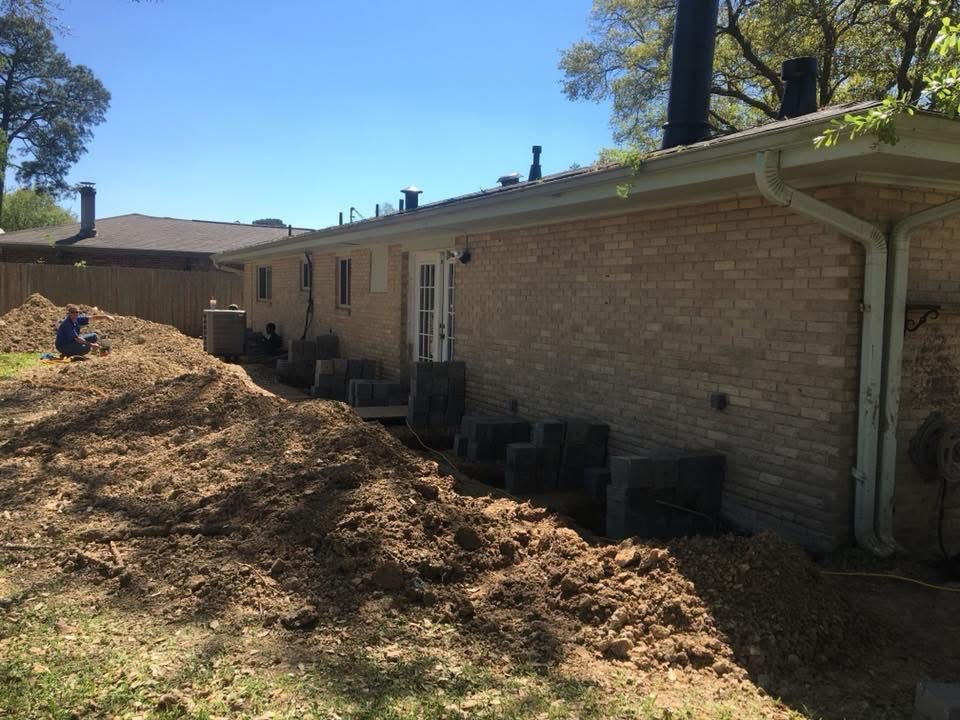
The DeVillier Group develops a repair plan based on the structure, site conditions, and areas requiring additional support. We install concrete, steel, or helical piles when appropriate.
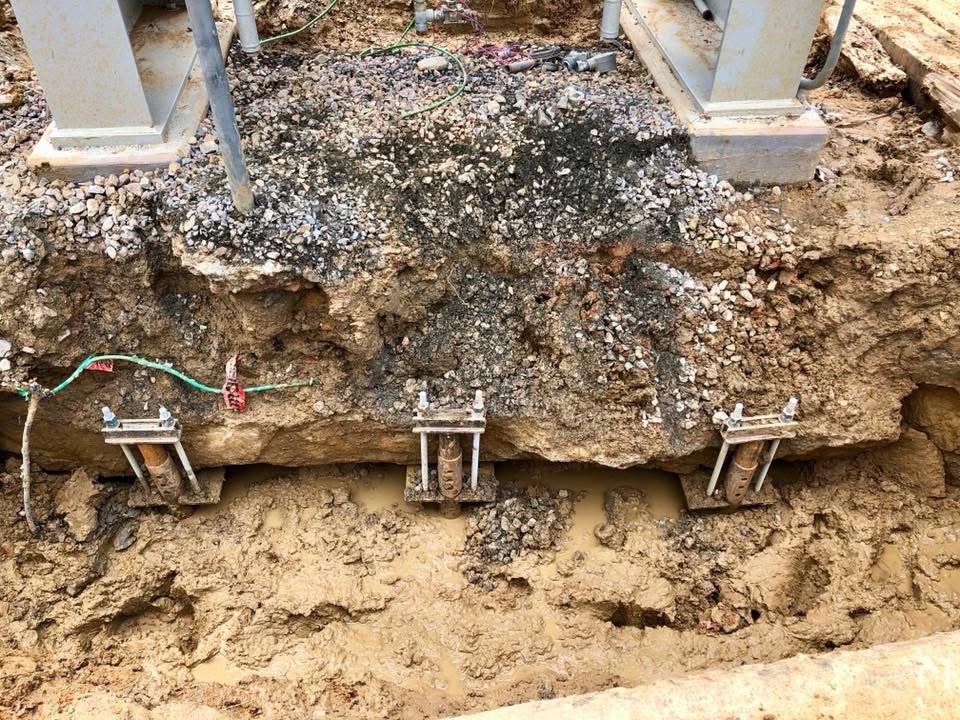
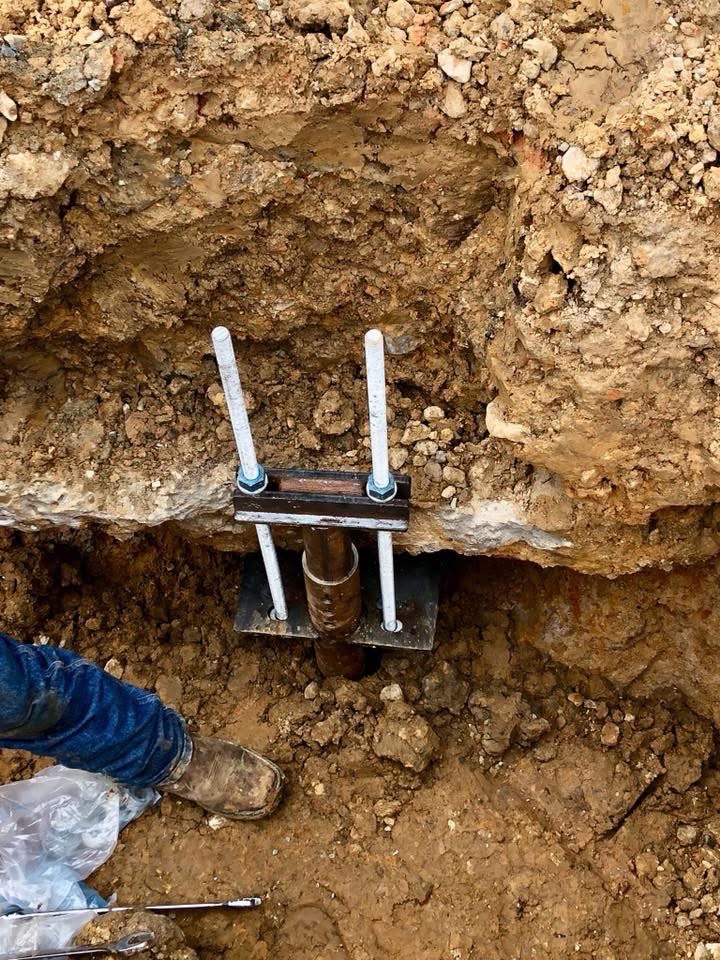
Concrete piles may be installed beneath affected sections of the foundation to provide support below unstable or insufficient surface soils. Whether concrete piles are appropriate depends on the foundation, structural loads, access, and conditions identified during the evaluation.
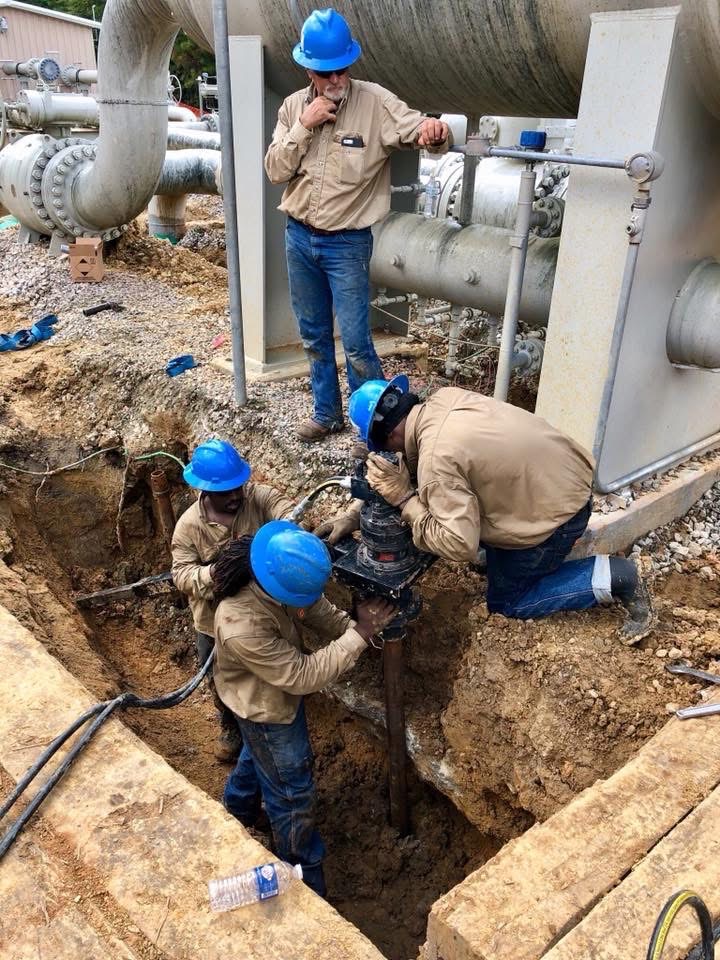
Steel piles can provide deeper structural support where the repair design requires additional capacity or greater installation depths. They are installed until the required resistance or support criteria for the project are reached. This does not necessarily mean every steel pile must reach bedrock.
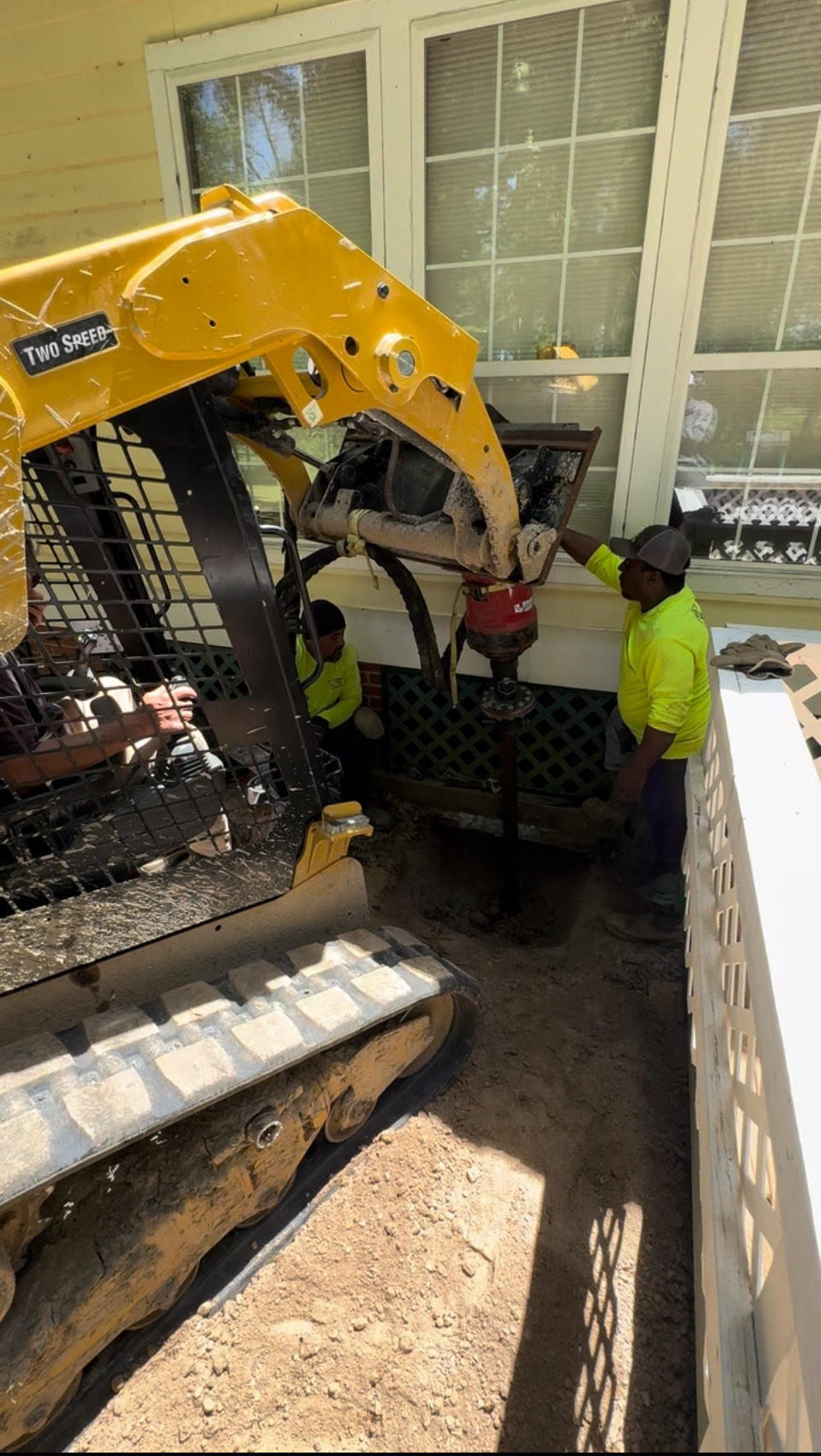
Helical piles are steel foundation elements with helical plates that are rotated into the soil. They may be recommended where access, structural requirements, or site conditions make them an appropriate solution. They can be used for existing structures as well as certain additions, porches, or other supported areas.
Some pier-and-beam structures may also require repair or replacement of deteriorated supports, installation of additional support points, or adjustments made as part of a leveling plan. No pile type is automatically best for every home. The recommended method should be based on the structure and conditions found at the property.
We follow a structured, transparent process on every Lafayette foundation repair project,
from the first phone call to the final walkthrough.

We begin by discussing the changes you have noticed, how long they have been present, and whether they appear to be getting worse. Information about previous foundation work, flooding, drainage problems, plumbing leaks, or additions can help the team understand the property's history.

Our team performs a thorough inspection of your foundation and structure, evaluating cracks, floor elevation, door and window operation, and drainage. This evaluation helps identify the cause of the movement and the areas that require support.

After evaluating the structure, The DeVillier Group develops a repair plan tailored to the property. The team explains the recommended repair system, the areas that require support, the expected project scope, and pricing.

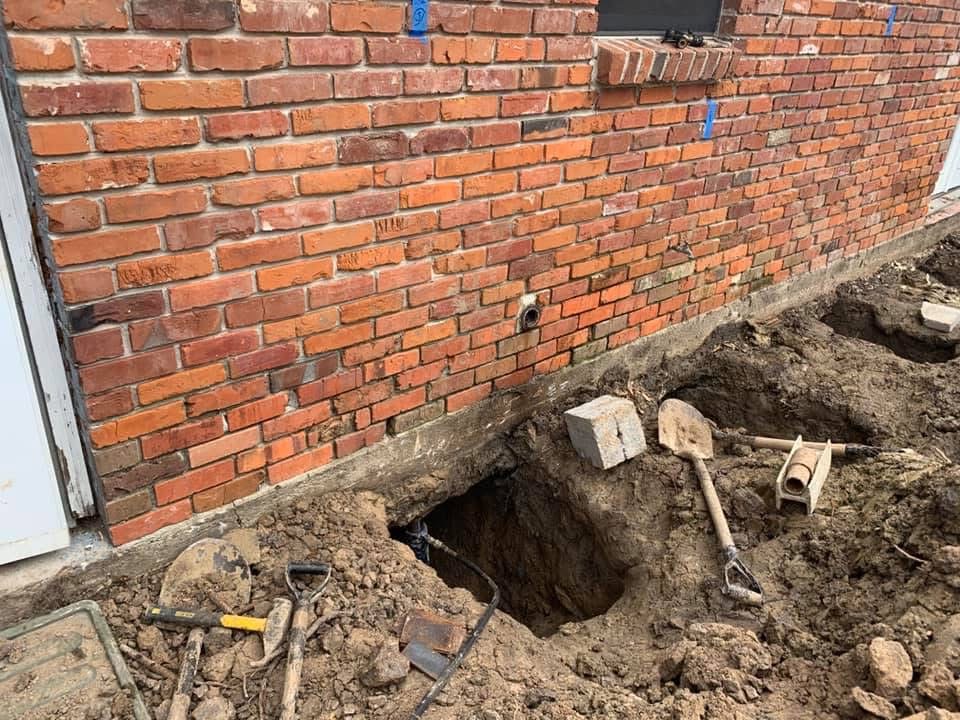
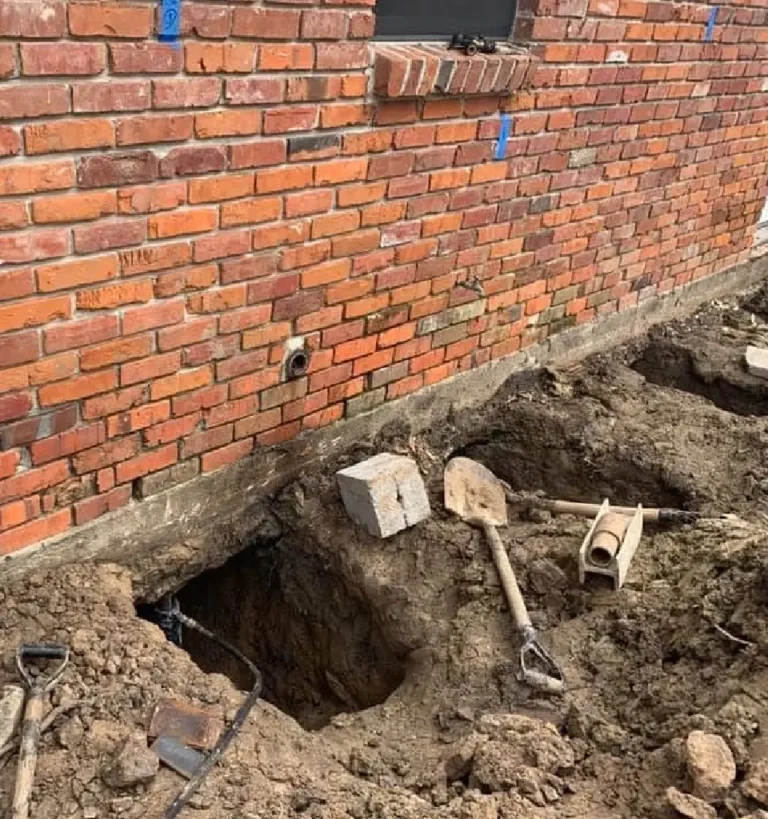
Before repairs begin, our crew prepares the work area and establishes safe access to the affected portions of the foundation. The preparation process varies depending on the foundation type, pile system, and location of the repair.

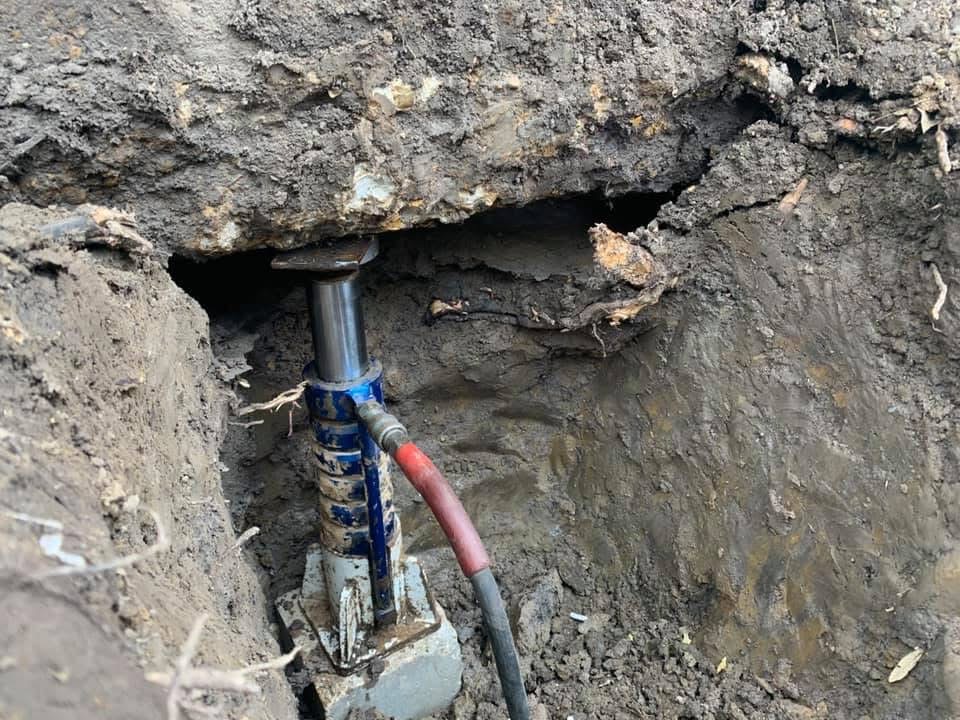
The selected piles or supports are installed according to the approved repair plan. If structural lifting is included, adjustments are made gradually using professional hydraulic equipment. The objective is to restore reliable foundation support while protecting the structure.

After the repair system is installed, we verify that the work has been completed according to the project plan, secure the repaired areas, and clean the worksite. We then review the completed work with you and discuss any recommended cosmetic repairs, such as drywall, flooring, or tile repairs, that may be needed after the foundation has been stabilized.
A well-designed foundation repair can:
• Restore support beneath affected portions of a structure
• Help reduce continued movement in repaired areas
• Improve certain floor-level differences
• Help doors and windows operate more normally
• Reduce stress on unsupported foundation sections
• Protect the home from additional damage caused by ongoing settlement
However, foundation repair does not automatically make every part of an older home perfectly level or eliminate all existing damage.
Results can depend on:
• How long the structure has been moving
• The condition of the framing and building materials
• The extent of previous damage
• Original construction tolerances
• Whether the repair includes lifting
• How the structure responds during adjustment
• Continuing drainage, plumbing or moisture problems
Cracked drywall, masonry, flooring, or trim may require separate repairs after the foundation work is complete. This is why the project proposal should clearly explain whether the scope includes stabilization only or also includes structural lifting and leveling.
Not every crack is an emergency, but visible changes should not be ignored if they continue to worsen or appear in several parts of the home.
A timely evaluation can help you:
• Determine whether movement appears active
• Identify drainage or moisture conditions that may be contributing
• Understand which part of the foundation is affected
• Compare repair options before damage becomes more extensive
• Plan cosmetic renovations after structural concerns have been addressed
•Make informed decisions before buying or selling a property
Waiting does not always mean the repair will become significantly larger, but continued movement can affect additional parts of the structure. The safest approach is to have any concerning changes professionally evaluated rather than relying on appearance alone.
Foundation repair costs vary because every structure and repair plan is different.
The estimate may be affected by:
A localized repair involving a limited section of the foundation may have a very different cost than a project involving several sides of the home or a combination of stabilization and leveling.
For that reason, The DeVillier Group provides estimates after evaluating the property rather than advertising a fixed price that may not apply to your structure. We also provide a no-cost initial assessment and free estimate for foundation repair and other structural services.
Structural concerns should generally be evaluated before completing cosmetic work that may be affected by continued movement.
New drywall, flooring, tile, cabinets, or paint may crack or shift again if the underlying foundation problem has not been addressed.
Before beginning a major renovation, consider obtaining a foundation evaluation if the property has:
• Uneven floors or recurring wall cracks
• Doors that no longer align
• Visible foundation movement
• A history of previous foundation repairs
Once the foundation work is complete, your renovation contractor can assess and complete the remaining cosmetic repairs.
Foundation issues do not automatically mean a home cannot be bought or sold. However, buyers and sellers should understand the condition, recommended repairs, and available documentation.
A foundation evaluation may help clarify:
• Whether visible symptoms indicate structural movement
• Which areas require support
• What repair method is proposed and estimated cost
• Whether leveling is included
• Whether previous repairs are visible
• What work may remain after stabilization
A contractor’s evaluation is not the same as a real estate inspection, appraisal, or engineering report. Depending on the transaction and the nature of the concerns, additional review by a qualified home inspector or structural engineer may be appropriate.
More Than 30 Years of Structural Experience: The DeVillier Group has more than three decades of experience lifting, leveling, moving, and repairing structures across Louisiana.
Customized Repair Plans: Every property is carefully evaluated to develop a repair plan based on its specific foundation issues rather than applying the same repair method to every property.
Multiple Foundation-Support Options: Depending on the property’s needs, our team installs concrete, steel, or helical piles to provide reliable, long-term foundation support.
Experience Beyond Foundation Repair: In addition to foundation repair, we provide house leveling, home elevation, and structure moving, bringing extensive experience in structural support and stabilization.
Professional Hydraulic Equipment: We use specialized hydraulic lifting and leveling equipment to complete structural repairs with precision and care.
Based Near Lafayette: Based in Eunice, The DeVillier Group proudly serves homeowners and businesses throughout Louisiana, including Lafayette and the surrounding areas.
Review examples of foundation repair projects completed by The DeVillier Group. Each property required a repair plan based on its foundation type, damage pattern, and support conditions.
From its Eunice location, The DeVillier Group serves Lafayette and surrounding Acadiana communities, including:


Project availability depends on the location, structure, and scope of work.
Don’t see your community listed? Call 337-546-0255 to discuss your property and confirm service availability.
Call 337-546-0255 today to request your free foundation repair estimate.
The location, direction, width, and progression of the crack all matter. A single small crack may be cosmetic, while cracks combined with uneven floors, sticking doors, or exterior separation may indicate foundation movement. An on-site evaluation is the best way to assess the complete pattern.
No. Concrete, drywall, and masonry can develop cracks for reasons that do not require structural foundation repair. Repair is generally recommended when an evaluation indicates inadequate support, damaging settlement, or movement that should be stabilized.
Foundation repair restores or adds support beneath a foundation. House leveling adjusts the elevation of parts of the structure. Some projects require stabilization only, while others combine foundation repair with lifting or leveling.
There is no single pile system that is best for every property. Concrete, steel, and helical piles have different applications. The suitable system depends on the foundation, structural load, supporting soil, access, and repair design.
Many slab-foundation problems can be repaired by adding support beneath affected areas. The appropriate repair method must be determined after inspecting the structure and evaluating the settlement pattern.
The DeVillier Group works with pier-and-beam structures through its foundation repair and house-leveling services. The project may involve stabilizing supports, reinforcing foundation components, leveling the structure, or combining several types of work.
Some cracks may narrow when lifting is included, but complete closure cannot be guaranteed. Existing drywall, brick, tile, and trim damage may still require separate cosmetic repairs.
Not necessarily. The achievable adjustment depends on the home’s age, framing, previous movement, and structural condition. The goal may be stabilization, improvement, or both, as defined in the proposal.
The timeline depends on the size of the repair, number and type of piles, access conditions, foundation type, and whether lifting or additional structural work is required. A project-specific timeline can be provided after the evaluation.
Many projects can be performed while the property is occupied, but this depends on the repair scope, access, and safety requirements. The team should explain what applies before work begins.
Yes, when drainage or water accumulation is contributing to changing soil conditions. Foundation repair can address structural settlement, but gutters, grading, plumbing leaks, or drainage problems may also require separate repairs or corrective measures.
The cost depends on the affected area, foundation type, selected support system, number of piles, access, and whether lifting is included. An inspection is necessary to provide an accurate estimate.
Yes. The DeVillier Group is based in Eunice and provides structural services across Louisiana. Contact us to confirm service availability for your location.