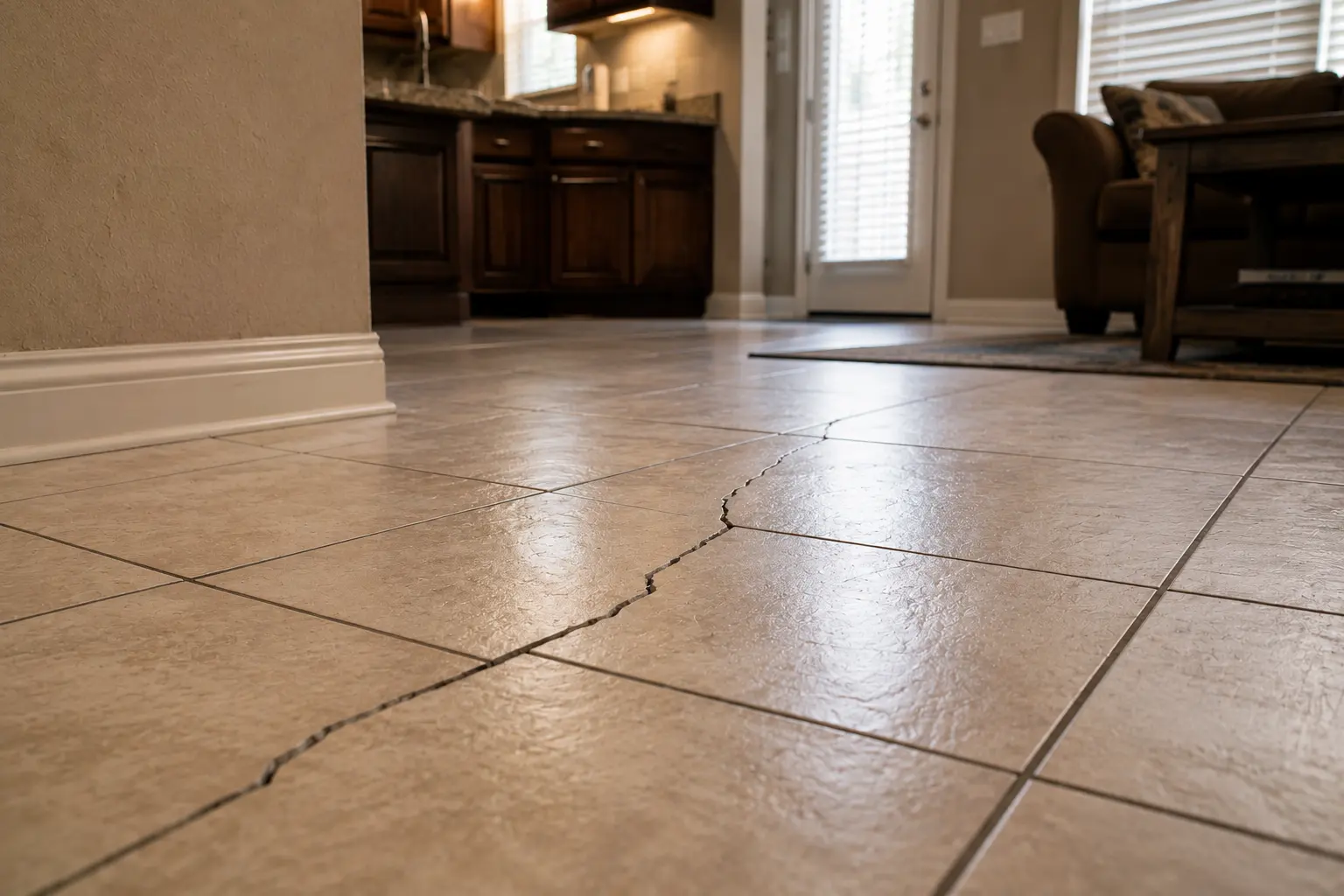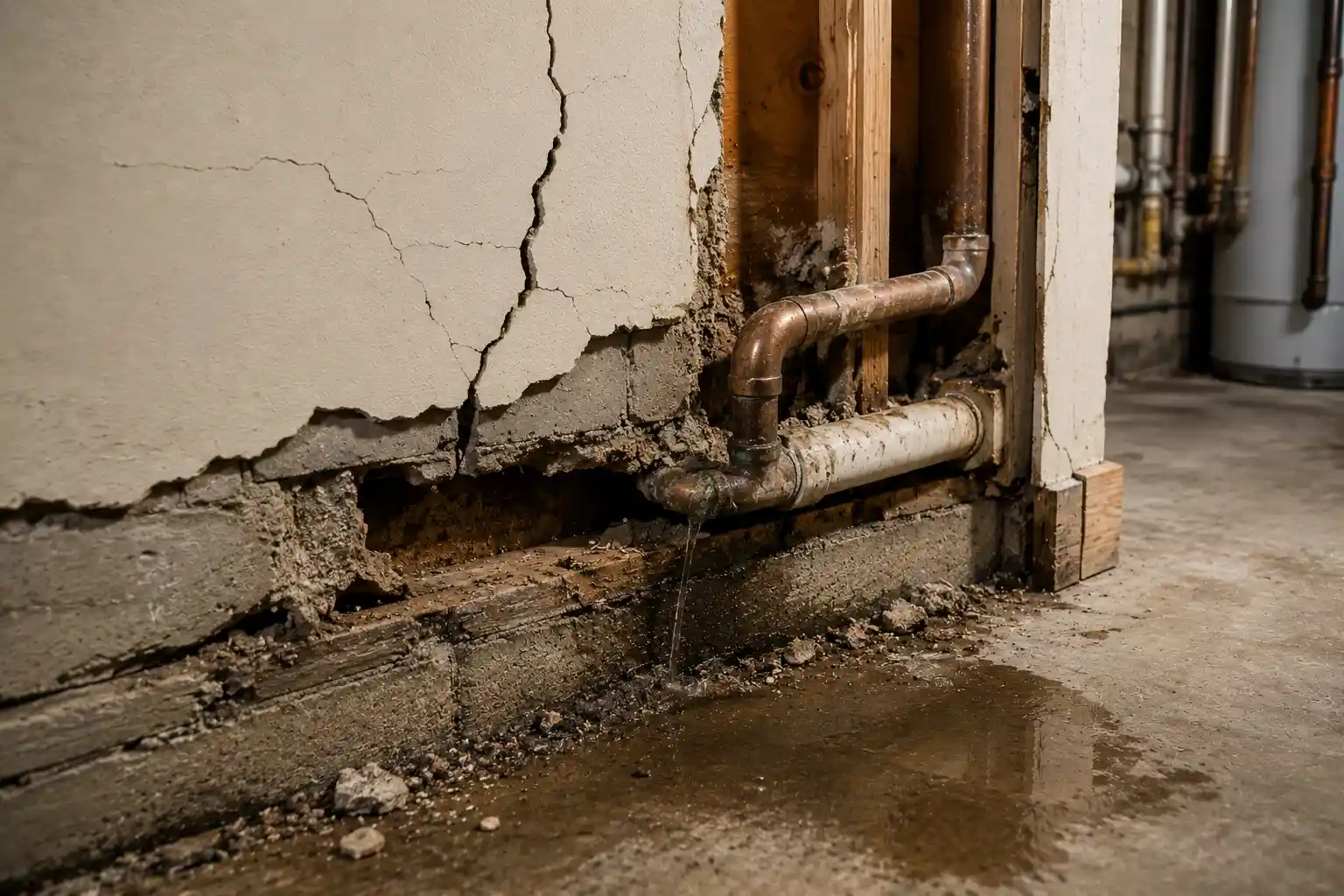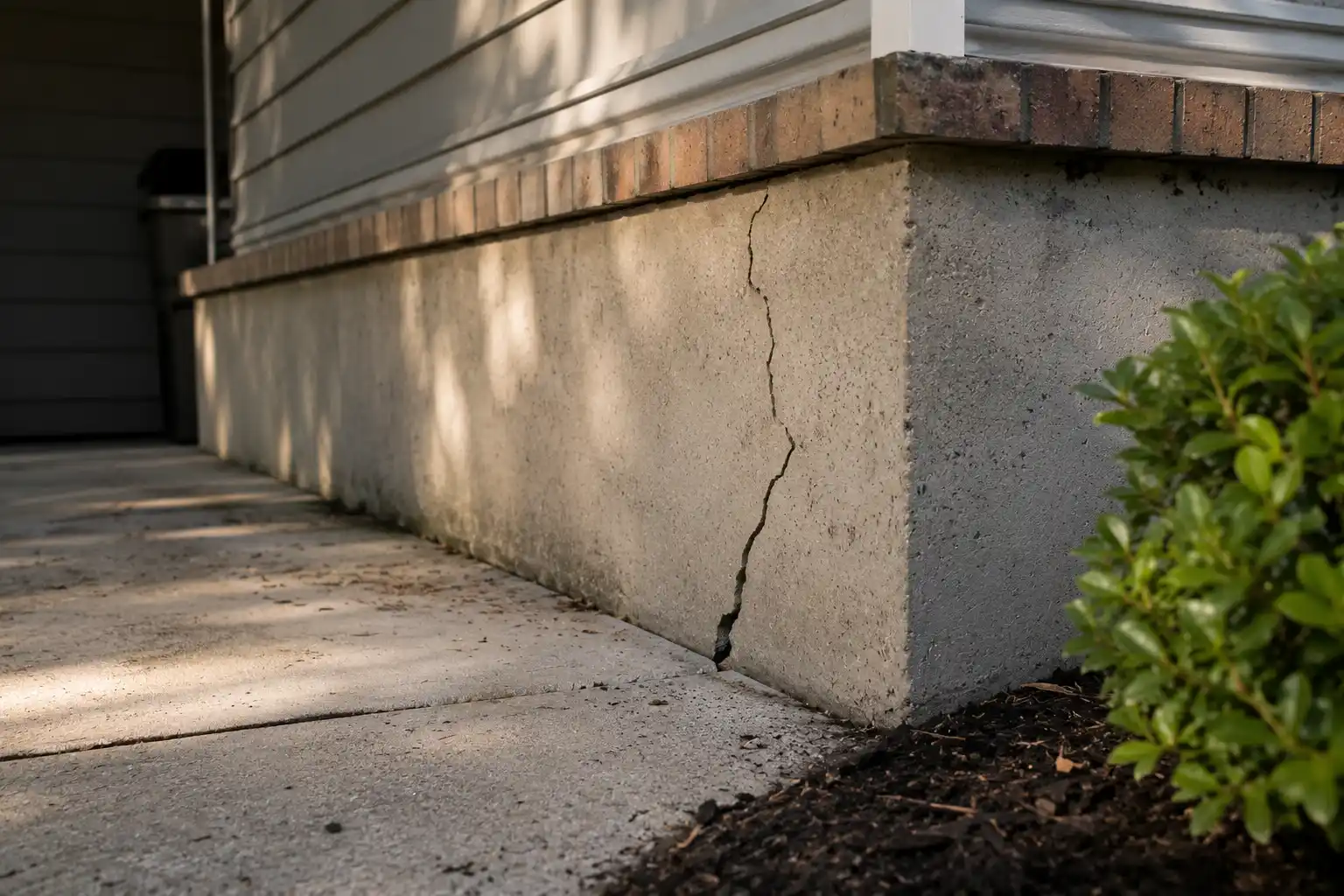
Finding a crack in your foundation can be alarming.
For many homeowners, it starts with a small line in the concrete. Maybe you notice it while mowing the lawn, cleaning the garage, or walking around the exterior of your home.
The first question is usually:
“Is this normal, or should I be worried?”
The answer depends on several factors.
Some foundation cracks are harmless and develop naturally as concrete cures and settles. Others may be early warning signs of foundation movement, soil instability, or structural settlement beneath the home.
In Louisiana, where foundations constantly deal with:
- expanding clay soil,
- heavy rainfall,
- flooding,
- and moisture fluctuations,
even small cracks deserve attention.
Here’s how to tell whether a foundation crack is likely cosmetic or a sign of something more serious.
Are Small Foundation Cracks Normal?
Sometimes, yes.
Concrete naturally develops small cracks over time.
This is because concrete:
- shrinks as it cures,
- expands and contracts with temperature changes,
- and experiences minor settling throughout its lifespan.
Many homes develop small hairline cracks that never create structural problems.
The challenge is identifying which cracks are harmless and which ones signal active movement.
What Causes Foundation Cracks?
Foundation cracks can develop for several reasons.
Common causes include:
- Normal Concrete Shrinkage: As concrete cures, minor cracking may occur naturally.
- Soil Movement: Louisiana’s clay-heavy soil expands and contracts constantly with moisture changes, which is one of the primary reasons houses sink in Louisiana.
- Foundation Settlement: Uneven settlement places stress on the foundation and surrounding structure.
- Poor Drainage: Water accumulation around the home can weaken soil support beneath the foundation.
- Flooding: Flood conditions may alter soil stability and contribute to structural movement.
1. Hairline Cracks Usually Aren't an Emergency
Hairline cracks are often among the least concerning foundation cracks.
These cracks are:
- very thin,
- narrow,
- and typically less than 1/8 inch wide.
Hairline cracks often occur because of:
curing shrinkage,
minor settling,
or normal material movement.
Signs a Hairline Crack Is Likely Cosmetic
- very narrow width
- no visible displacement
- stable over time
- no accompanying structural symptoms
Even cosmetic cracks should be monitored periodically.
2. Wider Cracks Deserve More Attention
As cracks become wider, the likelihood of active movement increases.
A crack that continues growing may indicate:
- ongoing settlement
- soil instability
- structural stress
- foundation shifting
General Rule:
The wider the crack becomes, the more important it is to determine whether movement is still active.
3. Horizontal Cracks Are Often More Concerning
Crack direction matters.
Vertical cracks are often less serious than horizontal cracks.
- soil pressure,
- foundation wall stress,
- bowing,
- or structural movement.
These cracks often deserve professional evaluation.
4. Cracks With Visible Separation May Signal Movement
A crack becomes more concerning when one side no longer aligns with the other.
This is called displacement.
Signs include:
- uneven concrete surfaces
- shifting edges
- visible movement between sections
Displacement often indicates active structural movement rather than simple shrinkage.
5. Water Seeping Through the Crack
Even a small crack can create problems if moisture enters the structure.
Water intrusion may lead to:
- mold growth
- moisture damage
- soil instability
- worsening structural conditions
In some cases, homeowners may mistake moisture-related issues for structural problems, which is why it’s important to understand whether water damage can look like foundation damage before assuming the cause of the crack.
6. Multiple Cracks Appearing Together
One small crack may not be concerning.
Several cracks appearing throughout the foundation often deserve closer attention.
Especially if you also notice:
- wall cracks
- sticking doors
- uneven floors
- brick separation
Multiple symptoms often indicate broader structural movement.
7. Cracks That Keep Getting Bigger
The most important question is:
Is the crack changing?
A stable crack is often less concerning than an active crack.
Signs of active movement include:
- widening width
- increased length
- new branching cracks
- recurring repairs
Monitoring crack progression over time can provide valuable information about foundation stability.
Warning Signs the Crack May Be Foundation Settlement
The crack itself isn’t always the biggest concern.
The surrounding symptoms often tell the real story.
Watch for:
Inside the Home
- wall cracks
- ceiling cracks
- sticking doors
- sticking windows
- uneven floors
Outside the Home
- stair-step brick cracks
- porch separation
- chimney movement
- visible settlement
The more symptoms appearing together, the more likely foundation settlement is occurring.
Why Foundation Cracks Are Common in Louisiana
Louisiana foundations experience constant environmental stress.
Expansive Clay Soil
The soil expands when wet and contracts when dry.
This repeated cycle creates movement beneath foundations.
Heavy Rainfall
Rain changes soil moisture levels and support conditions.
Flooding
Floodwater can weaken soil stability beneath structures.
Humidity
Long-term moisture exposure affects both soil and structural materials.
These factors make foundation cracking more common throughout Louisiana than many homeowners realize.
Should You Repair a Small Foundation Crack?
The answer depends on the cause.
Cosmetic Cracks
Small stable cracks may only require:
- monitoring
- sealing
- moisture protection
Structural Cracks
Active settlement-related cracks may require:
- foundation stabilization
- drainage correction
- soil management
- structural repair
In more advanced cases, professional foundation leveling services may be necessary to correct settlement and restore structural stability.
The goal is not simply filling the crack.
The goal is addressing whatever caused it.
Depending on the underlying issue, effective foundation repair may be needed to stop ongoing movement and prevent additional damage.
When Should You Call a Foundation Professional?
Consider a professional evaluation if:
- the crack widens
- multiple cracks appear
- water enters through the crack
- doors begin sticking
- floors become uneven
- wall cracks develop
- settlement symptoms increase
An inspection can determine whether the crack is simply cosmetic or part of a larger structural issue.
Final Thoughts
Not every small foundation crack is serious.
Many are harmless results of normal concrete behavior.
However, some cracks are early warning signs of foundation settlement, soil movement, or structural stress beneath the home.
Ignoring these warning signs can allow damage to spread over time, increasing both repair complexity and cost as foundation movement continues.
For Louisiana homeowners, paying attention to:
- crack size,
- crack direction,
- moisture intrusion,
- and surrounding symptoms
can help identify problems before they become more expensive to repair.
If you’re concerned about a foundation crack or other signs of settlement, If you’re concerned about a foundation crack or other signs of settlement, contact our team for a professional evaluation and personalized recommendations. for a professional evaluation and personalized recommendations.