
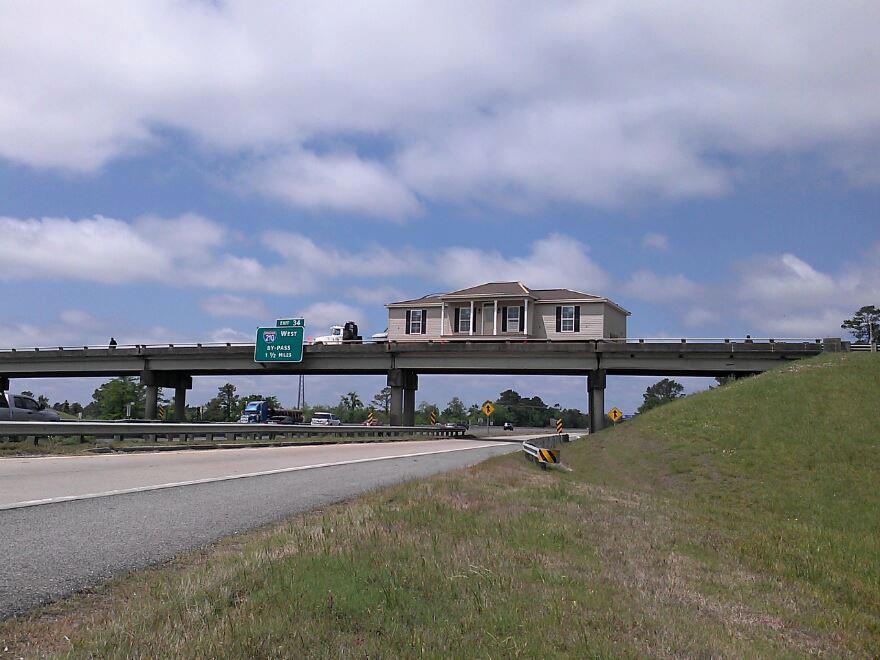
Structure Moving in Lafayette, LA

Professional House and Building Relocation Throughout Lafayette and Acadiana

The DeVillier Group provides professional structure moving services in Lafayette for homes, historic buildings, and qualifying commercial structures. Every project is carefully planned based on the building, site conditions, and relocation requirements.
With more than 30 years of experience and specialized hydraulic equipment, we safely lift, transport, reposition, and place structures throughout Acadiana.

email-icon

Call 337-546-0255 today to request a free structure-moving estimate.

What Is Structure Moving?

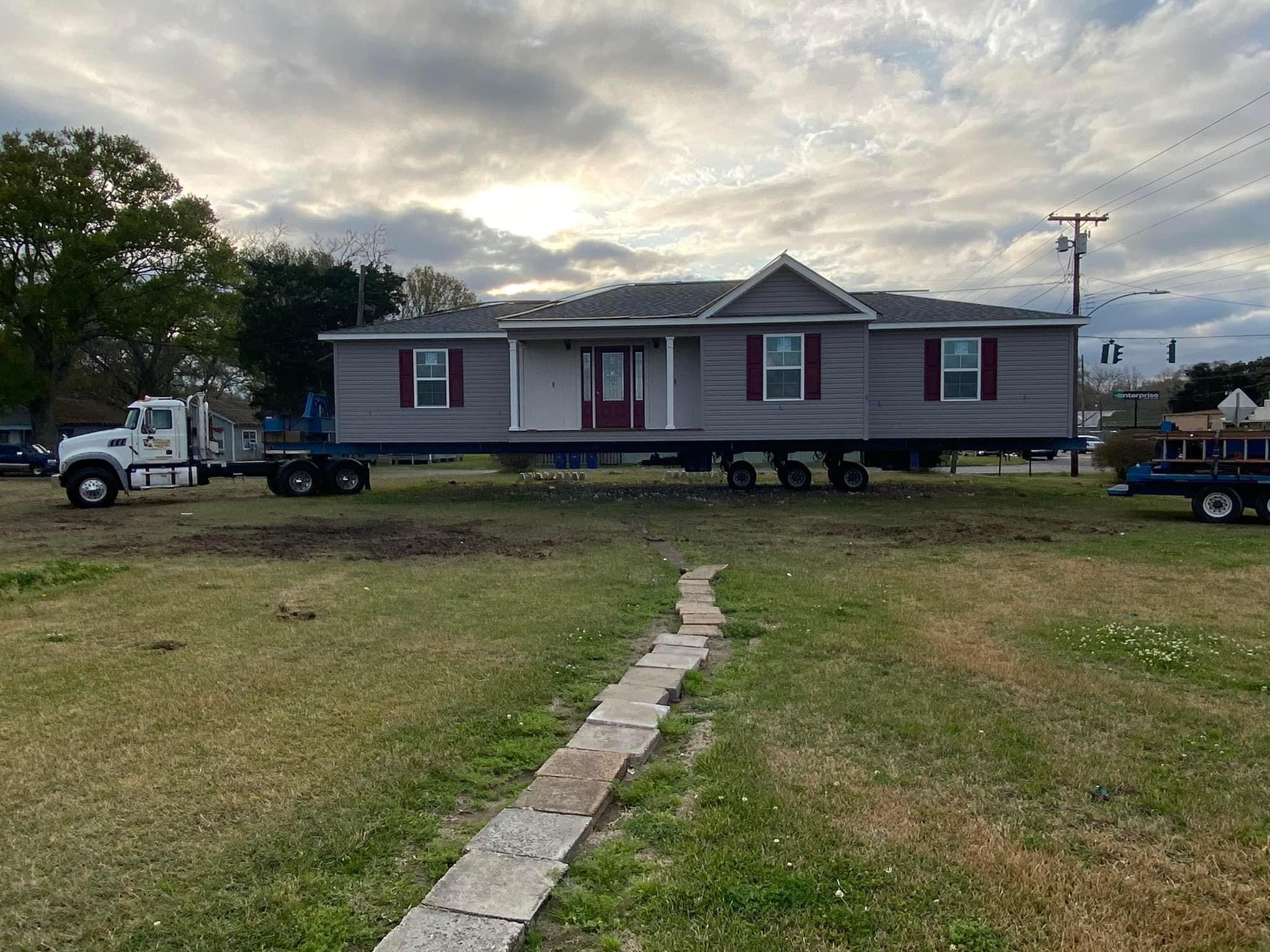
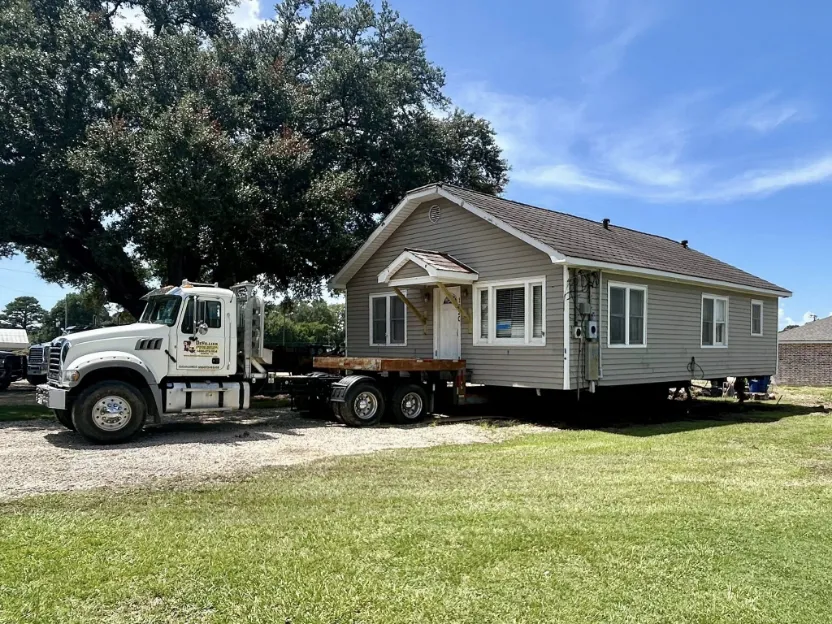
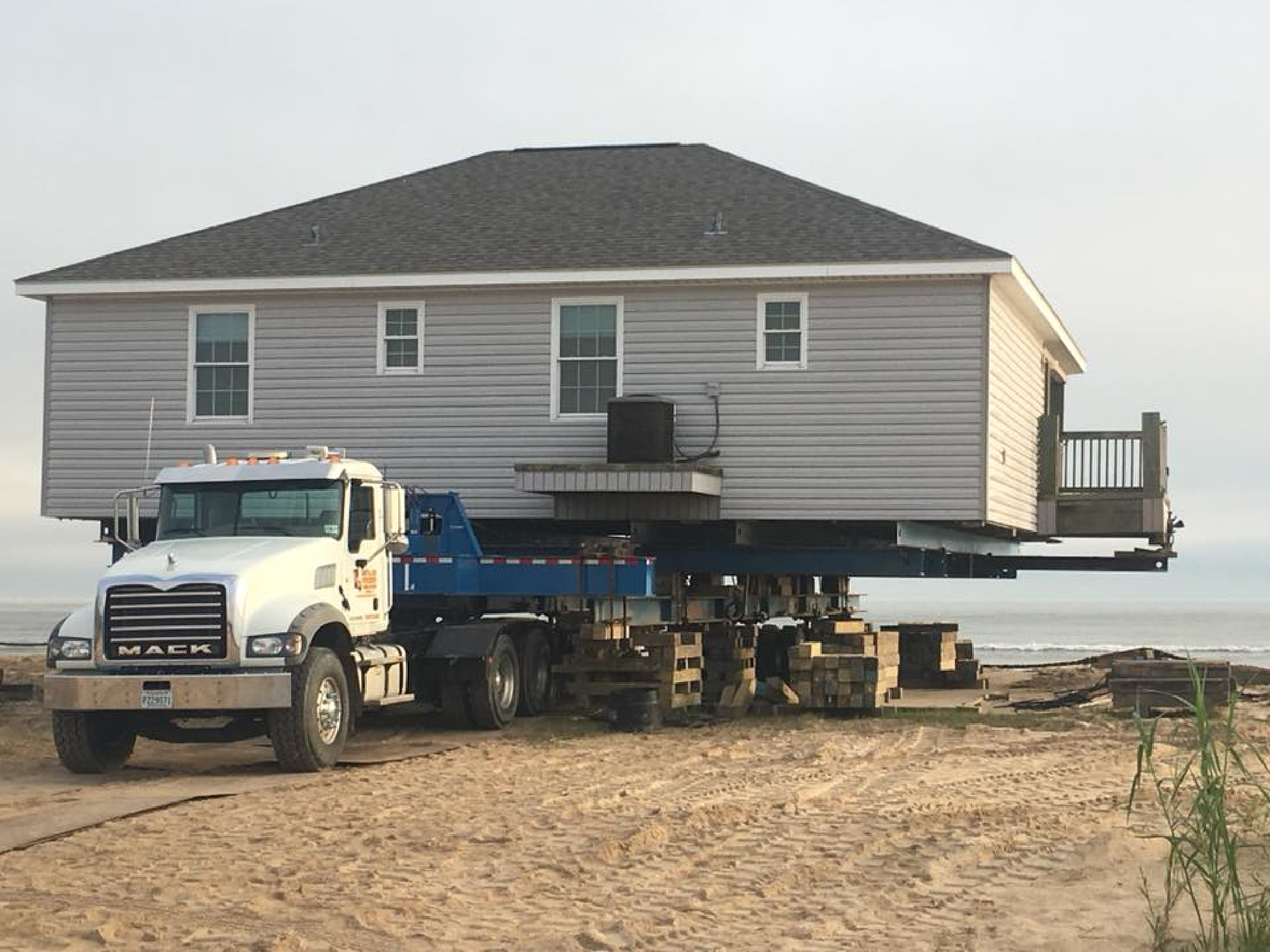
Structure moving, also known as house moving, building relocation, and structural relocation, is the process of lifting an existing building from its foundation and relocating it to another location or a new position on the same property.
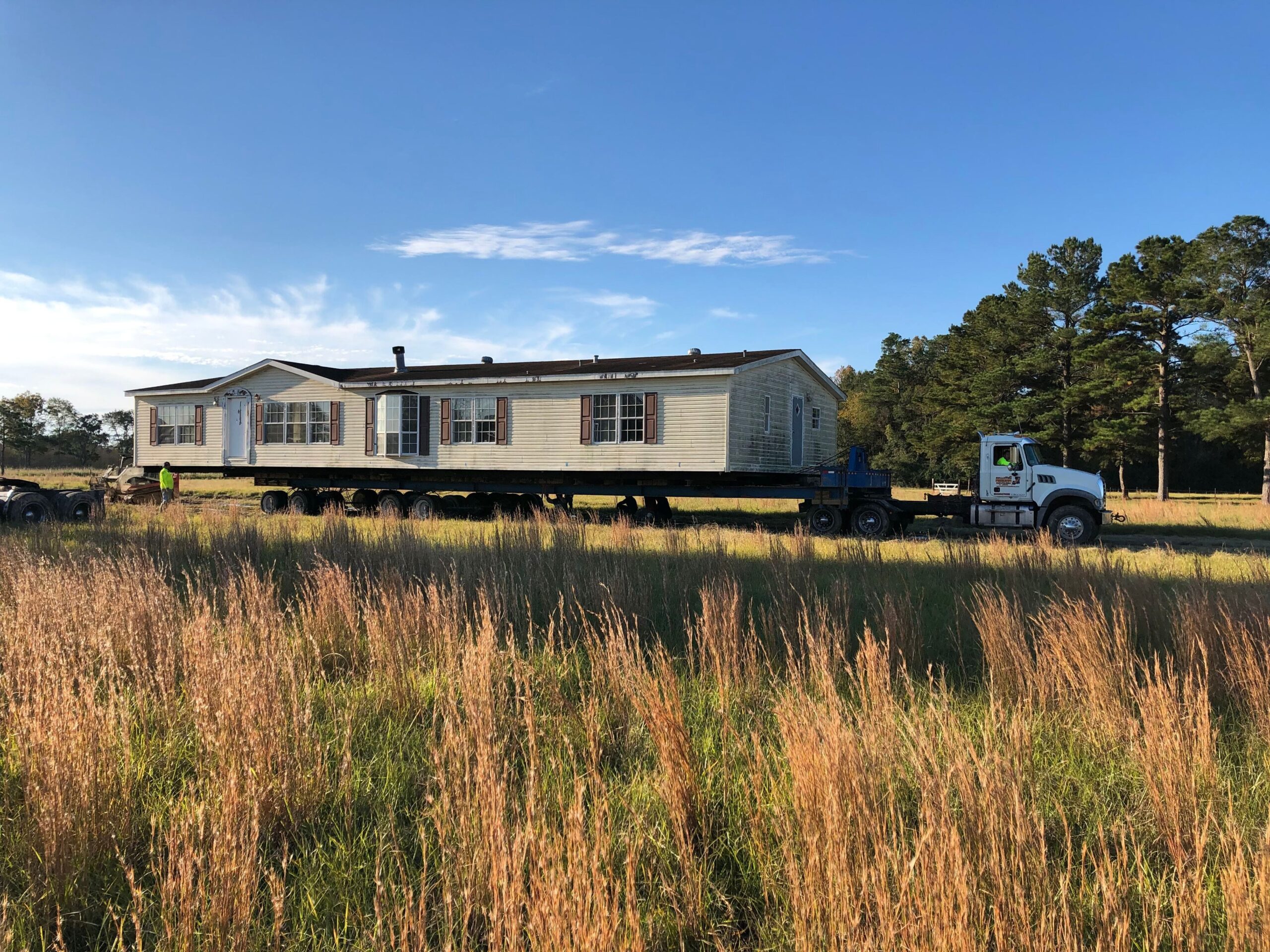
Projects may involve moving a structure across the same property, to a nearby lot, or to another location in Lafayette or elsewhere in Louisiana. Using steel beams and hydraulic lifting equipment, the structure is separated from its foundation, transported, and placed on a prepared foundation at its destination.
The goal is to preserve an existing building while adapting it to changing property needs, redevelopment plans, or a new location.

When Does Moving a Structure Make Sense?

Relocating a building may be worth considering when the structure remains structural,ly sound but its current location no longer meets the property owner’s needs. Common reasons property owners choose structure moving include:

Preserving a valued home

Relocate a family home, traditional Louisiana residence, or architecturally significant building instead of demolishing it, allowing you to retain its character and history.

Move a House to a New Property

When a house is purchased separately from the land, structure moving allows it to be safely transported and placed on a prepared foundation at its new location.

Making room for redevelopment

Relocate an existing structure to accommodate new construction, commercial expansion, property subdivision, or an updated site plan without removing the building.

Reposition a Building on the Same Lot

Move a structure to improve property layout, increase usable space, create better access, or prepare the site for future improvements.

Preserve Historic and Older Buildings

Relocation helps protect structurally sound historic or older buildings that cannot remain at their current location while preserving their long-term value.

Address Site-Related Challenges

Move a building away from areas affected by recurring drainage issues, redevelopment projects, road improvements, or other site conditions that limit its current location.

Can Every House or Building Be Moved?

Many structures can be relocated, but not every building is a practical candidate for structure moving. Project feasibility depends on factors such as:
  • Structural condition
  • Building size and weight
  • Foundation and framing
  • Site accessibility
  • Transportation route
  • Destination requirements
Every project begins with a professional feasibility assessment. Our team evaluates the building, relocation route, destination site, and project requirements before determining whether structure moving is the right solution.

Types of Structures We Move

Residential Homes

Traditional wood-frame homes and other residential structures may be suitable for relocation when their framing, foundation, and overall condition can safely support the move.

Historic Buildings

Structure moving helps preserve historic and older buildings that may otherwise face demolition while maintaining their architectural value.

Commercial Structures

Selected offices, retail buildings, and other qualifying commercial structures may be evaluated based on their size, construction, condition, and transportation requirements.

Garages and Accessory Buildings

Garages, cabins, workshops, and other detached buildings may also qualify depending on their construction and accessibility.

Buildings with Additions

Buildings with porches, garages, enclosed additions, or similar features require additional evaluation to determine the safest relocation approach.

Moving a Structure on the Same Property

Not every structure-moving project requires transporting a building on public roads.

A same-property move may involve:

  • Repositioning the structure
  • Rotating the building
  • Moving it onto a new foundation
  • Creating space for future construction
  • Improving property access
  • Meeting updated site plans

Before work begins, we evaluate:

  • Ground conditions
  • Equipment access
  • Utilities and obstacles
  • Foundation readiness
  • Site elevations
  • Required permits
Although transportation is shorter, same-site relocations still require careful planning and engineering.

Moving a Structure Over Public Roads

Moving a structure to another property requires detailed planning and coordination. Our team evaluates:
  • Building dimensions
  • Road and bridge clearances
  • Overhead utilities
  • Route restrictions
  • Traffic-control requirements
  • Required permits
Oversized structure moves require careful route planning, permits, and coordination before transportation begins. The safest route is not always the shortest, and every relocation is planned to protect the structure throughout the move.

Our Lafayette Structure-Moving Process

Consultation and Feasibility Assessment

1. Consultation and Feasibility Assessment

Every structure-moving project begins with a consultation to understand your building, relocation goals, and destination. We gather information about the structure, foundation, proposed location, and timeline before performing an on-site evaluation to determine whether the project is feasible.

Structural and Site Evaluation

2. Structural and Site Evaluation

Our team evaluates the building, existing foundation, framing, access, utilities, surrounding obstacles, and site conditions. We also assess the destination property to confirm there is adequate space, proper access, and a suitable foundation plan for the relocated structure.

Planning, Engineering, and Permitting

3. Planning, Engineering, and Permitting

Once the project is determined to be feasible, we develop a relocation plan that may include engineering, route planning, permit coordination, utility scheduling, and any required approvals. Every project is planned according to the building, destination, and transportation requirements.

Structure Preparation and Lifting

4. Structure Preparation and Lifting

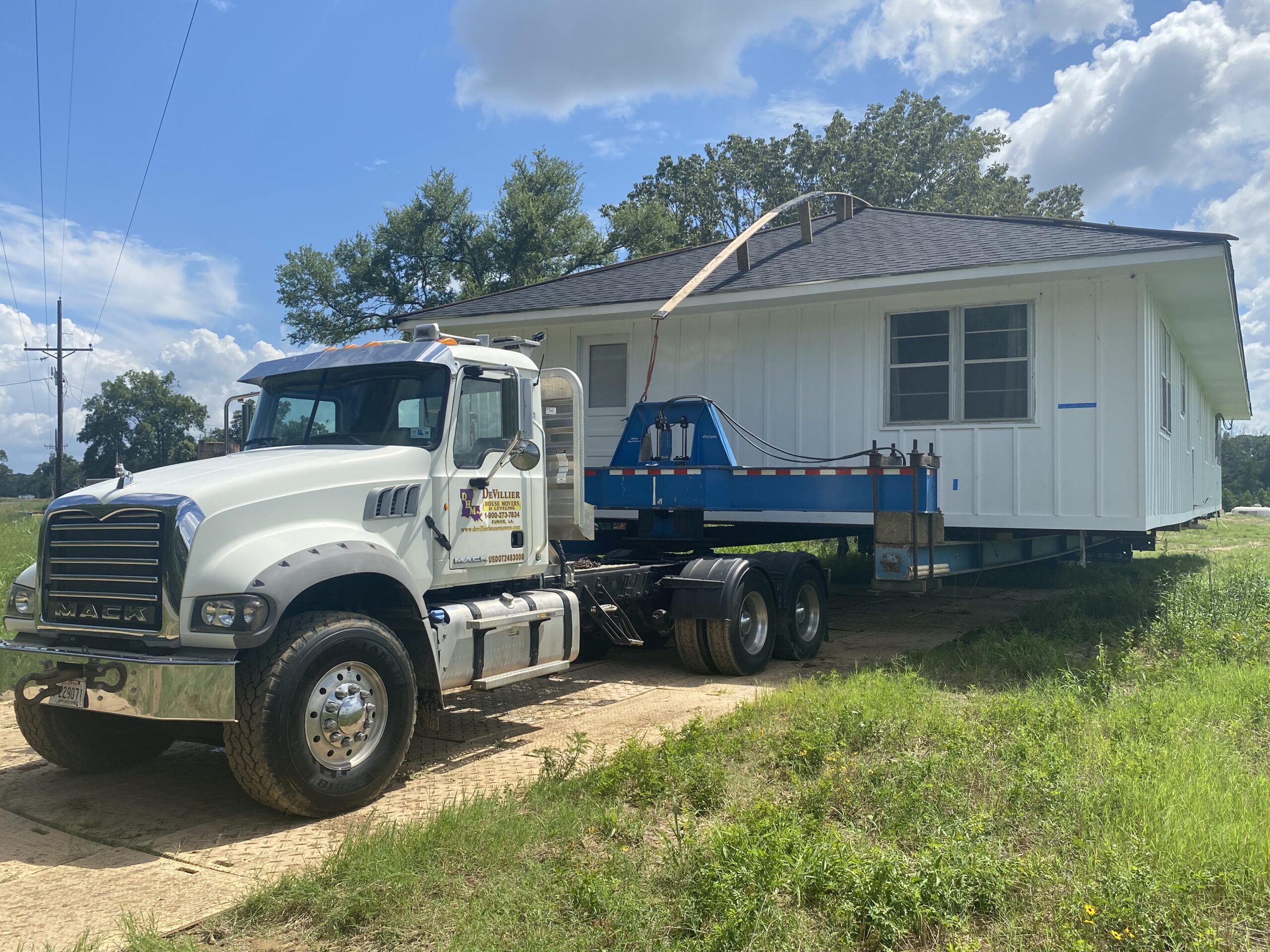
Before the move begins, utilities are disconnected and the structure is prepared for lifting. Steel beams, hydraulic lifting equipment, temporary bracing, and other specialized systems are installed so the building can be safely separated from its foundation and raised in a controlled manner.

Transportation and Placement

5. Transportation and Placement

Whether the structure is being repositioned on the same property or relocated to a new site, our team carefully transports it to its destination. The building is then aligned with the prepared foundation and gradually lowered into its permanent position.

Final Leveling and Completion

6. Final Leveling and Project Completion

After placement, we perform final leveling and verify the structure is properly positioned. Depending on the project scope, remaining work may include foundation completion, utility reconnections, grading, inspections, or coordination with other contractors before the project is complete.
Why Controlled Hydraulic Lifting Matters

A building does not carry its weight evenly. Areas such as kitchens, bathrooms, fireplaces, masonry walls, and additions can place different loads on various parts of the structure.
The DeVillier Group uses unified hydraulic lifting systems designed to raise and lower structures in a controlled, coordinated manner. This approach helps the crew:
  • Account for uneven weight distribution
  • Monitor structural movement during lifting
  • Maintain support at multiple lifting points
  • Transfer the building safely onto moving equipment
  • Position the structure on its new foundation
  • Make final leveling adjustments after placement
While specialized equipment helps reduce stress during lifting, the condition and age of the building remain important factors in every relocation project.

How Much Does Structure Moving Cost in Lafayette?

Every structure-moving project is unique, so pricing depends on several factors, including:
  • Building size and weight
  • Structural condition
  • Relocation distance
  • Route complexity
  • Foundation requirements
  • Site accessibility
  • Utility coordination
  • Required permits
After evaluating the building, destination, and relocation route, The DeVillier Group provides a project-specific estimate based on your project requirements.

Is Moving a House Less Expensive Than Building a New One?

Sometimes, but every project is different.
Moving may be the better option when the existing building remains structurally sound, has historic or architectural value, or can be relocated more economically than replacing it.
Building new may be the better choice when significant structural repairs, difficult transportation conditions, or extensive renovations make relocation impractical.
A professional feasibility assessment helps determine the most cost-effective solution.

How Long Does a Structure Move Take?

Every project follows its own schedule based on:
  • Structural evaluation
  • Engineering and permits
  • Foundation preparation
  • Route planning
  • Utility coordination
  • Weather and scheduling
Although the actual move may happen within a relatively short period, planning and preparation often account for most of the project timeline.

Why Choose The DeVillier Group?

More Than 30 Years of Structural Experience

With more than three decades of experience, The DeVillier Group has safely lifted, moved, leveled, and repaired structures throughout Louisiana using proven methods and specialized equipment.

Complete Structure Moving Solutions

From the initial evaluation and planning to permitting assistance, lifting, transportation, route coordination, and final placement, we manage every stage of the structure-moving process.

Specialized Hydraulic Lifting Equipment

Our unified hydraulic lifting systems help raise and lower structures in a controlled manner, providing stable support throughout the relocation process.

Residential, Historic, and Commercial Projects

We evaluate homes, historic buildings, and qualifying commercial structures to determine the safest and most practical relocation approach for each project.

Licensed and Insured Professionals

Our crews are licensed and insured, with cargo, liability, and workers’ compensation coverage, giving property owners added confidence throughout the project.

Serving Lafayette and South Louisiana

Based in Eunice, The DeVillier Group proudly provides structure moving services in Lafayette and communities throughout South Louisiana, delivering reliable solutions backed by decades of experience.

We've partnered with

international association of structural movers
BBB Logo
Texas association of structural movers logo
licensed contractor state of louisiana
fema logo

WHAT OUR CLIENTS SAY

Recent Structure-Moving Projects

Explore structure-moving projects completed by The DeVillier Group throughout South Louisiana. Each relocation required an individual plan based on the building, starting site, destination and transportation route.

Structure Moving Near Lafayette

We proudly serve Lafayette and surrounding communities, including:
maps-and-flags

Youngsville

maps-and-flags

Broussard

maps-and-flags

Scott

maps-and-flags

Carencro

maps-and-flags

Duson

maps-and-flags

Milton

maps-and-flags

Maurice

Don’t see your community listed? Contact us to discuss your project and determine whether structure-moving services are available in your area.

Request a Free Structure-Moving Estimate in Lafayette

Every successful structure-moving project begins with a professional feasibility assessment. The DeVillier Group evaluates your building, destination property, and proposed relocation route to determine the safest and most practical solution.
You’ll receive a project-specific recommendation covering planning, lifting, transportation, permitting, and final placement.
With more than 30 years of experience and specialized hydraulic lifting equipment, our team has successfully relocated homes, historic buildings, and qualifying commercial structures throughout Louisiana.

Call 337-546-0255 today to request your free structure-moving estimate.

Frequently Asked Questions

What is the difference between house moving and structure moving?

House moving refers specifically to relocating a residential house. Structure moving is the broader service and can include houses, historic buildings, and qualifying commercial or accessory structures.
Not automatically. Feasibility depends on the structural condition, size, construction, access, destination, and transportation route; the building has to be evaluated before a move can be confirmed.
Potentially, if a suitable route can be approved and coordinated. We evaluate roadway width, turns, bridges, overhead utilities, signs, trees, and construction zones to make sure the route can accommodate the building’s dimensions and our moving equipment.
A roadway move may be possible if a suitable route is approved and coordinated. Building dimensions, overhead lines, road width, bridges, turning space, permits and traffic-control requirements all affect feasibility.
Yes, a structure relocation can involve building, transportation, foundation and other approvals. Requirements depend on the starting property, destination and roads involved. Most construction activities in Lafayette require permitting, and oversized roadway loads are subject to state transportation rules.
The company states that it assists with permitting, route planning, utility coordination and other relocation requirements. The project proposal should identify precisely which permits and approvals are included.
Some masonry buildings, or those with brick components, may be movable, but they require individual evaluation. Brick veneer, chimneys and masonry features may need special preparation or may not travel with the main structure.
That depends on how they are connected and whether they can be included within the move. Some may be supported and moved with the building, while others may need to be detached or rebuilt.
Utilities must be safely disconnected before lifting. Reconnection at the destination is coordinated according to the project plan and may require coordination with utility companies, licensed trade contractors, and inspections.
Professional lifting and relocation methods are designed to manage structural stress, but no contractor should promise that an existing building will experience no cosmetic movement. The structure’s age, condition, finishes and amount of preparation affect how it responds.
Cost depends on the building, preparation, distance, route, permits, utility work, destination access and foundation requirements. An on-site assessment is necessary to prepare an accurate estimate.
The complete project may involve weeks or longer of planning, permitting, route coordination and foundation preparation. The actual transportation is only one phase of the project.
Yes. The DeVillier Group provides house-moving and building-relocation services throughout Louisiana from its Eunice base.