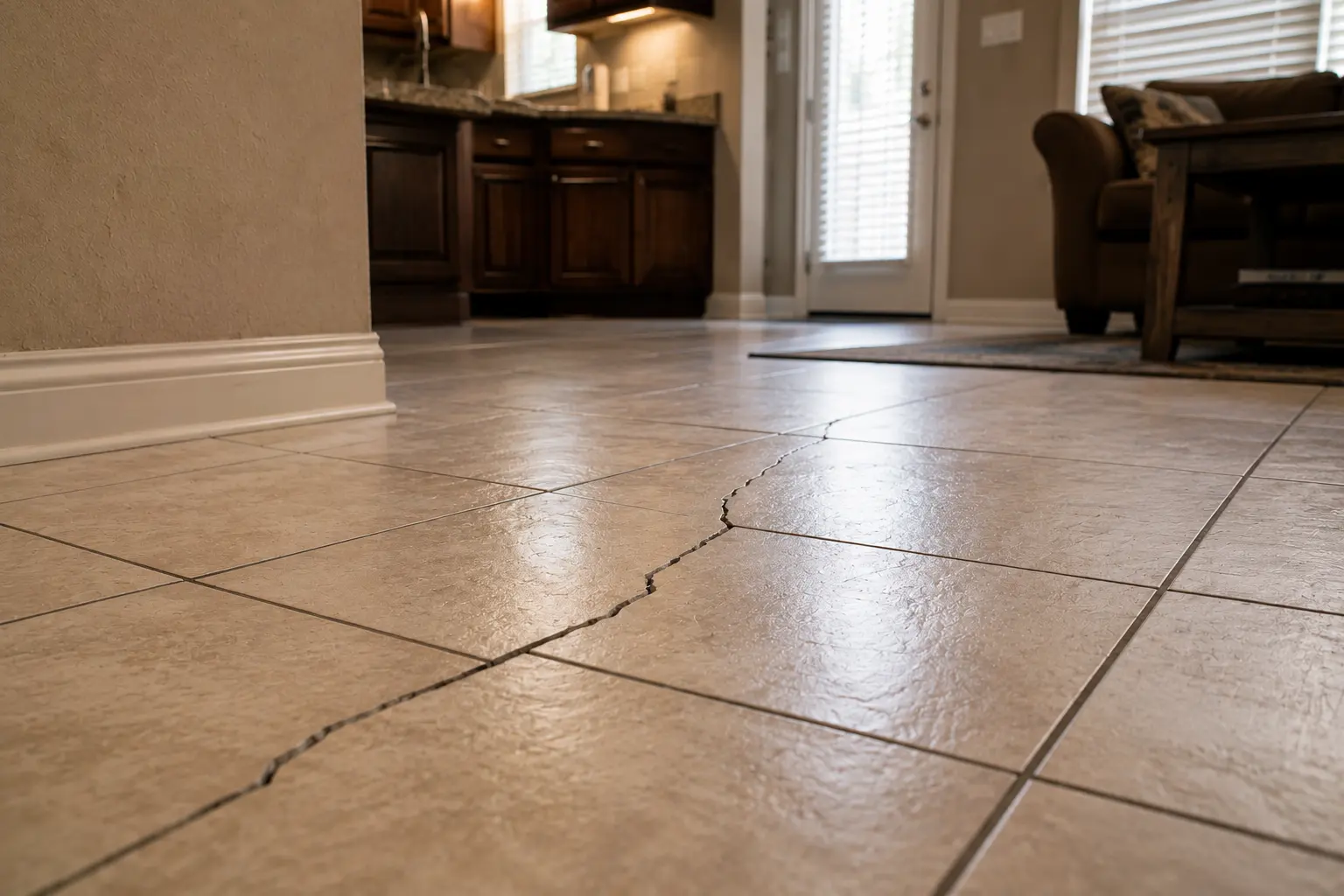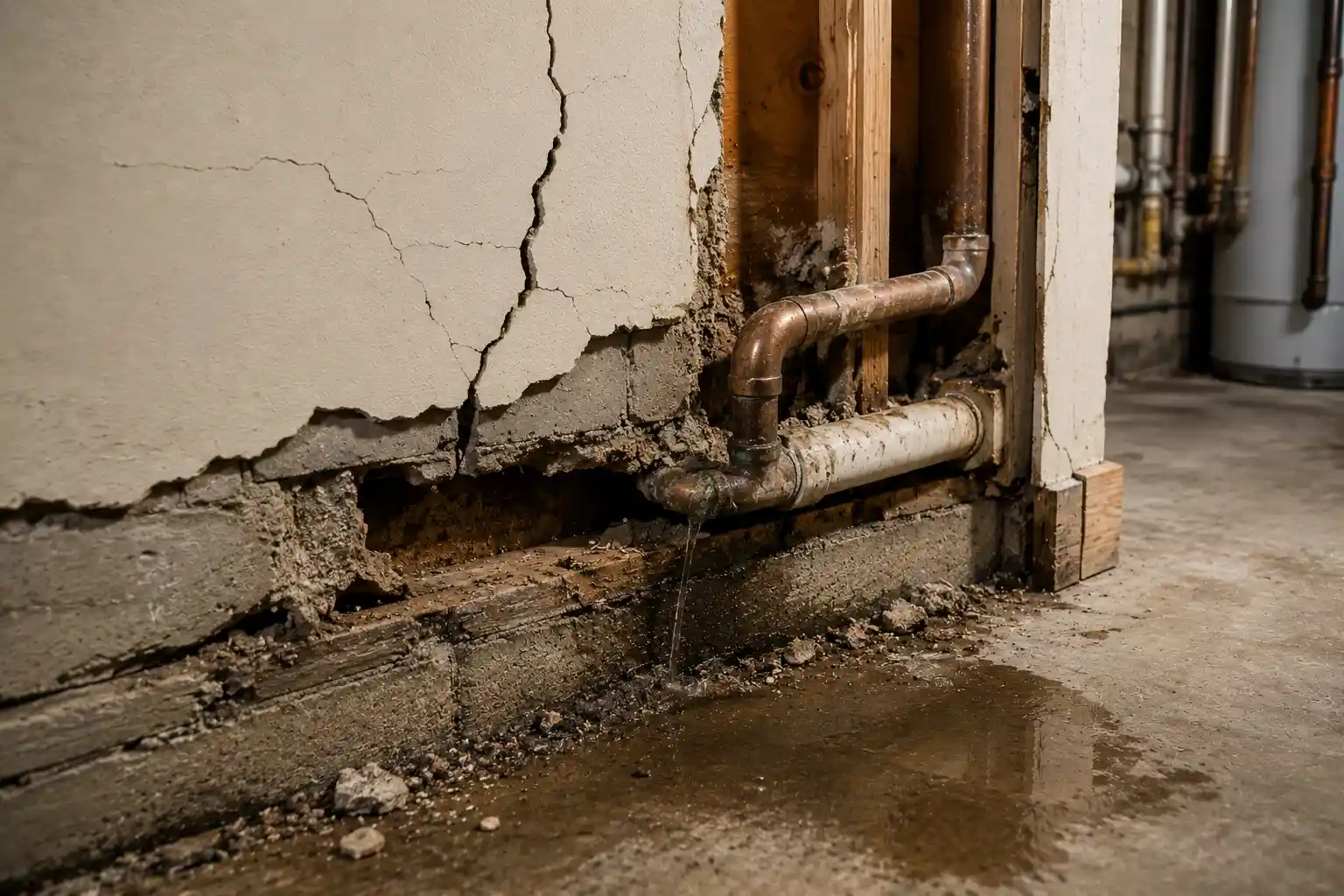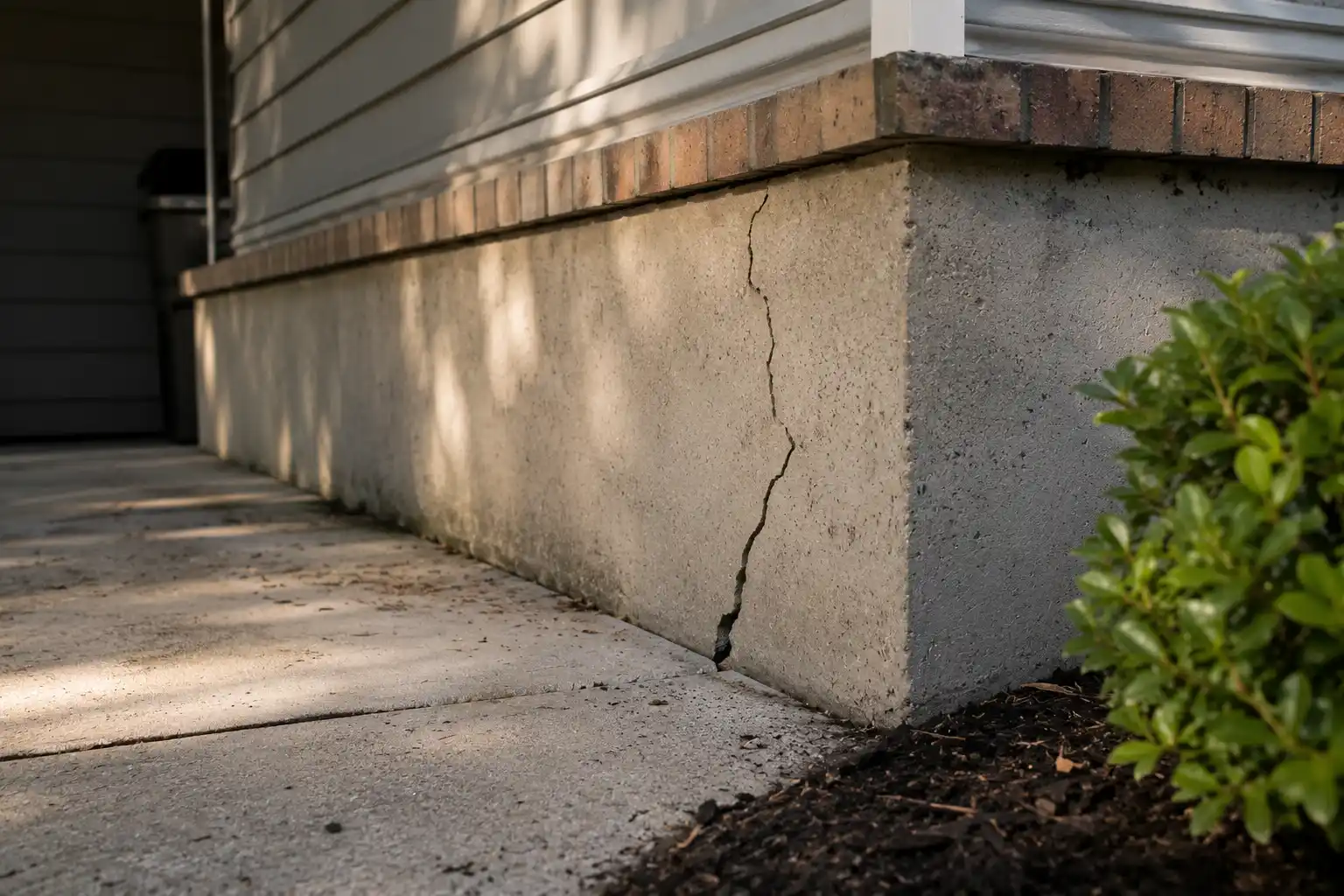
Many homeowners notice something changing inside the house and immediately assume the foundation is failing.
Maybe cracks suddenly appear near windows. Floors begin feeling uneven. Doors stop closing properly. Baseboards separate slightly from the wall. In Louisiana homes, these symptoms often raise immediate concerns about structural settlement.
But here’s what many homeowners don’t realize:
Water damage and foundation damage can sometimes look very similar.
In fact, moisture problems are one of the biggest reasons structural symptoms become confusing. Water damage can mimic foundation issues, hide foundation problems underneath, or even contribute to actual structural settlement over time.
Because Louisiana homes constantly deal with:
- humidity,
- flooding,
- heavy rainfall,
- crawl-space moisture,
- and drainage problems,
distinguishing between water damage and foundation movement becomes especially important.
Here’s how to tell the difference — and when the symptoms may indicate a deeper structural problem.
Why Water Damage and Foundation Problems Often Look Similar
Both issues affect the structure of the home.
Water damage weakens materials over time, while foundation movement shifts the structure itself. In many cases, the visible symptoms overlap.
Both conditions may cause:
- wall cracks,
- ceiling cracks,
- uneven floors,
- sticking doors,
- trim separation,
- or sagging areas.
This is why homeowners often misdiagnose the problem initially.
In Louisiana homes, moisture exposure and foundation movement are also frequently connected, making the situation even more complicated.
1. Wall Cracks
Wall cracks are one of the most common symptoms associated with both water damage and foundation settlement.
Water Damage Cracks
Moisture weakens drywall and framing materials, which can create:
- bubbling paint,
- soft drywall,
- warped surfaces,
- or irregular cracking.
These cracks often appear alongside:
- stains,
- humidity damage,
- or visible moisture exposure.
Foundation-Related Cracks
Foundation movement usually creates:
- stair-step cracks,
- widening cracks,
- diagonal cracks,
- or repeated recurring cracking.
These cracks often appear together with:
- floor slope,
- sticking doors,
- and structural shifting.
2. Uneven or Sagging Floors
Both moisture problems and foundation movement can cause floors to feel unstable.
Water Damage Floor Problems
Excess moisture beneath the home can weaken:
- floor joists,
- subflooring,
- beams,
- and support systems.
This may create:
- soft spots
- sagging flooring or bouncing floors
Foundation-Related Floor Problems
Settlement beneath the foundation often creates:
- sloping floors,
- uneven elevation,
- and shifting structural alignment.
The floor movement tends to feel more directional or widespread throughout the home.
3. Doors and Windows Sticking
Many homeowners notice sticking doors and windows during humid Louisiana weather.
Moisture-Related Sticking
Humidity causes wood materials to expand naturally. This may temporarily affect:
- door frames,
- trim,
- and window openings.
The issue often changes seasonally.
Foundation-Related Alignment Problems
Foundation movement slowly shifts framing throughout the structure.
This may create:
- uneven gaps,
- permanent alignment changes,
- or worsening door problems over time.
If multiple doors begin sticking alongside wall cracks and floor movement, structural settlement becomes more likely.
4. Ceiling Cracks and Sagging
Ceiling issues may also result from either condition.
Water Damage Symptoms
Moisture-related ceiling damage often includes:
- staining,
- bubbling paint,
- sagging drywall,
- soft texture,
- or visible water spots.
Structural Movement Symptoms
Foundation-related ceiling cracks tend to appear with:
- wall cracking,
- floor slope,
- or widespread structural movement.
The pattern and surrounding symptoms usually help determine the actual cause.
5. Baseboard and Trim Separation
Water damage and foundation movement can both cause trim separation.
Moisture Damage
Humidity and water exposure may warp trim materials and loosen caulking.
Structural Settlement
Foundation movement physically shifts walls and framing apart, creating:
- widening gaps,
- uneven trim spacing,
- and separation around windows and doors.
When gaps continue worsening over time, structural movement becomes more concerning.
How Water Damage Can Actually Cause Foundation Problems
In Louisiana homes, water damage and foundation damage are often connected.
Long-term moisture problems may eventually weaken the soil beneath the foundation itself.
Common Moisture-Related Structural Risks
- poor drainage
- flooding
- plumbing leaks
- standing water
- crawl-space moisture
- gutter overflow
Over time, excess moisture destabilizes soil and increases settlement risk.
This is why water management is one of the most important parts of foundation protection in Louisiana.
Louisiana Homes Face Unique Moisture Challenges
Louisiana’s environment creates ideal conditions for both water damage and structural movement.
Homes throughout the region constantly deal with:
- high humidity,
- heavy rainfall,
- flooding,
- clay soil expansion,
- and moisture fluctuations.
This combination makes it extremely common for homeowners to experience:
- recurring cracks,
- floor movement,
- crawl-space moisture,
- and drainage-related structural stress.
Even relatively minor water problems can eventually affect structural stability if ignored long enough.
Signs the Problem May Be Mostly Water Damage
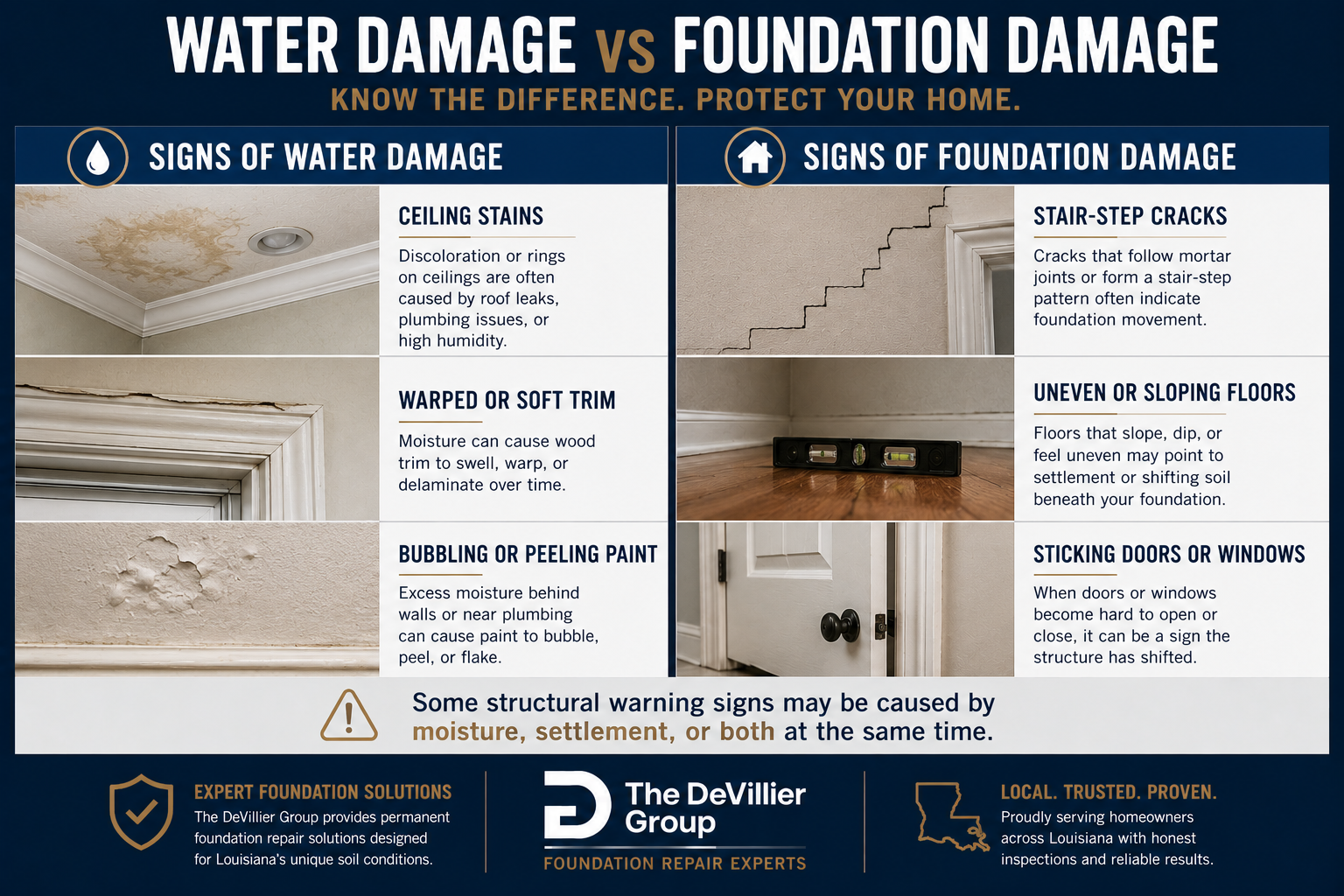
The issue may primarily involve moisture exposure if you notice:
- visible staining
- bubbling paint
- mold or mildew
- musty odors
- soft drywall
- warped trim
- isolated sagging
These symptoms often point more toward water intrusion than structural settlement alone.
Signs Foundation Damage May Be Involved
Foundation movement becomes more likely when you notice:
- stair-step brick cracks
- widening wall cracks
- uneven floors
- sticking doors throughout the home
- visible foundation cracks
- structural shifting
- recurring crack patterns
- separation near ceilings and corners
Multiple structural symptoms appearing together usually indicate movement beneath the home.
Why Cosmetic Repairs Often Fail
Many homeowners repaint walls or patch cracks only to watch the problem return later.
This happens because:
- the moisture issue,
- structural movement,
- or drainage problem
was never fully corrected.
Temporary cosmetic repairs rarely solve long-term structural stress.
Identifying the real source of movement is the key to preventing recurring damage.
How Professionals Diagnose the Difference
A professional inspection may evaluate:
- moisture levels
- drainage conditions
- crawl-space conditions
- foundation alignment
- floor leveling
- crack patterns
- framing stability
- soil movement
- signs of water intrusion
In Louisiana homes, inspections often focus heavily on both:
- structural movement,
- and moisture management
because the two issues are so closely connected.
Can Both Problems Exist at the Same Time?
Absolutely.
In many Louisiana homes:
- water damage contributes to foundation settlement,
- and foundation movement increases moisture intrusion.
The two problems frequently overlap.
For example:
- poor drainage weakens soil,
- settlement creates cracks,
- cracks allow more moisture inside,
- and moisture further weakens structural materials.
This cycle can continue worsening if the root problem is not addressed early.
How to Help Prevent Both Problems
Homeowners can reduce risk by:
- improving drainage,
- keeping gutters clear,
- extending downspouts away from the home,
- monitoring crawl-space moisture,
- repairing leaks quickly,
- and addressing structural symptoms early.
Preventative maintenance is often far less expensive than major repair later.
Final Thoughts
Water damage and foundation damage can look surprisingly similar — especially in Louisiana homes where moisture constantly affects structural conditions.
Wall cracks, uneven floors, sticking doors, and ceiling separation may result from:
- water intrusion,
- structural movement,
- or both at the same time.
Understanding the difference is important because cosmetic repairs alone rarely solve the underlying problem.
The earlier moisture and structural issues are identified, the easier it becomes to protect your home from larger long-term damage. If concerns continue, homeowners may want to schedule a professional inspection.
FAQs
Can water damage cause cracks in walls?
Yes. Moisture can weaken drywall and framing materials, causing cracking, bubbling paint, and warped surfaces.
How do I know if my cracks are from water damage or foundation problems?
Water damage often includes staining, soft drywall, or mold, while foundation problems commonly involve widening cracks, uneven floors, and sticking doors.
Can water damage lead to foundation settlement?
Yes. Poor drainage, flooding, and long-term moisture exposure can weaken soil beneath the foundation and contribute to settlement.
Why are Louisiana homes vulnerable to both water and foundation problems?
Louisiana homes experience heavy rainfall, humidity, flooding, and clay soil movement, all of which increase structural and moisture-related risks.
Can both water damage and foundation damage happen at the same time?
Yes. Moisture problems and structural settlement are often connected and may worsen each other over time.