Many Louisiana homeowners don’t realize their foundation is settling until the warning signs become impossible to ignore.
A crack appears above a doorway. A window suddenly becomes difficult to open. Floors start feeling uneven. At first, these issues seem unrelated. But together, they often point to one common problem: foundation settlement.
The challenge is that foundation movement usually happens slowly.
Most homes don’t suddenly sink overnight. Instead, the soil beneath the house gradually shifts, expands, contracts, or loses support over time. As the foundation moves, the entire structure begins reacting to that movement.
Because Louisiana homes are constantly exposed to:
- expansive clay soil,
- heavy rainfall,
- flooding,
- humidity,
- and drainage challenges,
foundation settlement is one of the most common structural issues homeowners face.
Here are 10 warning signs that may indicate your foundation is settling.
What Is Foundation Settlement?
Foundation settlement occurs when the soil beneath a home can no longer support the structure evenly.
As support changes underneath the house, portions of the foundation may:
- sink,
- shift,
- tilt,
- or settle at different rates.
This uneven movement is called differential settlement.
When it happens, stress transfers throughout the home, creating visible symptoms in:
- walls,
- floors,
- ceilings,
- doors,
- windows,
- and exterior masonry.
2. Stair-Step Cracks in Brick
Exterior brick often reveals settlement before interior drywall.
As foundations shift unevenly, pressure transfers into masonry walls and creates stair-step cracking patterns along mortar joints.
These cracks typically:
- widen over time
- appear near corners
- follow brick mortar lines
In Louisiana homes, stair-step cracks are among the most common visible signs of settlement.
3. Doors That Suddenly Stick
Foundation movement frequently affects door alignment.
When the structure shifts, door openings become slightly distorted.
This may cause doors to:
- rub against the frame
- refuse to latch
- swing open by themselves
- become difficult to close
When multiple doors begin sticking around the same time, foundation movement becomes more likely.
4. Windows That Won't Open Properly
Windows react much like doors when settlement occurs.
You may notice:
- sticking windows
- locking issues
- uneven frame gaps
- difficulty opening or closing
As the structure shifts, window openings lose their original shape and alignment.
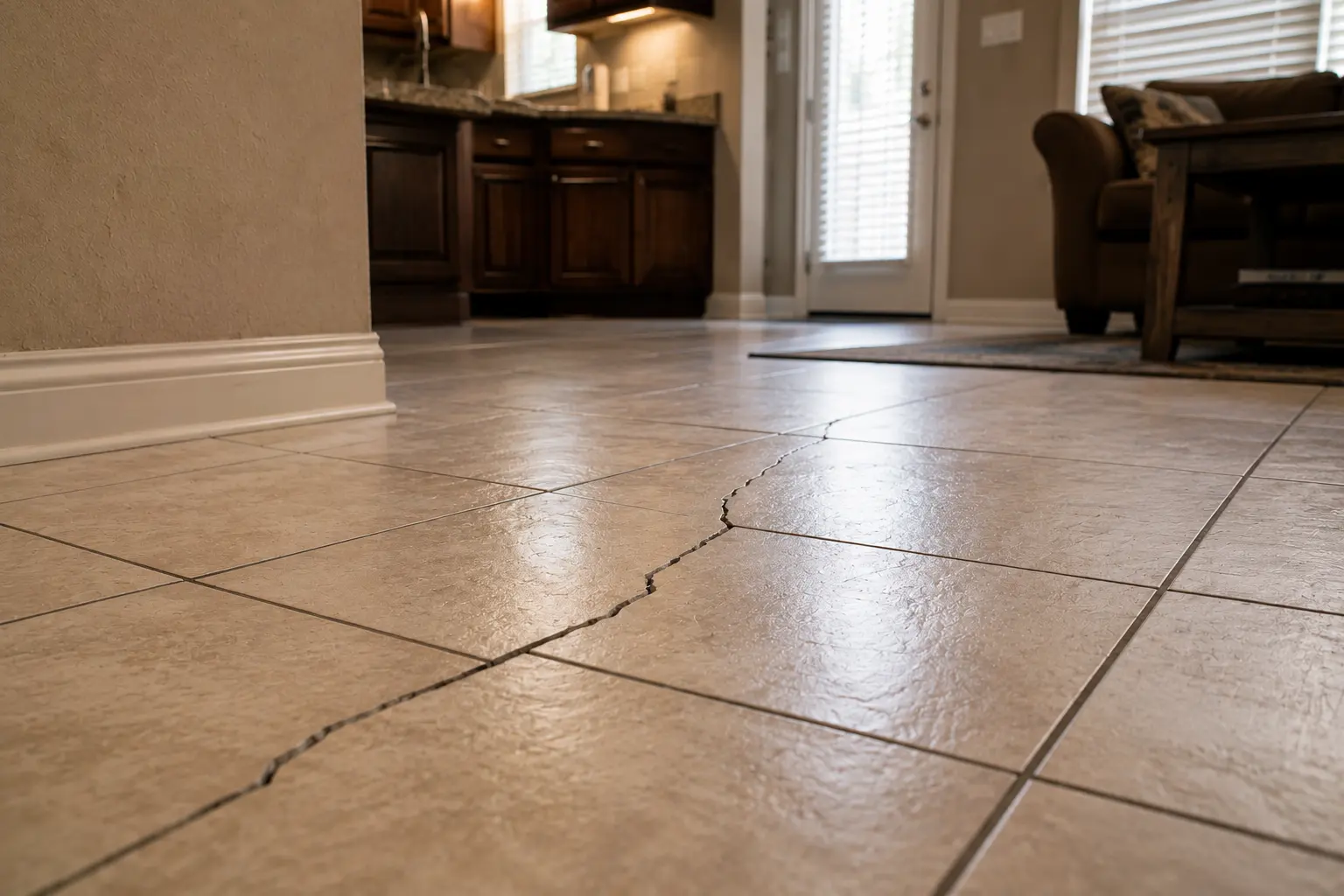
5. Uneven or Sloping Floors
Floors often reveal foundation settlement before homeowners notice cracks.
Signs include:
- sloping floors
- visible dips
- rolling objects
- uneven furniture
- soft spots
Many homeowners describe it as:
“The house just doesn’t feel level anymore.”
6. Sagging or Bouncing Floors
In raised Louisiana homes, settlement may affect support systems beneath the floor.
This often creates:
- springy flooring
- floor movement while walking
- visible sagging
- uneven transitions between rooms
Floor movement combined with cracking often deserves professional evaluation.
7. Gaps Around Trim and Baseboards
As the structure shifts, walls and floors begin separating slightly.
You may notice:
- gaps near crown molding
- baseboard separation
- trim pulling away from walls
- widening caulk joints
These small changes often indicate movement occurring throughout the structure.
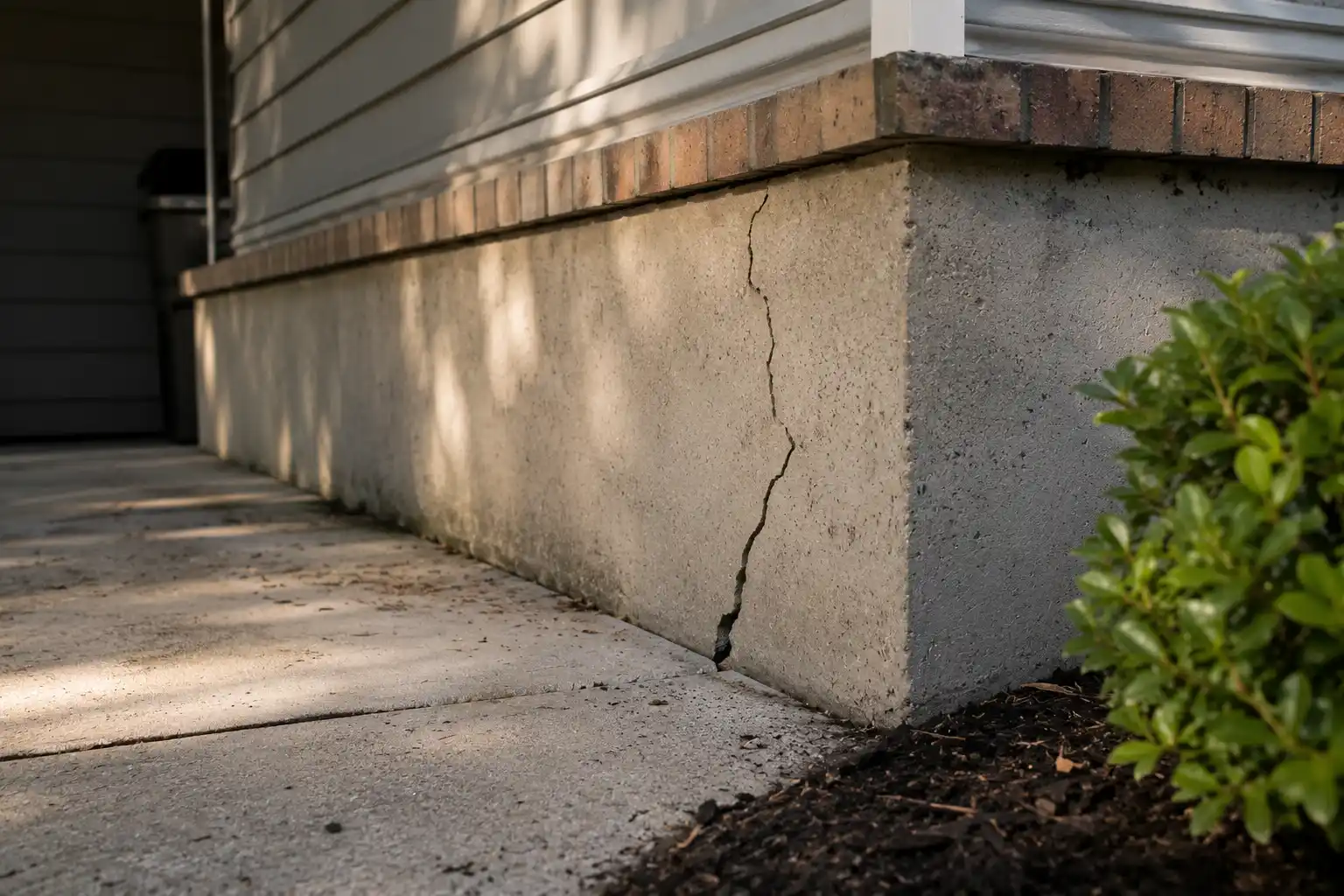
8. Cracks in the Foundation Itself
Visible foundation cracks should never be ignored.
Not all cracks are structural, but settlement-related cracks often appear as:
- widening vertical cracks
- stair-step cracks
- displaced sections
- cracks with visible separation
The larger and more active the crack becomes, the more concerning it may be.
9. Chimney or Porch Separation
Heavy structures often reveal settlement first.
Watch for:
- leaning chimneys
- porch separation
- gaps between additions and the main structure
- visible shifting outside the home
These symptoms frequently indicate differential settlement beneath the foundation.
10. Problems Get Worse After Heavy Rain
One of the clearest Louisiana-specific warning signs is structural movement after storms.
You may notice:
- new cracks after rain
- worsening door alignment
- expanding wall cracks
- increased floor movement
This often occurs because clay soil absorbs moisture and expands, changing support conditions beneath the home.
Why Foundations Settle in Louisiana
Several environmental factors make Louisiana homes especially vulnerable.
1. Expansive Clay Soil
Clay expands when wet and shrinks when dry.
This constant movement creates long-term structural stress beneath foundations.
2. Poor Drainage
Standing water around the home weakens soil stability and increases settlement risk.
3. Flooding
Flood events can erode or soften supporting soil beneath the structure.
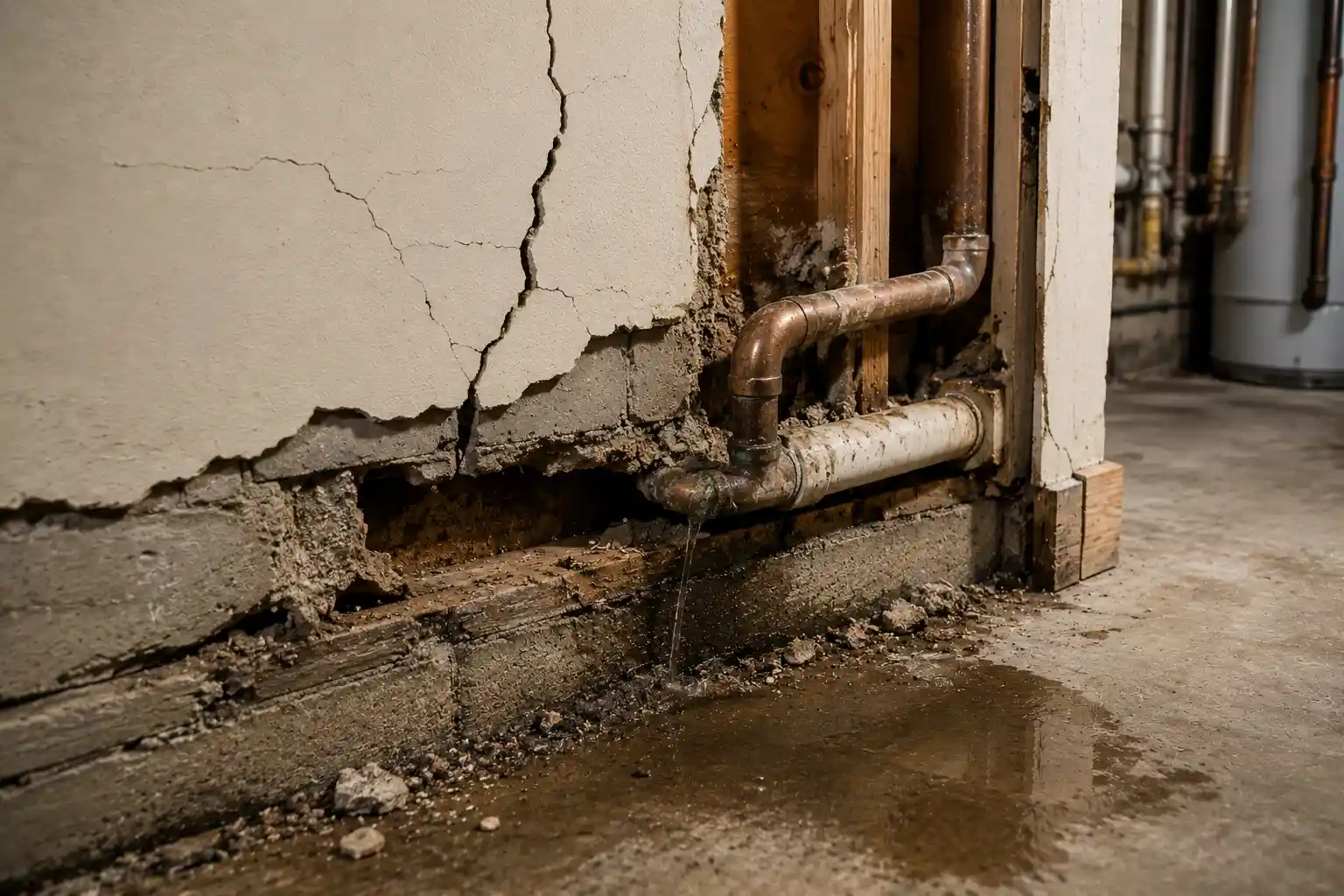
4. Plumbing Leaks
Underground leaks may wash away supporting soil over time.
5. Aging Structures
Older homes naturally experience more settlement than newer construction.
Is Foundation Settlement Always Serious?
Not necessarily.
Most homes experience some degree of settling throughout their lifespan.
The concern arises when settlement becomes:
- uneven,
- progressive,
- or structurally significant.
Usually Less Concerning
- small stable cracks
- minor cosmetic settling
- isolated symptoms
More Serious Warning Signs
- multiple symptoms appearing together
- worsening cracks
- sloping floors
- sticking doors
- visible structural movement
The more symptoms present, the more likely settlement is affecting the home.
What Should You Do If You Notice These Signs?
The biggest mistake homeowners make is waiting too long.
Settlement rarely improves on its own.
Early evaluation can help determine:
- whether movement is active,
- how severe it is,
- and what solutions may be needed.
Depending on the severity of the issue, solutions may include foundation leveling to correct uneven settlement and restore proper support.
Final Thoughts
Foundation settlement often begins quietly.
A crack here. A sticking door there. A slightly uneven floor that wasn’t there last year.
Individually, these symptoms may seem minor. Together, they often tell the story of structural movement beneath the home.
Understanding the cause early can help homeowners protect their home’s long-term structural stability before larger repairs become necessary. If concerns continue, it may be wise to schedule an inspection.