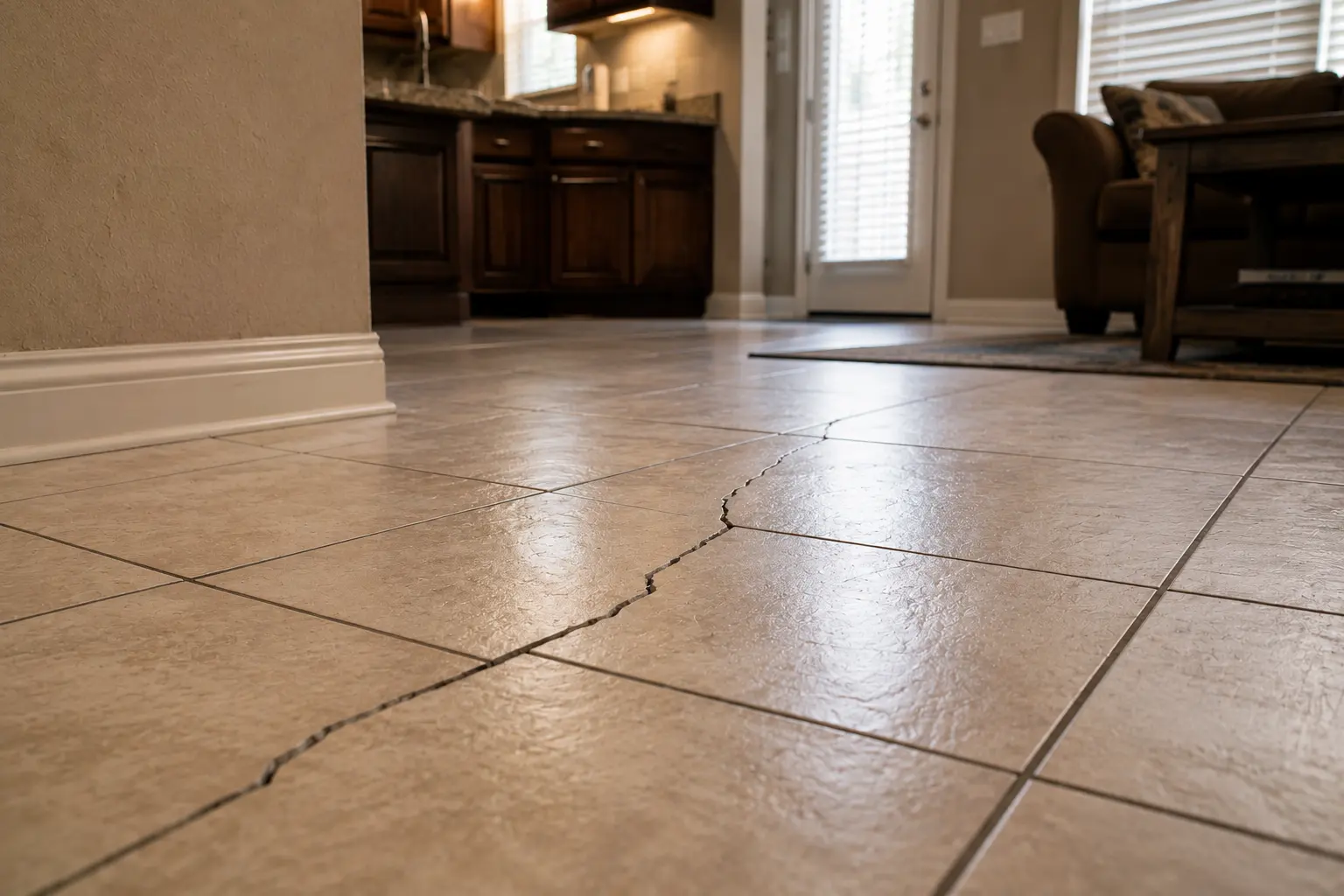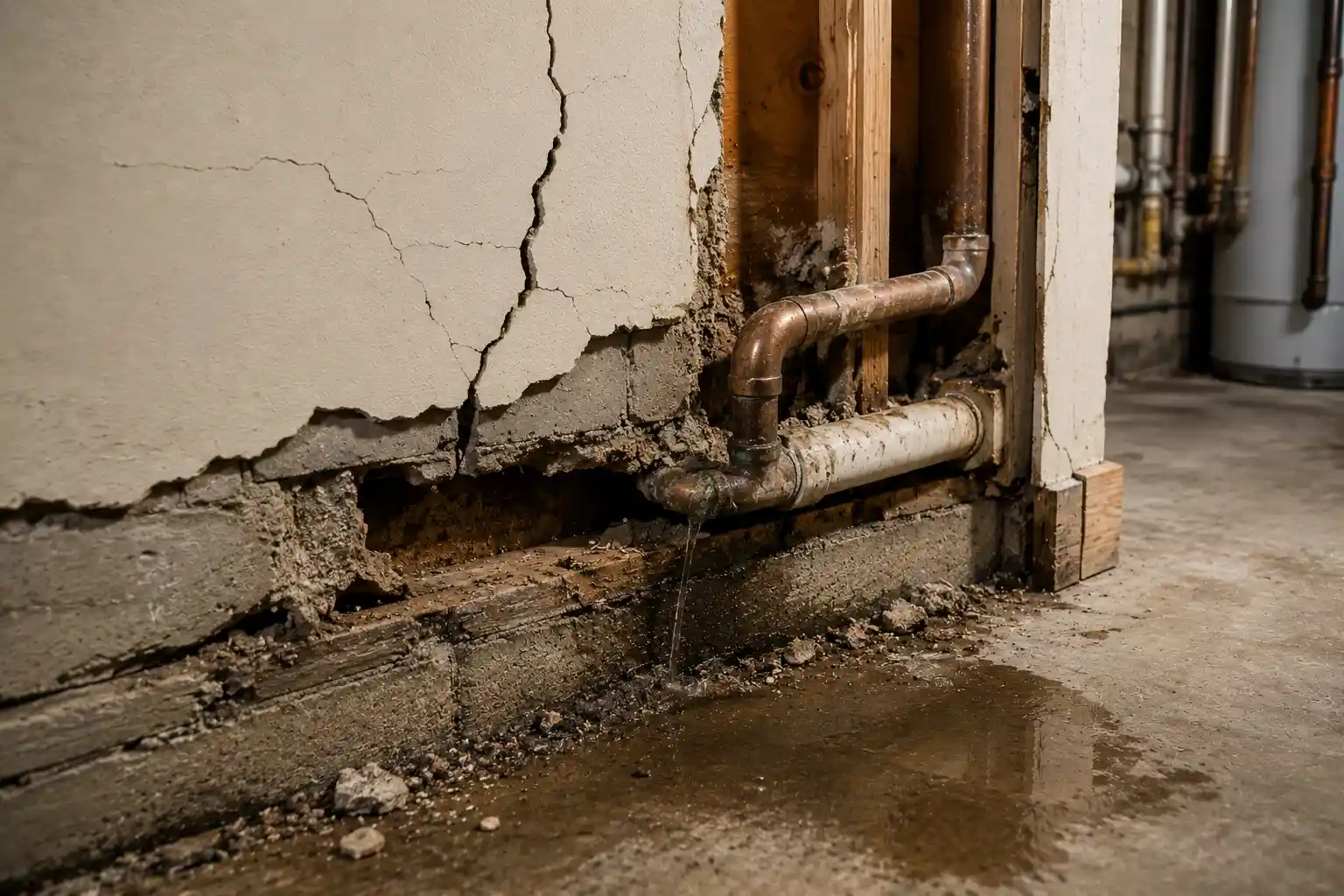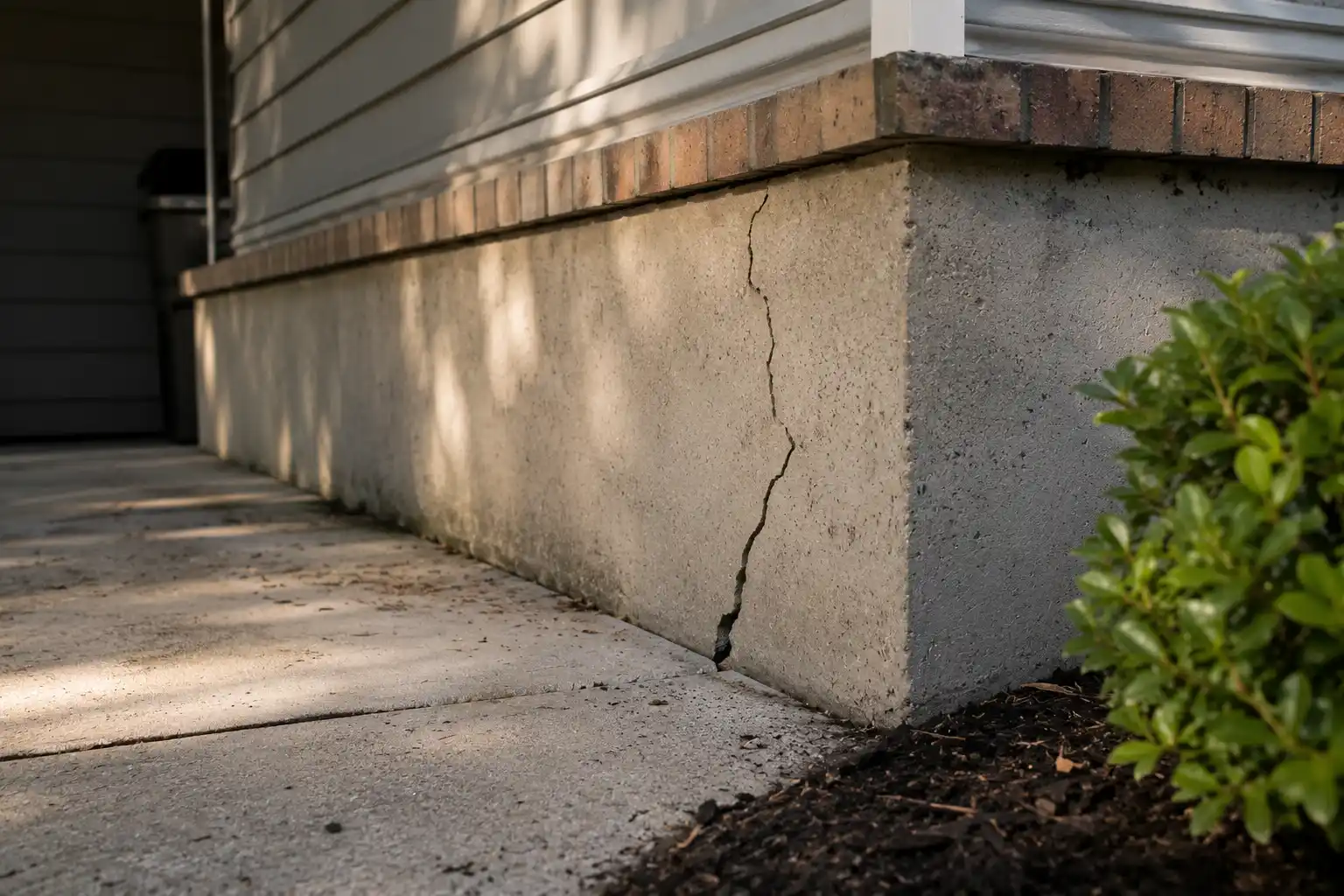
Most homeowners notice uneven floors gradually.
At first, something just feels different when walking through the house. Maybe a chair rocks slightly on the floor. Maybe a ball slowly rolls across the room. Over time, certain areas begin feeling soft, sloped, or unstable underfoot.
Many people assume it’s simply part of living in an older home.
Sometimes that’s true.
But in Louisiana homes, uneven floors can also be early warning signs of:
- foundation settlement,
- crawl-space deterioration,
- moisture damage,
- or structural movement beneath the home.
Because Louisiana foundations constantly deal with:
- expanding clay soil,
- flooding,
- heavy rainfall,
- and humidity,
floor movement is one of the most common structural symptoms homeowners experience.
Here’s what uneven floors may actually mean, what causes them, and when it’s time to take the warning signs seriously.
What Are Uneven Floors?
Uneven floors are surfaces that no longer sit level throughout the home.
The movement may feel:
- sloped,
- sagging,
- soft,
- bouncy,
- or tilted.
In some homes, the unevenness is subtle enough that only the homeowner notices it. In others, furniture visibly leans or objects roll across the floor naturally.
Uneven flooring may affect:
- one room,
- isolated sections,
- or large portions of the home.
The most important question is:
What’s causing the movement underneath?
Are Uneven Floors Always a Foundation Problem?
Not always.
Some floor unevenness can occur naturally because of:
- aging materials,
- wood expansion,
- normal settling,
- or older construction methods.
However, worsening floor movement often signals:
- structural shifting,
- weakened support systems,
- or foundation instability.
The likelihood of foundation involvement increases when uneven floors appear alongside:
- wall cracks,
- sticking doors,
- ceiling separation,
- or visible structural movement.
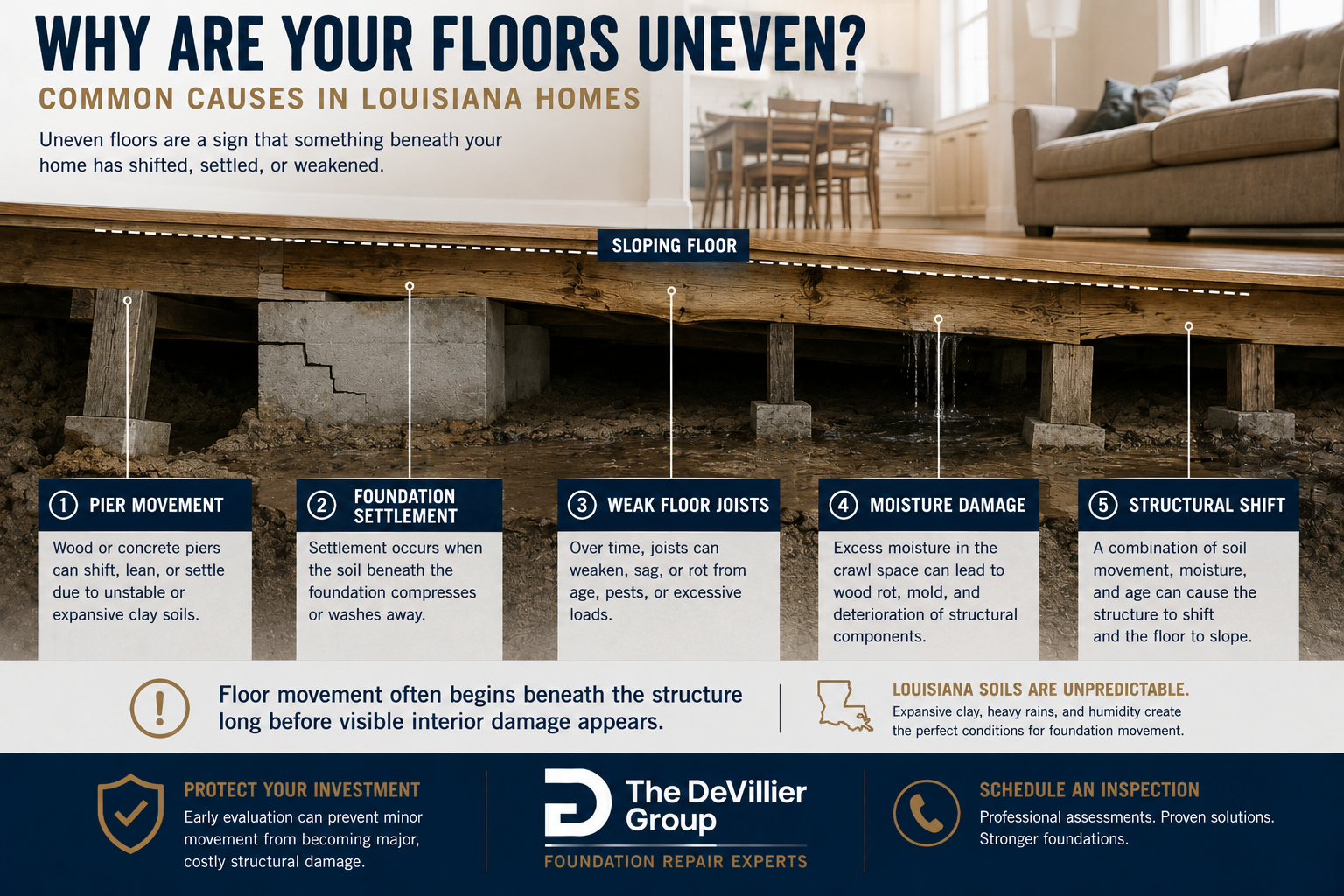
1. Foundation Settlement
One of the most common causes of uneven floors is foundation settlement.
When the soil beneath the home shifts unevenly, sections of the foundation may:
- sink,
- rise,
- or settle at different rates.
That movement transfers upward into:
- floors,
- walls,
- ceilings,
- and framing systems.
Common Signs of Foundation-Related Floor Movement
- sloping floors
- doors sticking nearby
- stair-step brick cracks
- gaps near trim
- worsening unevenness over time
In Louisiana, clay-heavy soil makes foundation settlement especially common because moisture constantly changes soil stability beneath homes.
2. Crawl Space Moisture Damage
In raised Louisiana homes, crawl-space moisture is one of the biggest causes of floor problems.
Excess humidity and water exposure can weaken:
- floor joists,
- support beams,
- subflooring,
- and wood framing systems.
As materials deteriorate, portions of the floor begin sagging or softening.
Signs Moisture May Be Affecting the Floor
- soft or spongy flooring
- musty odors
- wood rot
- sagging sections
- bouncing movement while walking
Older homes are particularly vulnerable because long-term moisture exposure slowly weakens structural supports underneath the house.
3. Pier and Beam Foundation Movement
Many Louisiana homes are built on pier and beam foundations.
These systems rely on:
- support piers,
- beams,
- and joists
to keep the structure level above the ground.
Over time, support piers may:
- settle unevenly,
- tilt,
- shift,
- or weaken from moisture exposure.
When support systems lose stability, uneven floors often become one of the first visible symptoms.
4. Expanding Clay Soil Beneath the Home
Louisiana’s expansive clay soil constantly reacts to moisture.
During Wet Periods
The soil expands and pushes upward.
During Dry Periods
The soil shrinks and loses support strength.
This ongoing cycle creates structural movement beneath foundations over time.
As pressure changes underneath the home, floors may gradually:
- slope,
- separate,
- or shift unevenly.
This is why many Louisiana homeowners notice floor problems worsening after:
- heavy rain,
- flooding,
- or seasonal weather changes.
5. Weak or Damaged Floor Joists
Floor joists are structural framing members supporting the floor system underneath the home.
Over time, joists may weaken because of:
- moisture exposure,
- wood rot,
- termites,
- or structural aging.
When joists begin sagging, sections of the floor lose support.
Common Symptoms
- bouncing floors
- creaking sounds
- soft spots
- visible dips
- sagging near heavy furniture
In some homes, the foundation itself may still be stable while the framing above requires structural repair.
6. Water Drainage Problems
Poor drainage around the home can destabilize the soil supporting the foundation.
After heavy Louisiana rainstorms, oversaturated ground may:
- erode,
- soften,
- or shift unevenly.
This movement often contributes to:
- floor slope,
- settlement,
- and structural imbalance.
Common Drainage Warning Signs
- standing water near foundation
- muddy areas after storms
- sinking walkways
- worsening floor movement after rainfall
Drainage problems are one of the most overlooked causes of structural movement in Louisiana homes.
7. Natural Aging and Settling
Some uneven flooring develops naturally over decades.
Older homes often experience:
- wood movement,
- material compression,
- and gradual structural settling.
Minor unevenness does not automatically mean the home is unsafe.
The concern increases when:
- movement worsens,
- multiple structural symptoms appear,
- or visible damage spreads throughout the structure.
What Uneven Floors Can Feel Like
Homeowners often describe uneven flooring differently depending on the cause.
Common Descriptions
- “The floor feels sloped.”
- “Certain spots feel soft.”
- “Furniture leans slightly.”
- “The floor bounces when walking.”
- “A ball rolls across the room.”
Subtle movement often develops slowly, making it difficult to notice until structural symptoms become more obvious.
When Should You Worry About Uneven Floors?
Not every floor slope is dangerous.
The seriousness depends on:
- how severe the movement is,
- whether it’s worsening,
- and what other symptoms appear nearby.
Usually Less Concerning
- slight stable unevenness
- minor settling in older homes
- isolated cosmetic slope
More Serious Structural Warning Signs
- worsening floor movement
- soft or unstable flooring
- sticking doors
- wall cracks
- ceiling separation
- stair-step brick cracks
- visible sagging
Multiple symptoms together often indicate structural movement beneath the home.
How Professionals Diagnose Uneven Floors
A structural inspection may evaluate:
- foundation settlement
- crawl-space conditions
- moisture exposure
- floor joists
- support piers
- drainage conditions
- floor leveling
- structural alignment
In Louisiana homes, inspections often focus heavily on:
- moisture,
- soil movement,
- and crawl-space stability
because environmental conditions play such a major role in structural movement.
Can Uneven Floors Be Repaired?
In many cases, yes.
The repair depends entirely on what’s causing the movement underneath the home.
Common Repair Solutions
Corrects settlement-related structural movement.
Pier Stabilization
Strengthens weakened support systems beneath raised homes.
Crawl Space Structural Repair
Reinforces damaged beams and floor supports.
Drainage Correction
Helps stabilize soil around the foundation.
Joist and Beam Replacement
Repairs weakened structural framing beneath flooring systems.
The earlier uneven floors are diagnosed, the easier structural repairs often become.
How to Help Prevent Floor Movement
Homeowners can reduce structural stress by:
- improving drainage,
- controlling crawl-space moisture,
- fixing plumbing leaks quickly,
- monitoring structural changes,
- and addressing early warning signs before movement worsens.
Preventative maintenance is often far less expensive than major structural repair later.
Final Thoughts
Uneven floors are one of the most common signs that something beneath the home may be shifting.
In Louisiana homes, floor movement is frequently connected to:
- foundation settlement,
- crawl-space moisture,
- expanding clay soil,
- pier movement,
- or weakened structural supports.
Some unevenness may simply reflect normal aging. But worsening slope, sagging, or structural symptoms appearing together should never be ignored.
Understanding what’s happening underneath your home is the first step toward protecting its long-term structural stability. If concerns continue, homeowners may want to schedule a professional inspection.
FAQs
What causes uneven floors in a house?
Uneven floors may be caused by foundation settlement, crawl-space moisture, weak floor joists, pier movement, drainage problems, or structural aging.
Are uneven floors a sign of foundation problems?
They can be. Uneven floors combined with wall cracks, sticking doors, or structural movement may indicate foundation settlement.
Can moisture cause uneven floors?
Yes. Excess moisture beneath a home can weaken floor joists, beams, and support systems, causing sagging or soft floors.
Should I worry about sloping floors in an older home?
Minor stable unevenness may be normal in older homes, but worsening slope or additional structural symptoms should be professionally evaluated.
Can uneven floors be repaired?
Yes. Repairs may include foundation leveling, pier stabilization, crawl-space repair, drainage correction, or structural reinforcement.