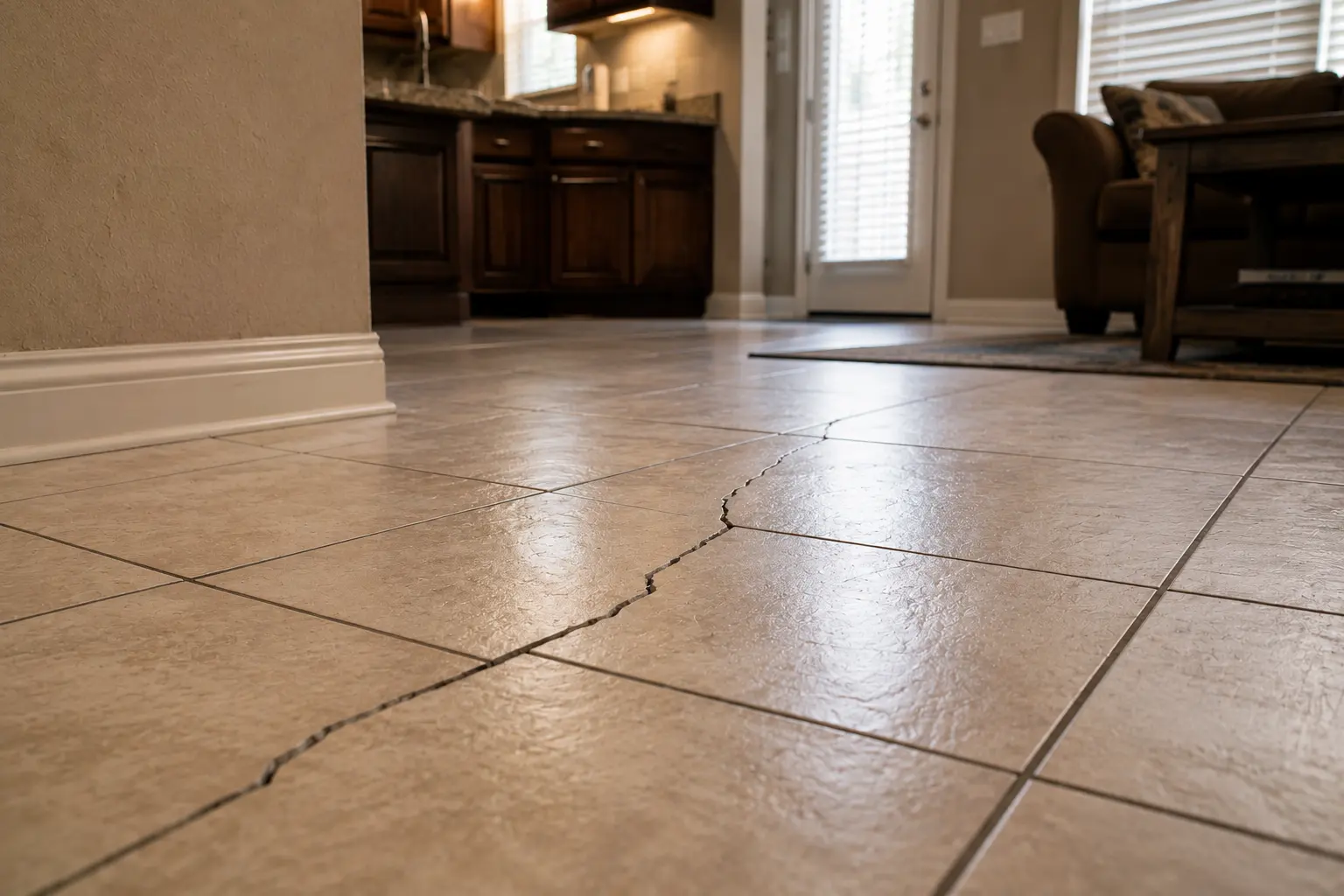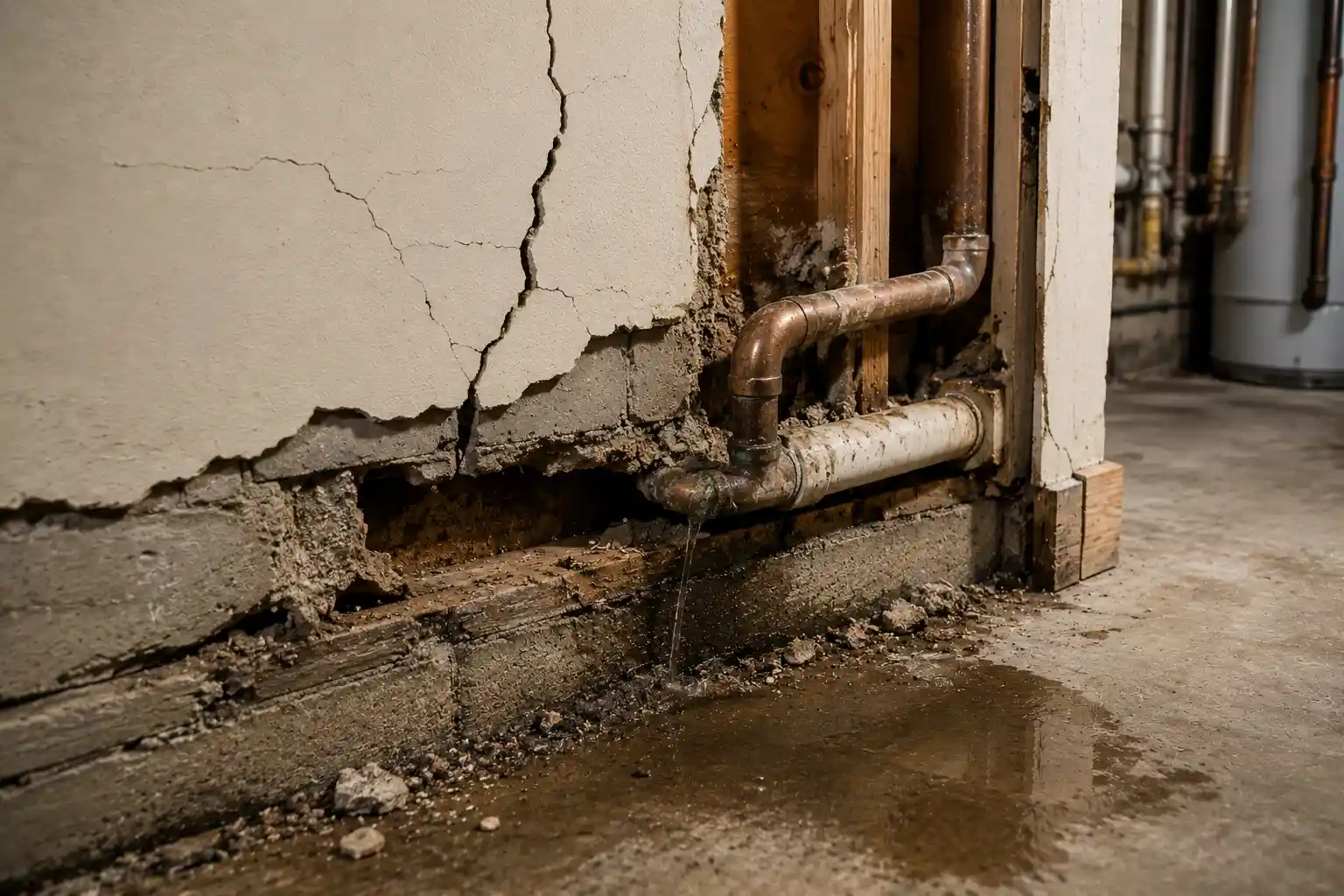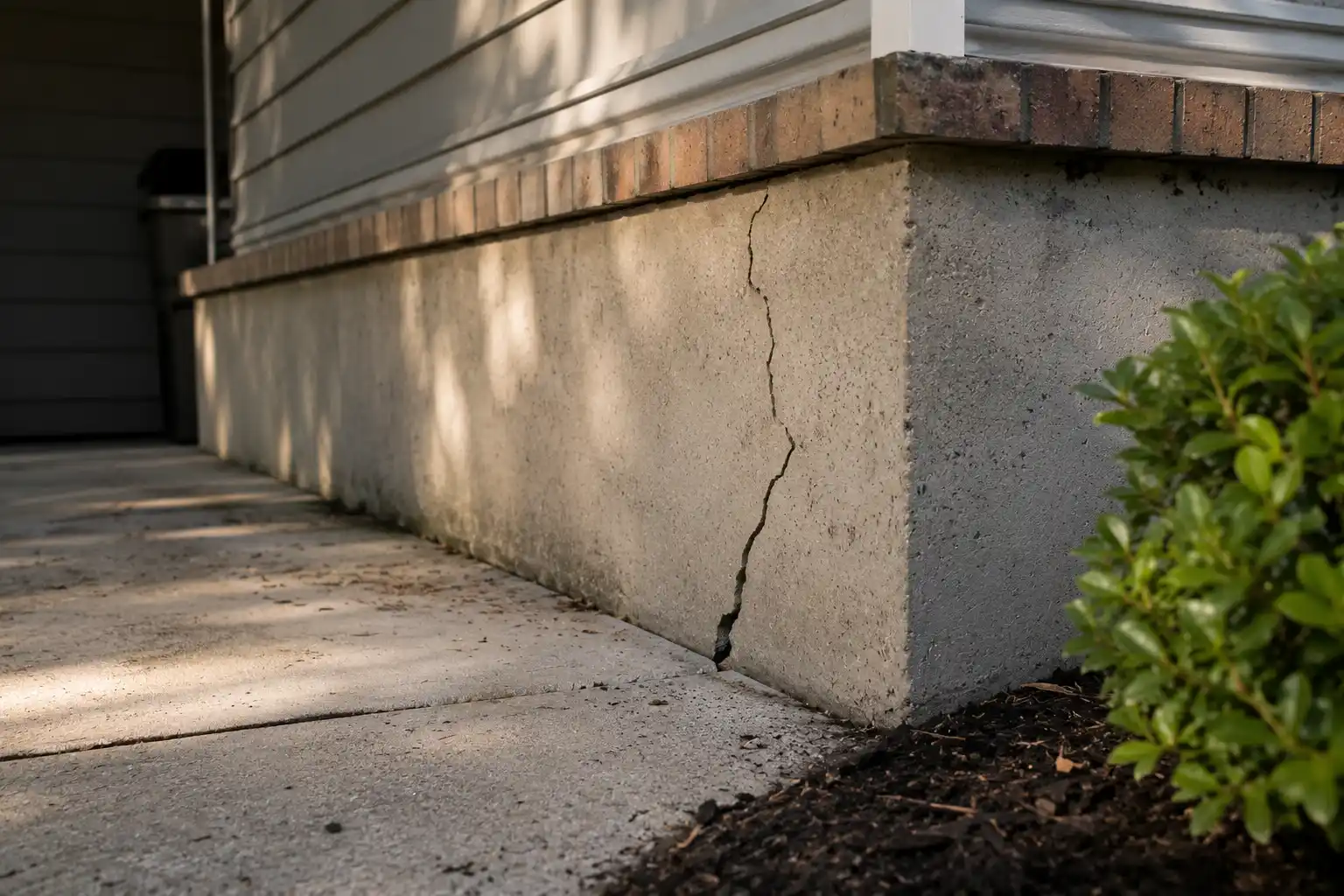
It usually starts with one small annoyance.
A bedroom door suddenly sticks near the top corner. The front door becomes harder to latch after heavy rain. A bathroom door swings open by itself even when nobody touches it.
Most homeowners assume it’s just humidity, old hinges, or normal aging.
Sometimes that’s true.
But in many Louisiana homes, doors that suddenly stop closing properly can also be early warning signs of foundation movement happening underneath the structure.
As foundations shift, settle, or experience structural stress, the framing around doors begins moving slightly out of alignment. Even a small amount of structural movement can cause doors to:
- stick,
- drag,
- swing unevenly,
- or stop latching correctly.
Here’s what causes door alignment problems, when it may signal foundation trouble, and how to tell the difference between normal humidity issues and larger structural concerns.
Why Do Doors Suddenly Stop Closing Properly?
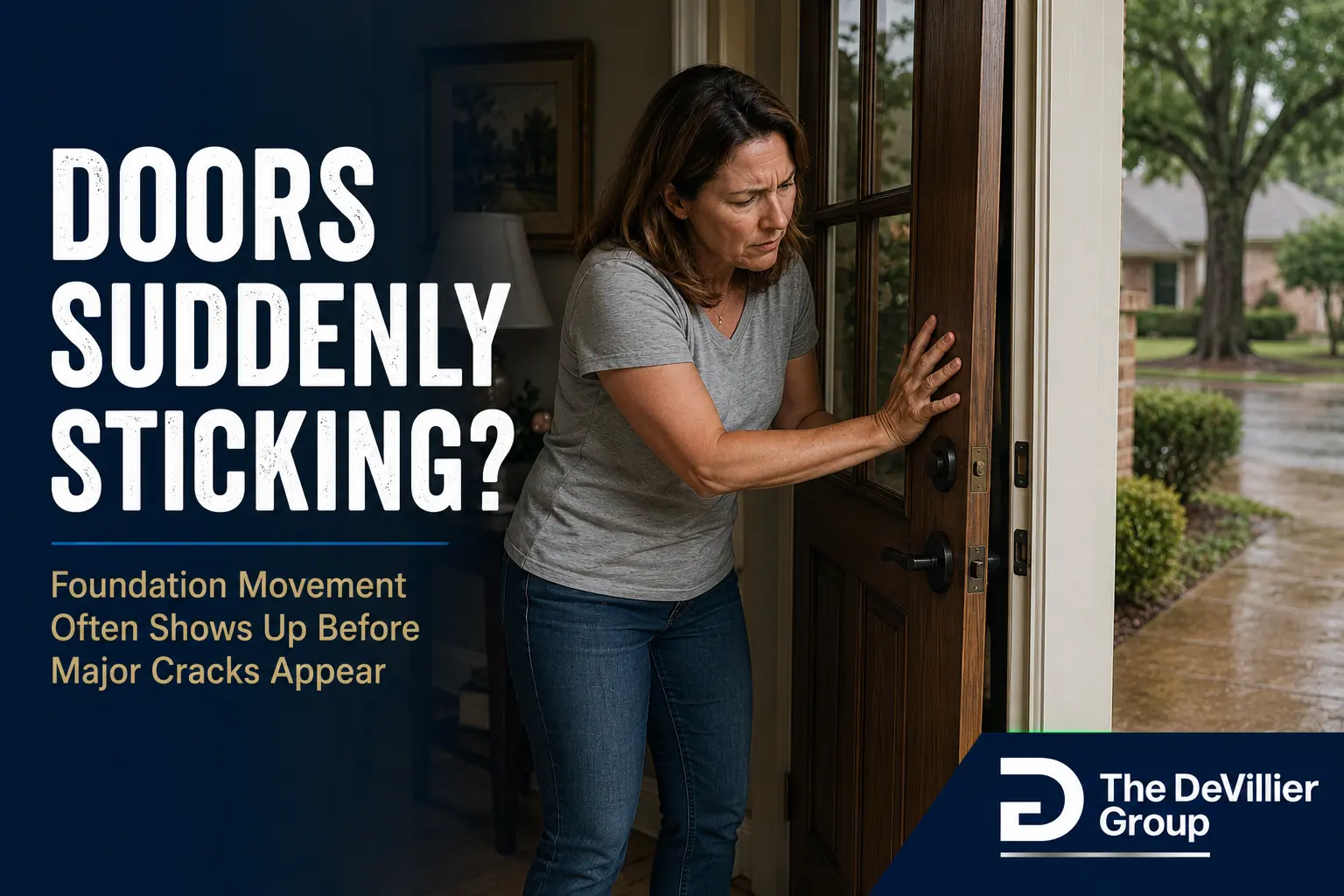
Doors depend on precise alignment.
When the structure around the frame shifts even slightly, the door may begin:
- rubbing against the frame,
- sticking near corners,
- refusing to latch,
- or swinging open unexpectedly.
The issue may involve:
- humidity,
- structural settling,
- framing movement,
- or foundation problems beneath the home.
In Louisiana, environmental conditions make door alignment problems especially common because homes constantly deal with:
- moisture changes,
- shifting clay soil,
- flooding,
- humidity,
- and seasonal expansion.
1. Foundation Settlement
One of the most common structural causes of sticking doors is foundation settlement.
As portions of the foundation shift or settle unevenly, pressure transfers upward into:
- walls,
- door frames,
- windows,
- and structural framing.
This movement slightly twists or distorts door openings, causing doors to stop fitting correctly inside the frame.
Common Signs of Foundation-Related Door Problems
- doors rubbing at the top
- uneven gaps around the frame
- The doors suddenly became difficult to latch
- multiple doors are affected at once
- sticking doors combined with wall cracks
When several doors in different areas of the house begin acting differently at the same time, structural movement becomes more likely. These are common signs your home needs foundation repair in Louisiana.
2. Louisiana Humidity and Moisture Expansion
Not every sticking door means foundation damage.
Louisiana’s humid climate causes wood doors and framing materials to naturally absorb moisture and expand during wet periods.
This is especially common during:
- summer humidity,
- rainy seasons,
- and long periods of moisture exposure.
Signs It May Be Humidity Instead of Structural Movement
The problem may simply be moisture-related if:
- only one door is affected,
- the issue changes with the weather,
- doors improve during drier months,
- and no cracks or floor movement appear nearby.
Humidity-related swelling is often temporary.
Foundation-related alignment problems usually worsen gradually over time.
3. Shifting Door Frames From Structural Movement
As homes settle unevenly, door frames can slowly become distorted.
This movement may create:
- uneven spacing around the door,
- visible gaps near trim,
- pressure points when closing,
- or difficulty locking doors.
Even small structural shifts become noticeable because doors require precise alignment to function properly.
Common Areas Where Movement Appears
- front entry doors
- bedroom doors
- garage access doors
- bathroom doors
- French doors and sliding systems
Exterior doors are especially vulnerable because they already experience weather exposure and structural stress.
4. Uneven Floors Affecting Door Alignment
In many homes, sticking doors and uneven floors appear together.
When sections of the floor system sink or slope slightly, the wall framing above also shifts. That movement eventually affects nearby door openings.
Signs Floor Movement May Be Connected
- sloping floors near the door
- soft or bouncy flooring
- gaps beneath baseboards
- doors sticking in specific corners
- furniture leaning nearby
This is especially common in:
- pier-and-beam homes,
- older Louisiana houses,
- and homes with crawl-space moisture problems.
If you’ve noticed both floor slope and sticking doors, review our guide on foundation stability signs that your home needs leveling support.
5. Expanding Clay Soil Beneath the Foundation
Louisiana’s clay-heavy soil expands and contracts constantly depending on moisture levels.
During wet periods:
- soil swells,
- pressure increases,
- and sections of the foundation may rise slightly.
During dry periods:
- soil contracts,
- support weakens,
- and settlement may occur.
This repeated movement slowly stresses the structure over time and can eventually affect door alignment.
Why This Matters
Many homeowners notice sticking doors before they ever notice:
- wall cracks,
- floor movement,
- or visible foundation damage.
Doors often act as one of the earliest warning signs of structural movement.
6. Water Drainage Problems Around the Home
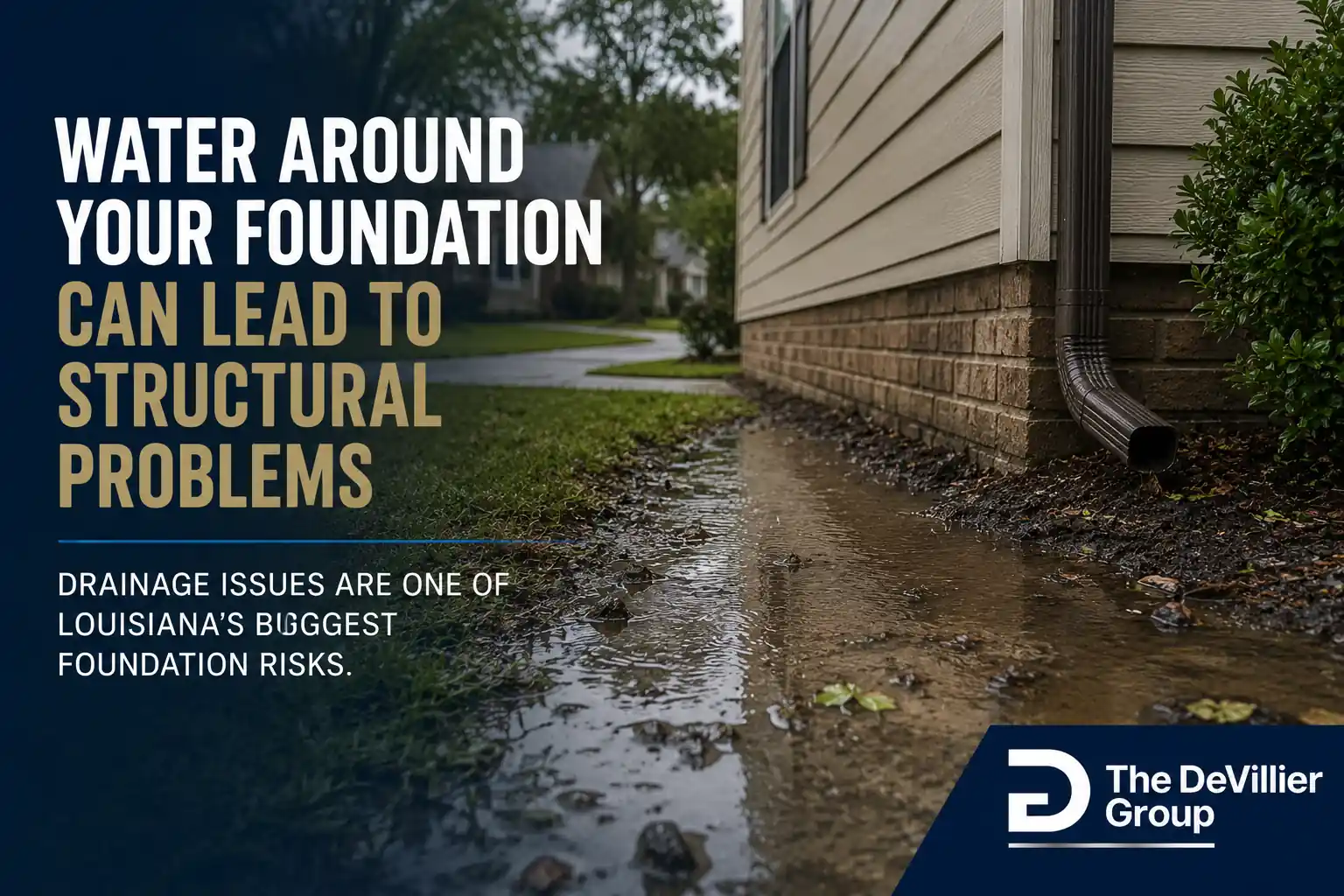
Poor drainage can destabilize the soil beneath your foundation.
After heavy Louisiana rainstorms, water collecting around the home may:
- oversaturate soil,
- weaken support conditions,
- create uneven settlement,
- and increase structural movement.
Signs Drainage Problems May Be Contributing
- standing water near the foundation
- muddy areas after storms
- worsening door problems during rainy weather
- cracks appearing near doors
- porch or walkway settlement
Over time, poor drainage can significantly affect foundation stability.
7. Aging and Natural Home Settling
Some door alignment changes happen naturally as homes age.
Older houses often experience:
- minor framing movement,
- material expansion,
- and gradual settling over decades.
A slightly sticking door in an older home may not necessarily indicate major structural failure.
The concern increases when:
- the problem worsens,
- multiple doors are affected,
- or other structural symptoms appear nearby.
When Should You Worry About Sticking Doors?
The seriousness depends on:
- how suddenly the issue appeared,
- whether multiple doors are affected,
- and whether other symptoms exist nearby.
Usually Less Concerning
The issue may be minor if:
- only one door sticks,
- humidity changes affect the problem,
- the issue improves seasonally,
- and no cracks or floor movement appear.
More Concerning Warning Signs
You should consider a professional inspection if you notice:
- multiple sticking doors
- wall cracks nearby
- uneven floors
- visible foundation cracks
- widening trim gaps
- worsening alignment problems
- doors that suddenly stop latching completely
Multiple symptoms together often indicate larger structural movement.
How Foundation Problems Affect Doors
Foundations support the entire structure of the home.
When the foundation shifts unevenly, pressure transfers upward into:
- walls,
- ceilings,
- floors,
- windows,
- and door frames.
Because doors require extremely accurate alignment, even slight movement becomes noticeable quickly.
This is why doors are often one of the earliest visible signs of foundation settlement.
Can Door Alignment Problems Be Fixed?
Yes, but permanent repair depends on identifying the actual cause.
Common Solutions Incluade
Hinge or Door Adjustment
Useful for minor alignment issues and humidity-related swelling.
Moisture and Drainage Correction
Helps reduce soil instability and structural movement.
Crawl Space Repair
Corrects weakened floor supports beneath the structure.
Foundation Stabilization
Used when settlement or structural shifting affects the home’s framing.
Structural Leveling
Restores alignment throughout affected sections of the house.
Simply trimming or forcing a sticking door closed without addressing structural movement often allows the problem to worsen over time.
How Professionals Diagnose Foundation-Related Door Problems
A structural inspection may evaluate:
- door alignment,
- floor slope,
- wall cracking,
- foundation settlement,
- crawl-space conditions,
- drainage patterns,
- and moisture exposure.
In Louisiana homes, inspections often focus heavily on environmental movement because soil expansion and moisture-related shifting are extremely common.
Final Thoughts
A sticking door may seem like a small inconvenience, but it can sometimes reveal larger structural movement happening underneath your home.
In Louisiana, where humidity, shifting clay soil, flooding, and moisture exposure constantly affect residential foundations, door alignment problems are often connected to:
- settling foundations,
- uneven floors,
- crawl-space movement,
- or structural shifting.
Not every sticking door means foundation damage — but worsening alignment combined with cracks or floor movement should never be ignored.
Paying attention to these early warning signs can help homeowners identify structural issues before more expensive damage develops.
If you’re concerned about sticking doors and other structural symptoms, explore our guide to 13 possible signs of a bad foundation or learn more about foundation repair in Lafayette, LA.
FAQs
Why are my doors suddenly sticking?
Doors may stick because of humidity, foundation settlement, structural movement, uneven floors, or shifting door frames.
Can foundation problems cause doors not to close properly?
Yes. When foundations settle unevenly, the framing around doors can shift slightly out of alignment, causing sticking or latching problems.
How do I know if my sticking door is caused by humidity or foundation issues?
Humidity-related sticking often changes seasonally and affects isolated doors, while foundation-related issues usually worsen over time and appear alongside cracks or uneven floors.
Are sticking doors a serious structural warning sign?
They can be. Multiple sticking doors combined with wall cracks, uneven floors, or visible settlement may indicate foundation movement.
Can sticking doors be repaired permanently?
Yes, but permanent repair depends on addressing the underlying cause, such as humidity problems, floor movement, crawl-space issues, or foundation settlement.